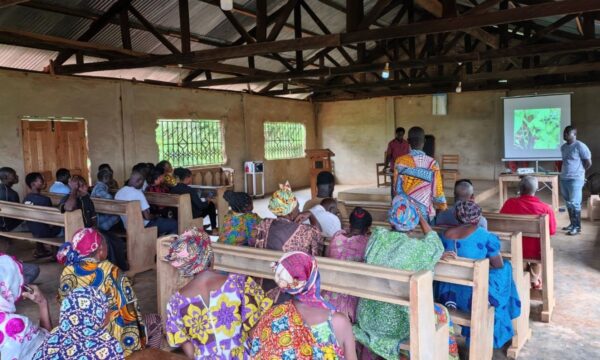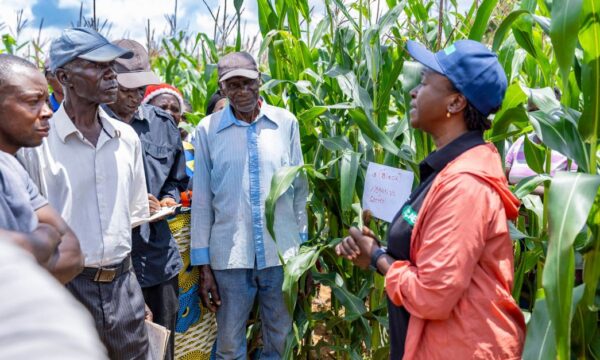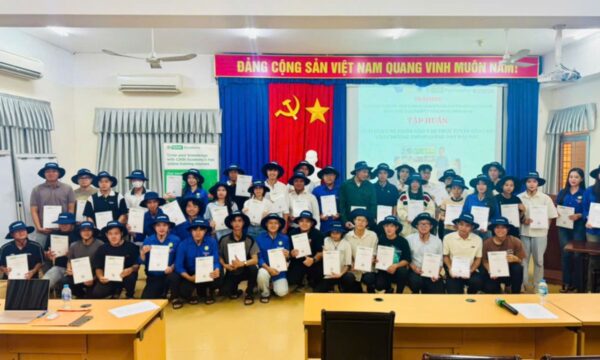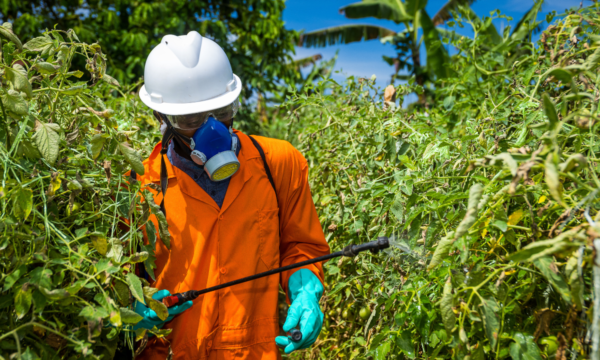
Ukulima True is a communications campaign that has helped to reduce pesticide risks among farmers in Kenya. Carried out under PlantwisePlus, it has reached a wide range of stakeholders, from smallholders and consumers to extension officers and policymakers. The campaign has shared practical advice to support social and behavioural change around pesticides, helping many people to adapt and change the way they use and view them, reducing health risks.
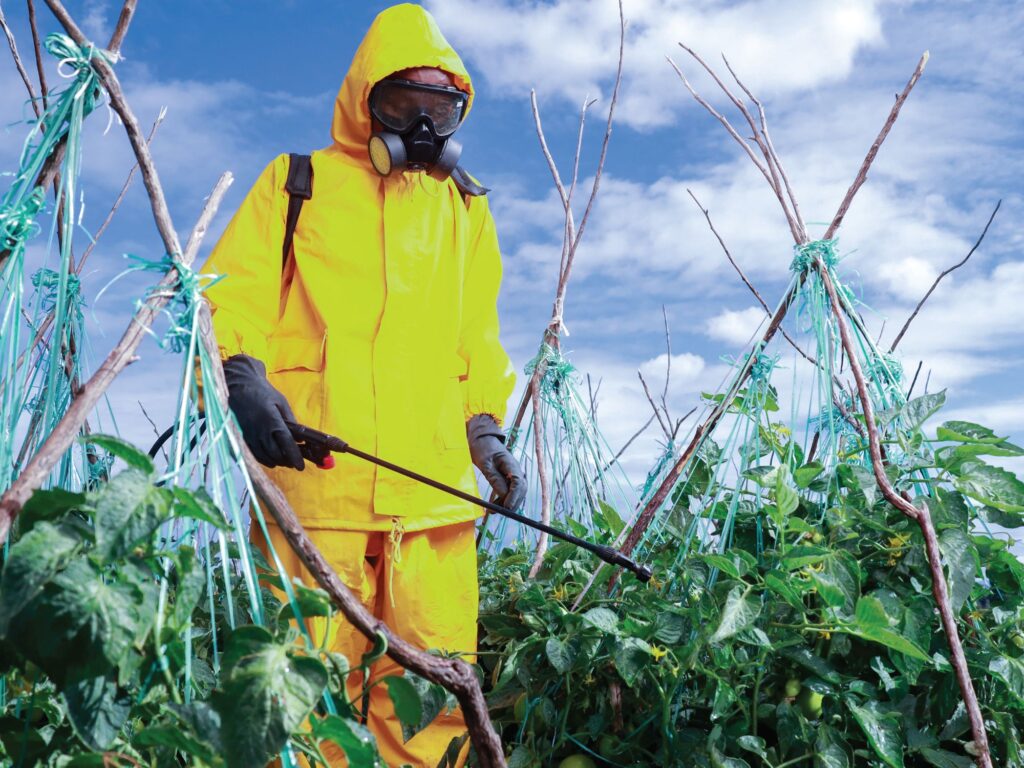
In 2024, the campaign was extended in a region of Kenya as a pilot to include community health teams, specifically community health promoters. These are locally trained volunteers who provide basic health education, often in rural communities. They reached hundreds of people with pesticide risk reduction advice, demonstrating the interconnectedness of pesticide risks with human, animal, plant, and ecosystem health.
In this blog, we take a look at the outcomes of this One Health approach.
A new collaboration opportunity to reduce pesticide risks
One Health is an approach that recognizes the interconnectedness of human, animal, plant, and environmental health. It is an integrated and transdisciplinary framework developed to address global public health challenges.
Pesticide risk is a classic One Health issue. It originates in one sector (plant health) but poses major health risks in other sectors (human, animal, and ecosystem health). Pesticides can have unforeseen impacts on many different stakeholders, from people working in food processing to consumers. Pesticides also impact wildlife and the natural habitats on which many species depend.
However, pesticide risk is often considered primarily an issue within the agricultural sector. This creates challenges. For example, during the initial phase of the Ukulima True campaign, the multisectoral Nakuru Food Safety Committee facilitated co-ordination. While the committee had a mandate to report pesticide poisoning, it did not have one to address pesticide risk reduction or human health implications.
Through Ukulima True, the Nakuru Food Safety Committee saw an opportunity to work in partnership with the Department of Health to take pesticide safety messages to farming households. The Ukulima True pilot campaign that followed leveraged a network of community health promoters across several areas of Subukia sub-county in Kenya.
These volunteer health advisors expand the reach of overburdened healthcare professionals. The knowledge and information they share benefits rural communities that might otherwise remain marginalized, improving healthcare and bridging the gap between outlying towns and villages and the country’s medical system.
One Health in action – bringing agriculture and health together
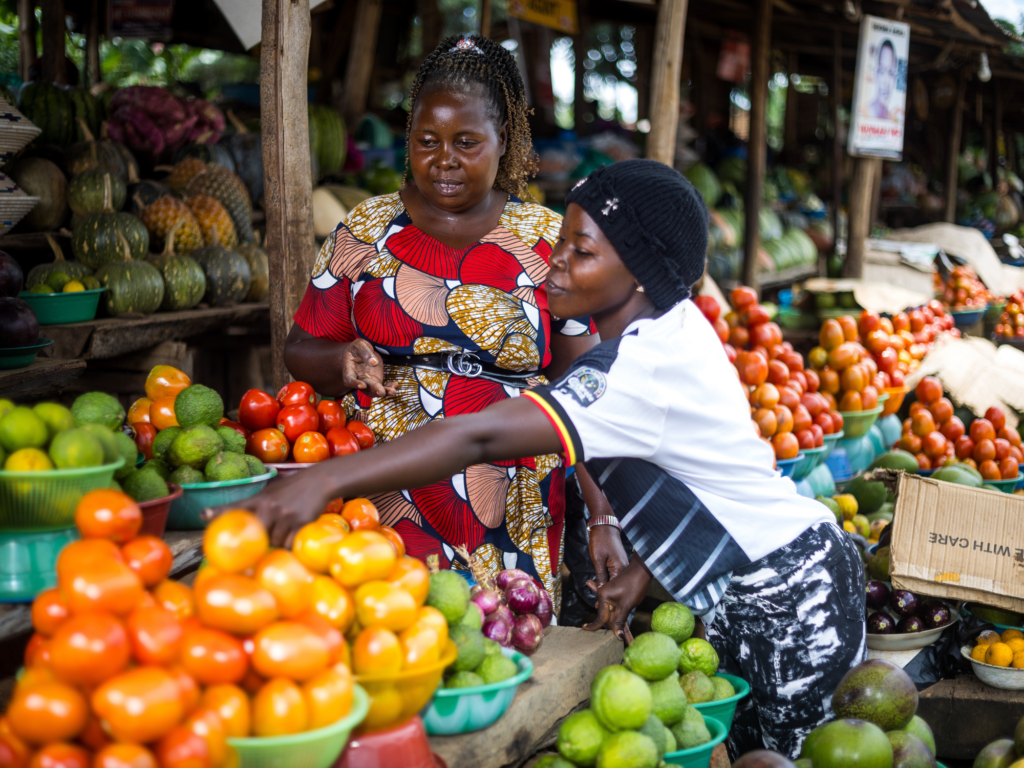
Together, the County Department of Agriculture and County Department of Health decided to include community health promoters in the Ukulima True campaign. With their household-level access and frequent interactions with rural farming families, they were in an excellent position to share messages about pesticide risk reduction. Moreover, the promoters are trusted sources of information and a first stop for health inquiries. Their visits often involve discussions on a wide variety of health and associated issues.
In 2024, 60 health promoters took part in Ukulima True. They reached 100 households through their routine quarterly visits. The promoters focused on health-related behaviours in households. This positioning allowed them to frame pesticide risk through a human health lens. Their conversations resonated strongly with household members and complemented messages that already reached farmers through agricultural advisors.
For example, promoters discussed the dangers of reusing empty pesticide containers for storing milk, water, and other food items. Hearing such messages from agricultural advisors as well as health promoters gave community members additional motivation to adopt safer practices.
Moreover, the promoters were able to reach more household members. Agricultural advisors are often limited to interacting with the heads of households and lead farmers. Community health promoters can reach everyone in the family, sharing advice with women, young people, and caregivers. These are people who might be affected by pesticide use decisions, but who are not in contact with agricultural advisors. They might help to store pesticides, for example, or wash pesticide residues from clothing, but lack access to knowledge about how to keep themselves safe while doing so.
The impact of combining agricultural and health advice
This One Health approach extended the reach of the Ukulima True campaign. It led to increased safe storage of pesticide containers away from the main dwelling. It also increased safe disposal of used pesticide containers. Women stopped spraying pesticides during pregnancy. One community health promoter was able to talk to a pregnant woman about pesticide risks to developing babies, and another carried out the spraying for the pregnant woman herself.
The messages also helped farmers to reduce pesticide dumping near rivers to protect ecosystems and livestock. Moreover, farmers introduced new agricultural systems to reduce pesticide risks. For example, they used a ‘red ribbon’ marking system to indicate the location of sprayed crops. The system also helped to ensure that pre-harvest intervals – the time between pesticide application and crop harvesting – were observed.
These positive results created a ripple effect, helping the pilot to scale up. The benefits inspired the County Department of Agriculture to include another 62 community health promoters in the campaign in 2025. This brought the promoters’ total reach within Ukulima True to around 12,200 households between 2024 and 2025.
Moreover, the collaboration improved information sharing among government departments. Interviews with county-level officers, for example, generated rich insights into behaviour change. They also revealed the challenges and opportunities for improving pesticide risk reduction. A retired crop protection officer from the Ministry of Agriculture said that while it was difficult to quantify the impact on pesticide risk reduction, there was a general sense that engaging with community health promoters added value.
Better together
Pesticide safety is not just an agricultural issue affecting farmers, livestock, and the environment. It is an issue that also impacts health. Collaboration between agriculture and public health departments can extend the reach of pesticide risk reduction work. A One Health approach can have more impact than focusing on agriculture or health alone. Using trusted community networks has turned knowledge into safer practices for people and the environment.
More information
Read the full case study here: Extending the Ukulima True Pesticide Risk Reduction Campaign in Kenya by Involving Community Health Promoters to Enhance Reach and One Health Outcomes
Learn more about PlantwisePlus and the One Health Hub.
PlantwisePlus
PlantwisePlus(opens in new tab)(opens in new tab)(opens in new tab) gratefully acknowledges the financial support of the Directorate-General for International Cooperation(opens in new tab)(opens in new tab)(opens in new tab), Netherlands (DGIS); European Commission Directorate General for International Partnerships(opens in new tab)(opens in new tab)(opens in new tab) (INTPA); UK International Development(opens in new tab)(opens in new tab)(opens in new tab) from the UK government; the Swiss Agency for Development and Cooperation(opens in new tab)(opens in new tab)(opens in new tab) (SDC); and the Australian Centre for International Agricultural Research(opens in new tab)(opens in new tab)(opens in new tab) (ACIAR).
Interested in learning more about PlantwisePlus?
PlantwisePlus works with partners including governments, research institutions, local NGOs, and regional plant protection organizations to strengthen plant health systems and improve food security.
>> Discover more about our approach and how we’re delivering sustainable impact.
Related News & Blogs
How IPM is helping Vietnam’s tomato farmers manage invasive tomato leafminer
Tomato farmers in Lam Dong Province, Vietnam, are gaining practical knowledge on managing the invasive South American tomato leafminer. The pest, Phthorimaea absoluta (formerly Tuta absoluta), can be difficult to control once established. Through integ…
14 October 2026