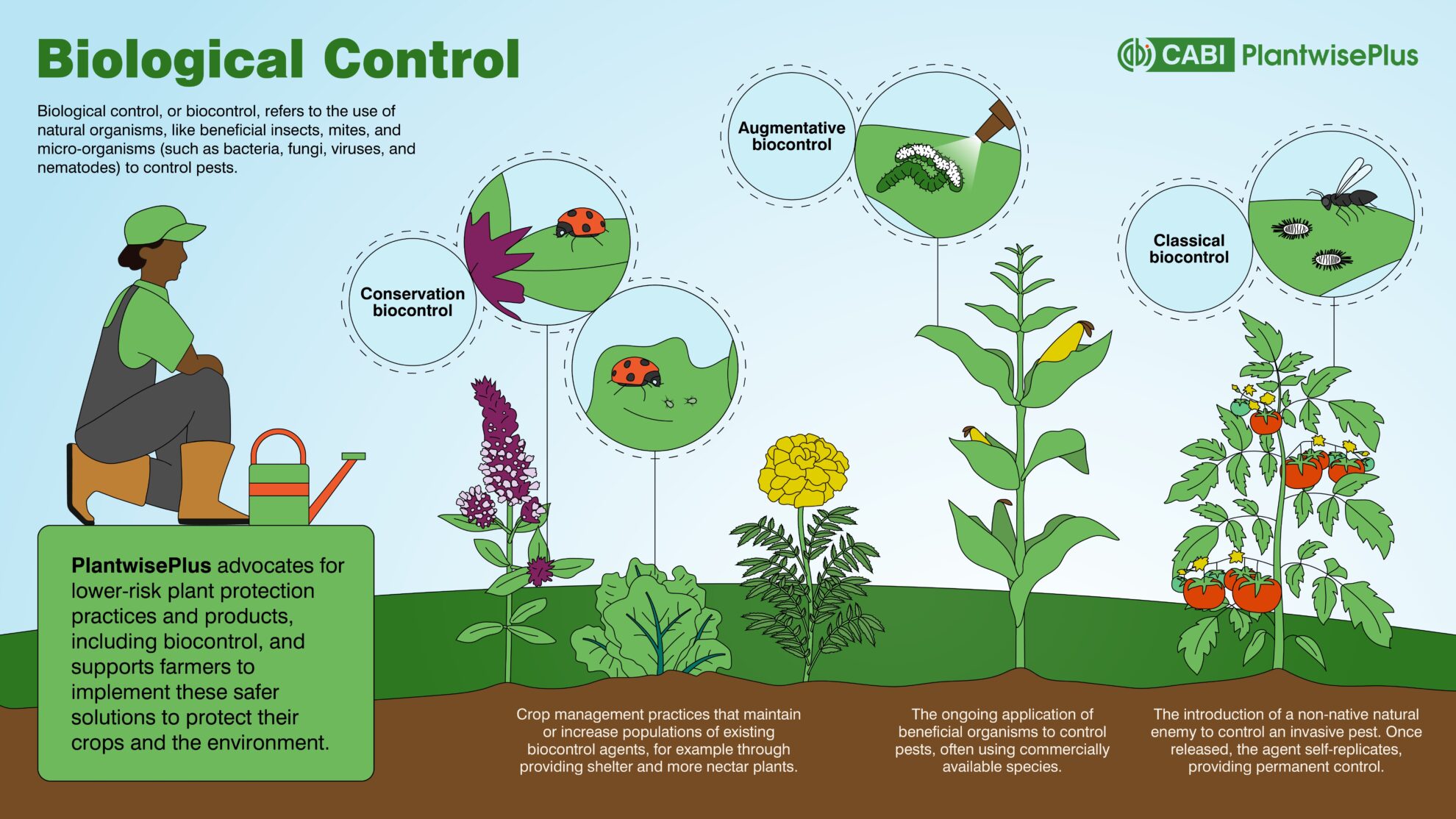
Tomato farmers in Lam Dong Province, Vietnam, are gaining practical knowledge on managing the invasive South American tomato leafminer. The pest, Phthorimaea absoluta (formerly Tuta absoluta), can be difficult to control once established. Through integrated pest management (IPM) and biological control approaches, farmers are learning how to manage the pest while reducing reliance on chemical pesticides.
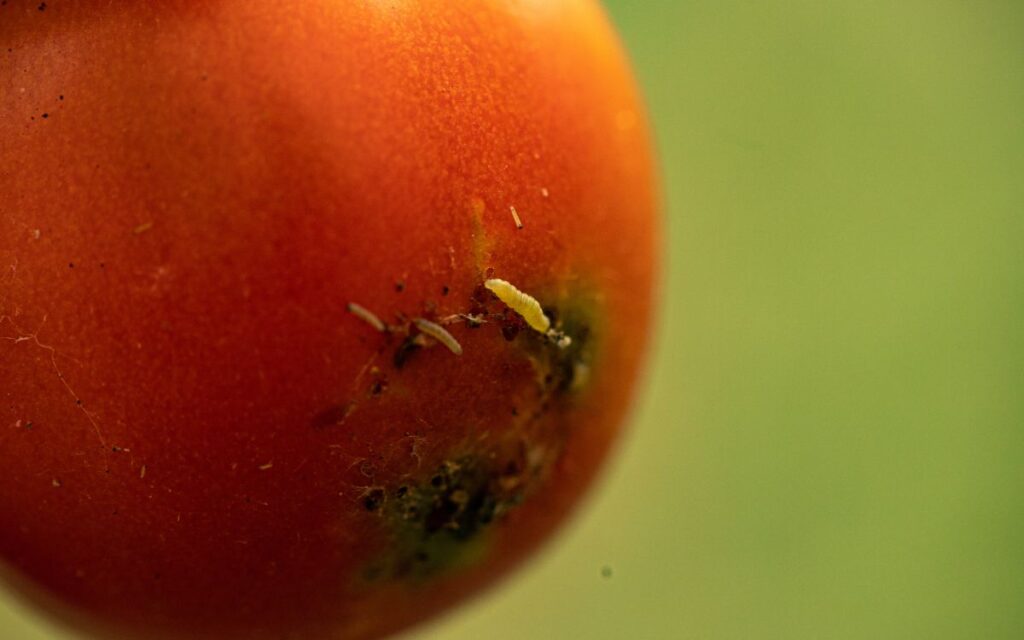
Earlier this year, CABI partnered with the Lam Dong Plant Production and Protection Sub-Department (PPPD) and biological control supplier BioPro of Da Lat Hasfarm to organize a farmer awareness workshop and field day in Nam Ban Lam Ha Commune. About 40 tomato farmers, commercial growers, extension staff, and private-sector representatives took part, learning how to identify, monitor, and manage P. absoluta and other key tomato pests.
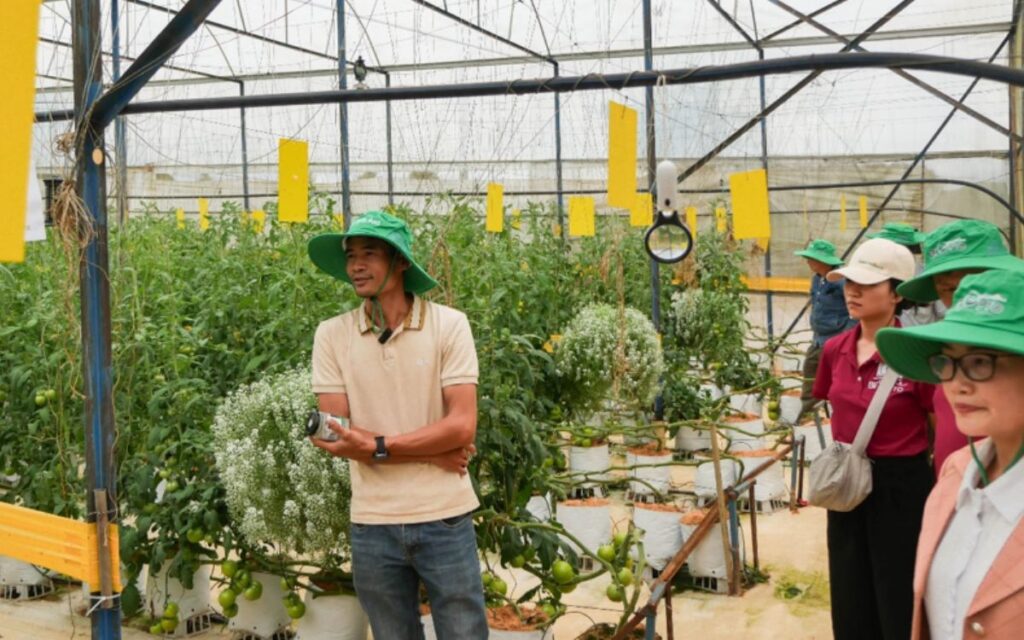
The field day centered on an IPM demonstration greenhouse. This enabled farmers to move beyond classroom learning and see the practices operating under commercial production conditions.
An emerging threat for tomato farmers
Lam Dong is one of Vietnam’s most important tomato-producing provinces, with approximately 6,644 hectares under tomato production and annual production of more than 305,000 tonnes.
The arrival of the South American tomato leafminer is therefore a growing concern for the province’s tomato farmers. The larvae feed inside leaves and can also damage stems and fruits, making established infestations difficult to control.
The pest was detected in the province in 2024 and has since spread to several tomato-producing areas, including protected and open-field production systems.
“Recently, the spread of P. absoluta and the increase in infested areas have become a new challenge for tomato growers in Lam Dong Province. We are actively working to manage the affected areas,” said Ms Vu Thi Thuy, Deputy Director of the Lam Dong Plant Production and Protection Sub-Department (PPPD).
Chemical pesticides have traditionally been farmers’ first response to pest outbreaks. However, repeated applications can increase production costs and pesticide exposure, disrupt beneficial organisms and contribute to insecticide resistance.
Managing the pest therefore requires early detection and a combination of preventive measures, monitoring, and biological control rather than relying primarily on pesticide applications.
Providing farmers with an alternative
Since detecting the pest in 2024, CABI PlantwisePlus has worked with national and provincial plant health authorities and research institutions to strengthen knowledge of P. absoluta management. The work has included technical training and farmer awareness activities in major tomato-producing areas, alongside access to practical pest management information through CABI digital tools.
In Lam Dong, this work has moved beyond technical training to show farmers how to apply these approaches in practice. During the field day, farmers learned how to detect pest activity early through regular crop scouting and traps. They also learned how sanitation, biological control, and selective pesticide use can be combined as part of an IPM approach.
Seeing biological control in practice
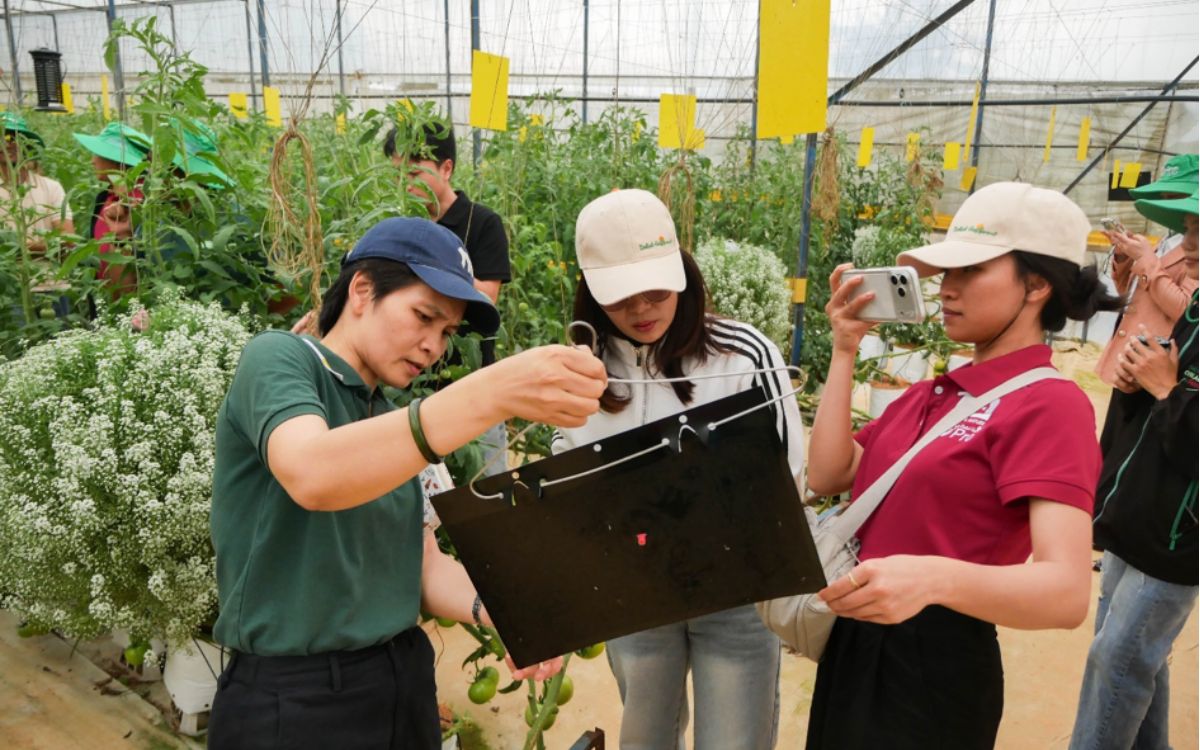
A nearby 1,000 m² IPM demonstration plot allowed participants to see these principles in practice. The plot was managed using a combination of crop sanitation; pest monitoring; pheromone, light and sticky traps; natural enemies; biological products; and selective pesticide interventions. A neighboring 1,000 m² block managed using conventional farmer practices provided a practical comparison.
Natural enemies introduced in the IPM plot included predatory mites and bugs, and Trichogramma parasitoids targeting different stages of P. absoluta, thrips and whiteflies. Flowering alyssum was also maintained in the greenhouse to provide food and refuge for beneficial organisms.
The comparison gave farmers early evidence that reducing pesticide use did not necessarily mean accepting greater pest damage. Demonstration data showed that P. absoluta density in the IPM plot was 43% lower than under conventional farmer practice. At the same time, the programme achieved the same results with four fewer chemical pesticide applications. Similarly, the application of natural enemies contributed to reduction of the thrips and whitefly population densities throughout the study course. Although improvements in yield and profit were relatively modest, the results demonstrate the potential of biological control to reduce pesticide use while effectively managing P. absoluta and other tomato pests.
For farmers considering unfamiliar biological control approaches, seeing these results in a commercial greenhouse helps demonstrate that the approach can work under local conditions.
Farmers learning from farmers
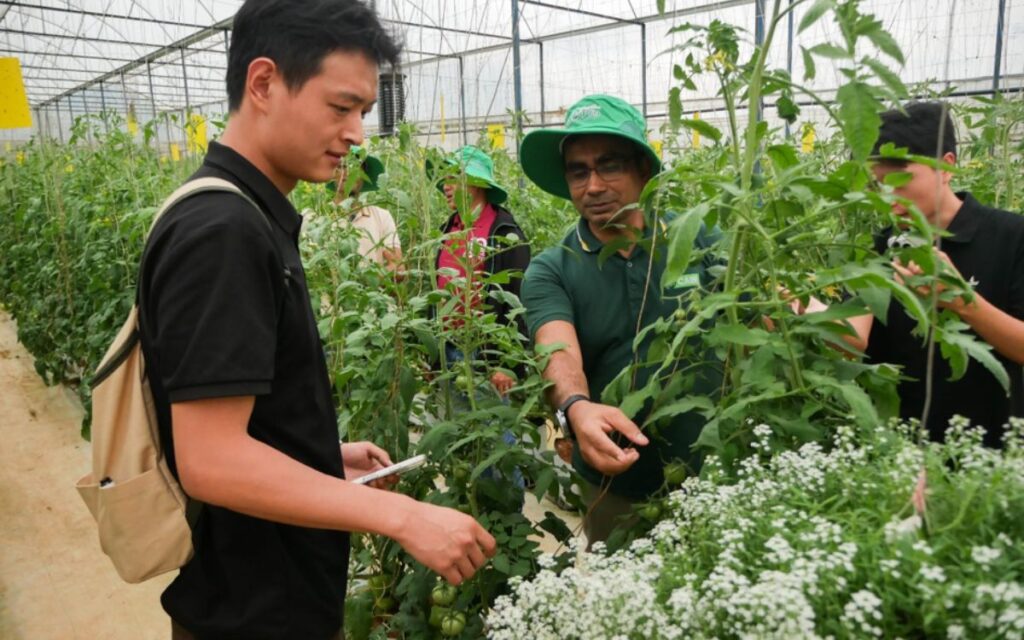
The field visit also gave participants a chance to discuss practical questions directly with the host farmer and technical specialists. Farmers examined pheromone traps, sticky traps, banker plants, and crop sanitation practices, and discussed how and when to release beneficial organisms.
Host farmer Mr Bui Xuan Bộ shared his experience of moving from conventional pesticide-based management towards IPM and biological control.
“Without the application of chemical pesticides, especially under greenhouse conditions, I can feel a sense of comfort when visiting and scouting the plants,” said Mr Bộ. “I could see very positive improvements in my field.”
He reported that beneficial organisms helped keep pest damage under control while reducing the need for insecticide applications. His experience was particularly useful for participating farmers because it illustrated both the initial uncertainty of adopting unfamiliar practices and the importance of regular technical support.
Neighboring farmers had already begun visiting the demonstration before the field day, showing how a local demonstration can become a platform for farmer-to-farmer learning as well as formal extension.
The objective is therefore not simply to demonstrate biological control on one farm, but to use the site to reach more tomato growers, allowing them to observe the practices, ask questions and make informed decisions about adapting their own production systems.
Taking IPM knowledge to more growers
The demonstration is an important first step, but wider impact will depend on farmers having the knowledge, confidence and support to apply these approaches on their own farms.
By bringing farmers, public plant health services, and private-sector biological control expertise together, the activity is helping build the knowledge and confidence needed to expand IPM beyond the demonstration site.
As awareness grows, the expectation is that participating farmers will take the lessons back to their own farms and communities, helping move tomato production in Lam Dong toward safer, cleaner, and more sustainable pest management. Wider dissemination through CABI’s digital tools can complement this farmer-to-farmer learning, giving more growers access to practical information on pest identification, monitoring and IPM.
Further reading
How digital learning is helping students build practical plant health skills in Vietnam
Scaling sustainable food production using integrated pest management
PlantwisePlus
PlantwisePlus(opens in new tab)(opens in new tab) gratefully acknowledges the financial support of the Directorate-General for International Cooperation(opens in new tab)(opens in new tab), Netherlands (DGIS); European Commission Directorate General for International Partnerships(opens in new tab)(opens in new tab) (INTPA); UK International Development(opens in new tab)(opens in new tab) from the UK government; the Swiss Agency for Development and Cooperation(opens in new tab)(opens in new tab) (SDC); and the Australian Centre for International Agricultural Research(opens in new tab)(opens in new tab) (ACIAR).
Interested in learning more about PlantwisePlus?
PlantwisePlus works with partners including governments, research institutions, local NGOs, and regional plant protection organizations to strengthen plant health systems and improve food security.
>> Discover more about our approach and how we’re delivering sustainable impact.
Related News & Blogs
Seeing the risk and speaking up: improving pesticide safety in Ghana
In Ahafo Ano North, Ghana, video-assisted community dialogues are moving pesticide education beyond one-way messaging. These videos are helping farmers, agro-input dealers, traders, and community leaders confront the pressures driving pesticide misuse.…
8 October 2026