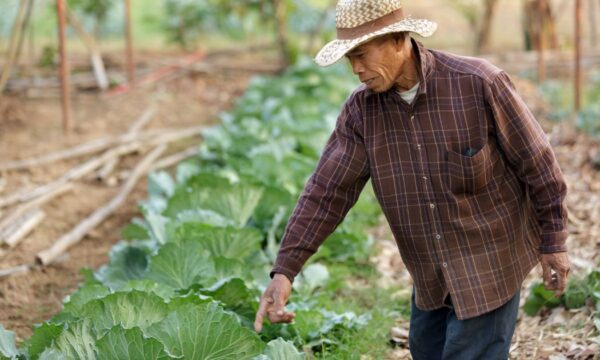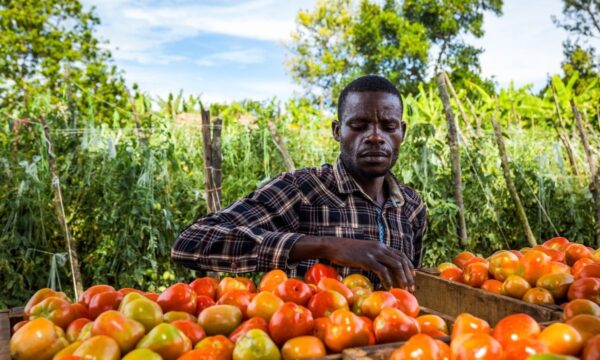
AI tools have the potential to close the gender gap for women farmers. Women contribute around 40% of all agricultural labour but achieve around 23% less productivity compared to men. This is due to many constraints, from a lack of access to credit, inputs, and land, to gender norms that prevent women from accessing agricultural knowledge, skills, and tools.
Over the past few years, AI has made substantial technological advances, and its application in the agricultural sector can achieve practical, real-world benefits. Part of that benefit is helping to close the gender gap in farming. This International Women’s Day, we look at the potential impact of AI tools on women farmers in low- and middle-income countries, the risks and limitations, and how AI can help to boost women’s incomes and productivity in rural farming communities.
AI tools to benefit women farmers
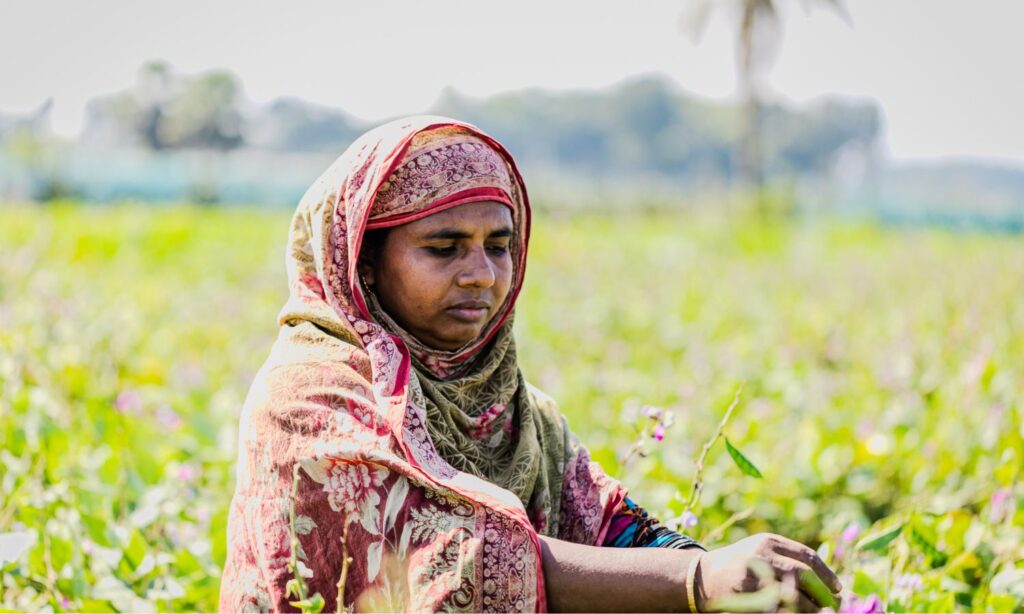
AI tools have the potential to deliver advisory services tailored to meet the specific needs of women farmers. For many women farmers, accessing reliable agricultural advice – in their local dialect in particular – remains a challenge. Extension services are largely targeted at heads of households, who are predominantly men. Despite their central role in food production, women remain underserved. AI tools could help to close the gender gap by providing them with quality-assured, standardized advice. Trusted content from scientific sources could empower women to make informed decisions in relation to climate-smart, sustainable farming. Voice mediated services delivered through spoken communication (rather than via text or images) is particularly helpful, as is information transmitted by video.
Improving access to information through AI tools
Pest management advice is particularly important for women farmers. In many contexts, women, who frequently work as farm labourers, are among the first to detect the arrival of crop pests. However, they are largely unable to obtain accurate, timely pest management advice. AI-enabled advisory tools can provide recommendations around pest diagnosis and integrated pest management (IPM). Pest and weather-based alerts could give women farmers and labourers advance warning of potential crop damage. The information, when delivered via voice, local language, and low-bandwidth interfaces, could make knowledge services more accessible and inclusive for women farmers.
Moreover, AI tools can help women to make independent, timely crop decisions, reducing reliance on male intermediaries or agro-input dealers. In this way, AI tools not only empower women, they enable them to play a more direct role in food production and income generation. Importantly, AI tools can also help women to earn social recognition and become trusted advisors, advancing their leadership roles. This is important because women digital champions often play a pivotal role in increasing access to knowledge for other women and young people in their communities via mentorship and social connections. They also help them to backstop or provide ongoing support to help women effectively use digital tools.
Overcoming cultural barriers in agricultural extension
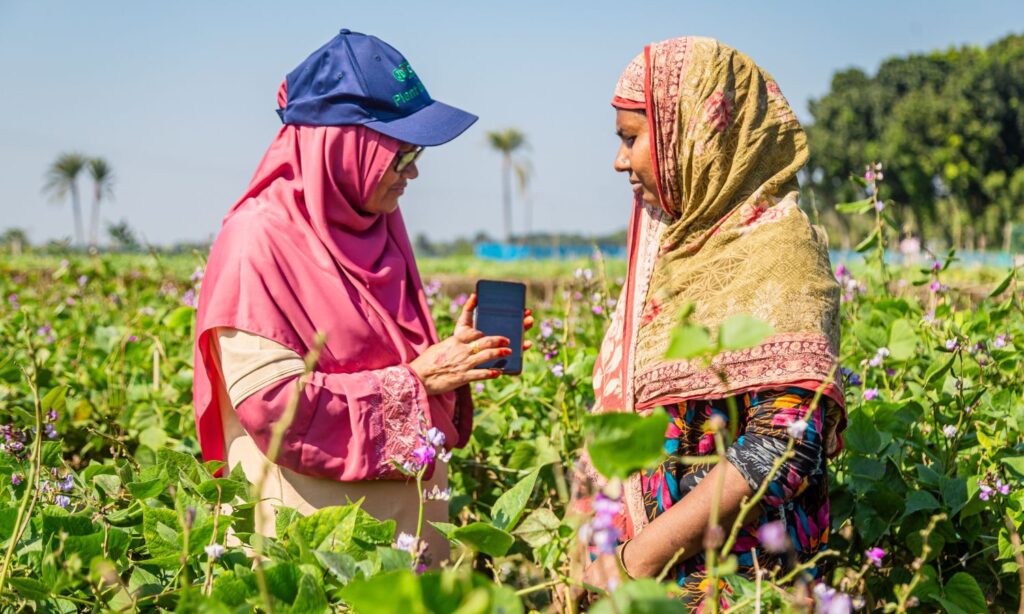
AI tools in agriculture also help women extension advisors share farming know-how more effectively with women farmers. This helps to overcome gender barriers and social norms. Sharing avatar-based examples of women solving problems in agriculture helps to show women what is possible and overcome barriers to their perception of themselves as farmers in their own right.
In Bangladesh, for example, CABI partnered with Fortell, an AI-powered digital survey company, to pilot avatar-based interviews and AI-driven analysis. The surveys assessed the impact of eLearning initiatives. The approach proved particularly effective in a region where cultural norms can discourage women from taking part in surveys. By using digital avatars, more women felt comfortable participating, leading to more inclusive feedback.
Projects and programmes to embrace AI tools
Recently, CABI conducted a workshop with digital tool users to build capacity and improve understanding of AI-based tools. This included how to use them responsibly, reviewing issues such as bias, errors, hallucinations (when AI makes up responses), and transparency. The CABI-led PlantwisePlus programme led the workshop, which included digital literacy training for women.
More generally, PlantwisePlus is working to close the gender gap in farming using digital technology. The programme seeks to use gender-sensitive approaches to reach more women farmers through its farmer advisory pathway. This includes increasing the number of women working in extension as plant doctors. Use of digital technology is an important part of the programme’s gender-responsive approach.
Moreover, CABI and partners have embraced AI tools for agriculture through the Generative AI for Agriculture Advisory (GAIA) project. This initiative explores how generative AI tools, including large language models (LLMs), can improve the quality and inclusivity of agricultural advice for smallholder farmers. The project aims to ensure AI-powered services are accurate, accessible, gender-responsive, and ethically governed.
In 2026, CABI will scale up a pilot project entitled ‘Women Digital Plant Health Leaders’ across selected PlantwisePlus countries, including India. The initiative has already been piloted in countries such as Bangladesh, Ghana, Nepal, Pakistan, and Uganda.
The risks and limitations of AI tools for women farmers
While AI can bring significant benefits to women in agriculture, we must remember that technology alone is not the answer. Firstly, literacy is lower globally among women than men, and this is a significant barrier to using AI tools. In many low- and middle-income countries, girls are still less likely than boys to complete secondary education. Subsequently, women are less likely to be digitally literate. They are also less likely to have internet access or own a mobile device. In the least developed countries, fewer than 29% of women are online compared to 41% of men. Without foundational education or digital skills, women cannot benefit from AI tools. Moreover, increased reliance on AI instead of human support risks leaving women further behind. Tools should complement or strengthen existing advisory services, rather than seek to replace them.
To address this, governments must invest in girls’ education and women’s literacy programmes. Targeted digital skills training can help women to use technology more confidently and, therefore, benefit from AI tools. At the same time, we must address social norms in rural farming communities, overcoming the barriers that limit women’s access to agricultural extension advice and support. Increasing the number of women extension officers is a step in the right direction. When it comes to developing AI tools, a participatory approach that includes women is critical.
The future of AI tools to close the gender gap in farming
AI tools can help to close the gender gap in agriculture, but only if they are intentionally designed for women farmers. Advisory support that includes AI can complement existing extension services and extend their reach into rural communities. Moreover, the tools can provide tailored, timely guidance to strengthen women’s decision-making power. In the face of biodiversity loss and climate change, AI tools have the potential not only to support climate-smart agriculture and sustainable farming but also to empower women, helping them thrive and increase agricultural production.
Further reading
Advancing gender-inclusive agricultural advisory services in Bangladesh
Digital skills training: Enabling access to digital advisory tools for women in Nepal
Women farmers in Uganda: Plant clinic challenges and progress
PlantwisePlus gratefully acknowledges the financial support of the Directorate-General for International Cooperation, Netherlands (DGIS); European Commission Directorate General for International Partnerships (INTPA); UK International Development from the UK government; and the Swiss Agency for Development and Cooperation (SDC).
Interested in learning more?
PlantwisePlus works with partners including governments, research institutions, local NGOs, and regional plant protection organizations to strengthen plant health systems and improve food security.
>> Discover more about our approach and how you can get involved.
Related News & Blogs
Agricultural service providers are transforming rural livelihoods – here’s how
Agricultural service providers play an important role in farming. In addition to offering support, they also help to fill gaps in public extension systems. They deliver services such as pest and plant health diagnosis and integrated pest mana…
10 September 2026