Mercy Akinyi Ogonyo did not set out to become a field advisor. When she joined KALRO Horticultural Research Institute (KALRO-HRI) as a crop health research scientist, her work was largely laboratory-based. Her role included identifying plant diseases from samples brought in by farmers, then passing findings to colleagues. This changed after Mercy discovered CABI Academy’s online courses, which helped boost her crop health knowledge and confidence to advise farmers in the field.
Mercy holds a Bachelor of Science in Agriculture from Southeastern Kenya University. She has also worked with CIMMYT on Fall Armyworm management. But her degree focused on theory and laboratory work. It had not given her the confidence to diagnose a problem on the spot and provide advice to farmers.
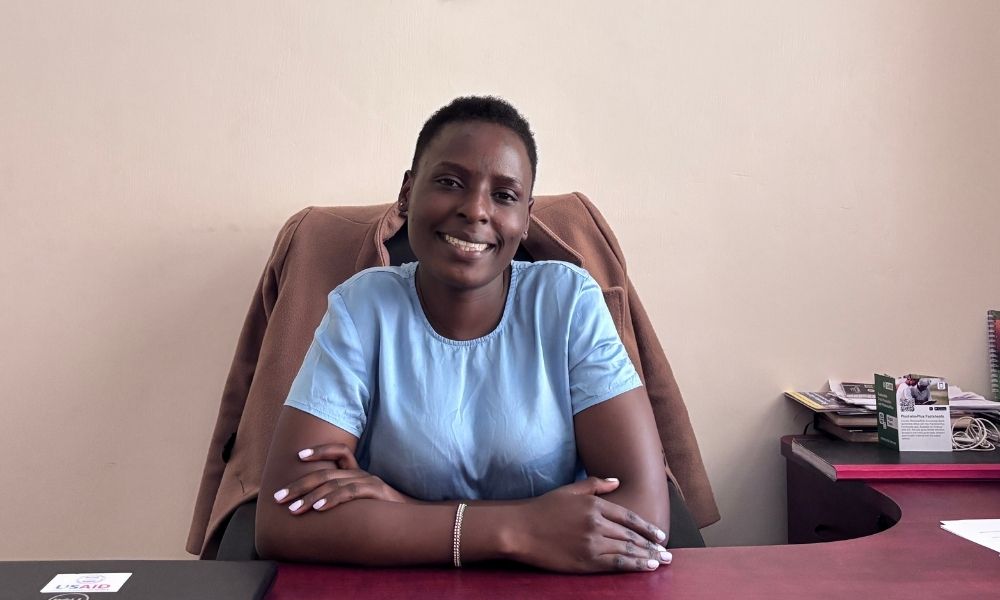
“My work was just in the lab,” she says. “I used to avoid the field a lot.”
What Mercy needed was plant health training that connected diagnosis directly to field conditions.
At a conference, Mercy noticed a stand promoting CABI’s digital tools, including CABI Academy. As a result, she enrolled in the Crop Pest Diagnosis (CPD) and Crop Pest Management (CPM) courses, completing both foundation and practitioner assessments.
She is currently working through the Gender-Inclusive Strategies for Improving Agricultural Productivity course.
“The courses were so practical, very different from university,” she says. “At university, the curriculum was not much about real-world application. Here, there were photographs of actual plant health problems I recognized from the clinic. It finally connected what I was seeing in the lab to what farmers were experiencing in the field.”
Drawing on plant health courses
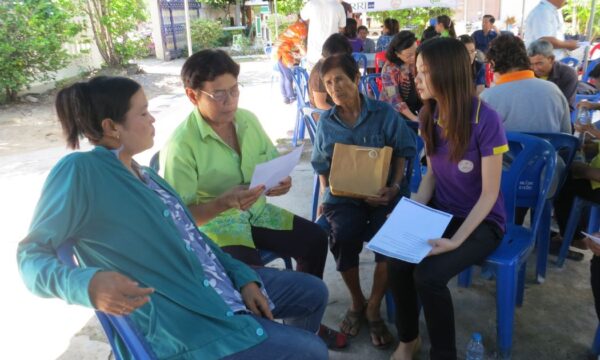
Mercy is now advising farmers in the field. At KALRO–HRI, farmers bring diseased plant material to live plant clinics. Mercy and her colleagues identify the cause, recommend management, and then follow up.
Farmer advisory is a core part of the PlantwisePlus programme activities. The programme supports plant health systems across lower- and middle-income countries. It trains advisors to give farmers timely, evidence-based guidance on plant health challenges. Central to this is the move towards integrated pest management (IPM). IPM combines cultural controls, biological options, and targeted treatments only where necessary.
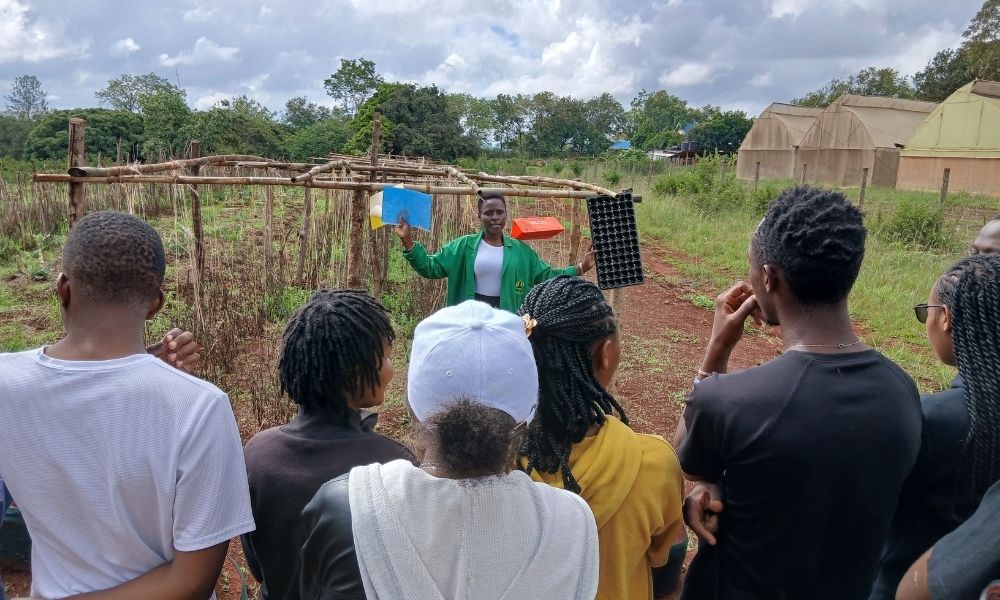
Plant clinics, like the one at KALRO–HRI, are central to this approach. They give farmers direct access to qualified advice, helping prevent and manage pest problems sustainably.
For example, a farmer once arrived with kale, locally known as sukuma wiki, showing scorched leaf edges. It would have been easy to assume a fungal disease caused these symptoms and recommend a fungicide.
Instead, drawing on her CPD course, Mercy identified a bacterial infection. Rather than prescribing chemicals, she advised cultural controls. She told the farmer to reduce watering, remove affected leaves, and improve airflow. Follow-up visits every two weeks confirmed the infection had cleared without any pesticides.
“Sometimes chemicals are just a waste of effort and money,” she says. “The right diagnosis at the right time makes the difference.”
Community action
Another example of how the courses have helped Mercy in her career is in dealing with fruit fly infestations. These are a persistent problem for local mango farmers. The usual recommendation is a broad-spectrum one, but this rarely works because fruit flies are mobile and difficult to target chemically. Consequently, many farmers end up spending money on inputs that do not solve the problem.
Drawing from her CPM training, Mercy changed her approach. She began recommending pheromone traps, biopesticides, and entomopathogenic nematodes. In addition, instead of focusing on individual farmers, she moved to community action.
“This has to be a community effort,” she says. “When the whole neighbourhood uses traps and IPM methods, everyone benefits. Individual effort is not enough for a pest that crosses boundaries.”
Farmers who attended the group trainings have since reported progress. Moreover, interest in follow-up sessions has grown.
Recognition at work
Mercy now leads farmer training sessions independently. Furthermore, her CABI Academy certificates have been formally recognised in KALRO’s performance contract reports.
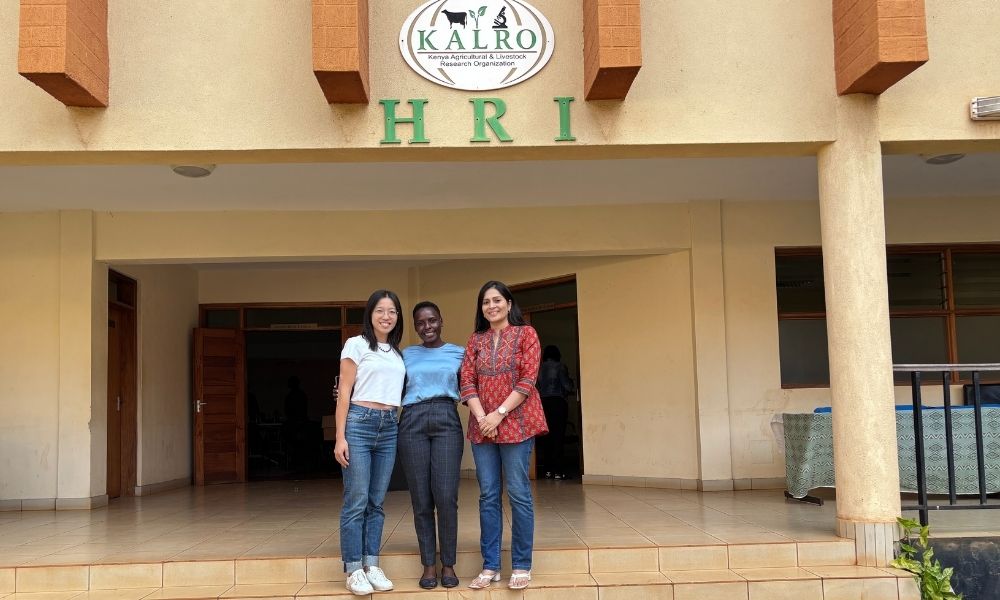
“My supervisor now sends me to the field without hesitation,” she says. “The certificates are in my annual performance report.”
She has also encouraged more than 30 university students to enrol in CABI Academy courses. Through her own experience, she shows them how plant health training connects research to practice.
Mercy is now preparing to pursue a master’s degree in Crop Pathology or Crop Protection. She feels ready, in part because of the applied foundation this training has given her.
“Before CABI Academy, I used to avoid fieldwork because I lacked confidence. Now, I enjoy visiting farmers, diagnosing problems firsthand, and offering timely, science-based advice.”
Find out more
Since Mercy completed her training, the Crop Pest Diagnosis (CPD) and Crop Pest Management (CPM) courses have been replaced with CABI Academy’s new plant health courses Crop Pest Diagnosis Fundamentals and Integrated Pest Management (IPM) Fundamentals.
The Crop Pest Diagnosis Fundamentals course covers the basic knowledge and skills to effectively identify and diagnose common pests.
The Integrated Pest Management (IPM) course provides the basic knowledge and skills needed to effectively manage crop pests and help protect agricultural yields using an integrated pest management (IPM) approach.
PlantwisePlus
PlantwisePlus gratefully acknowledges the financial support of the Directorate-General for International Cooperation, Netherlands (DGIS); European Commission Directorate General for International Partnerships (INTPA); UK International Development from the UK government; and the Swiss Agency for Development and Cooperation (SDC).
Interested in learning more?
PlantwisePlus works with partners including governments, research institutions, local NGOs, and regional plant protection organizations to strengthen plant health systems and improve food security.
>> Discover more about our approach and how you can get involved.
Related News & Blogs
Fall armyworm control starts with farmers, and collective action is key
Fall armyworm is a highly mobile crop pest that moves quickly between maize fields. Since it arrived in Africa, the pest has quickly spread across land managed by millions of smallholder farmers. The speed at which it moves makes its management co…
1 October 2026