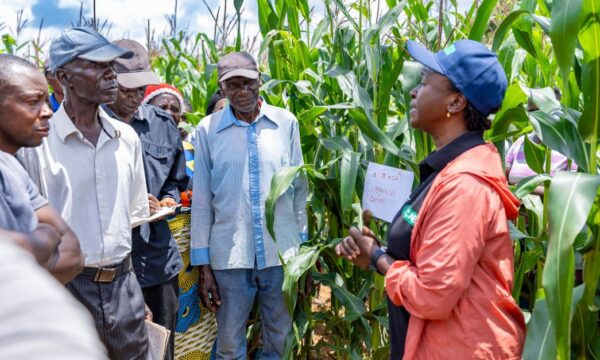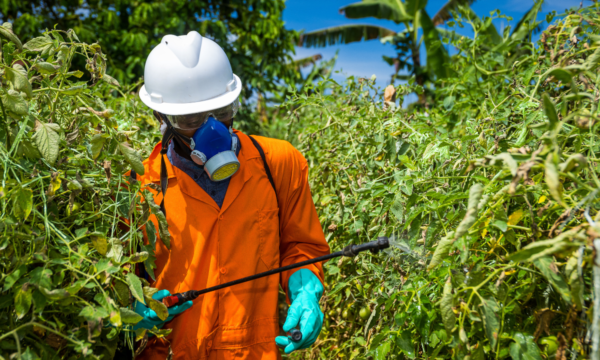
Biosecurity is essential for protecting food security, agricultural trade and rural livelihoods. It involves preventing the introduction and spread of harmful plant pests and diseases, alongside detecting new threats early so countries can respond quickly, in turn, strengthening their plant health systems.
This was a key theme at the 28th Annual Conference of the Plant Protection Society of Ethiopia (PPSE). The event was an opportunity for researchers, policymakers and development partners to discuss how stronger plant protection and phytosanitary systems can support sustainable agriculture, trade and national biosecurity.
In Ethiopia, one important part of that system is already working in farming communities across the country. Through PlantwisePlus, CABI and its national governmental and non-governmental partners support a network of community-based plant clinics. These clinics help farmers manage crop problems while generating valuable plant health data that strengthen national pest surveillance and biosecurity.
Providing farmers with practical plant health services
Plant clinics provide local farming communities with local pest diagnostic support and practical plant health advice. They are staffed by trained agricultural advisors who diagnose crop problems and provide advice based on integrated pest management (IPM). The actionable recommendations help farmers protect their crops and also reduce unnecessary pesticide use.
Over the past 12 years, CABI has worked with Ethiopia’s Ministry of Agriculture and other national partners to strengthen this service. During this time, 240 plant clinics have been established across the country, with 126 currently active, supported by national and regional implementation partners. PlantwisePlus has directly reached around 99,400 farmers in Ethiopia, with hundreds of thousands more reached through complementary approaches.
The Ministry of Agriculture now integrates the plant clinic approach into its regular budget and co-finances activities in Ethiopia. Its continued support for the network reflects growing national ownership and the increasing integration of plant clinics within the country’s agricultural extension system.
Plant clinics: strengthening national biosecurity
The value of plant clinics goes beyond crop pest and disease diagnosis. Consultations generate information on the affected crop, observed symptoms, the diagnosis, and the management advice provided. This information creates a valuable source of surveillance data, helping researchers, extension services and plant protection authorities identify changing pest patterns, detect emerging threats earlier, and respond more effectively.
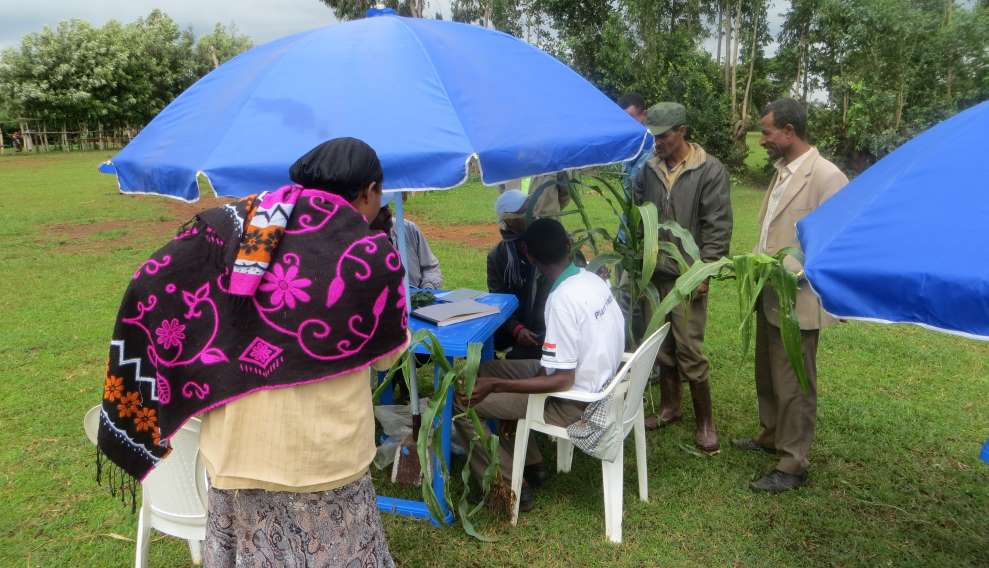
Bringing together plant clinic information from across the country helps build a national picture of emerging threats. This enables surveillance and support to be targeted where they are needed most. This is particularly valuable in Ethiopia, where diverse agroecological zones present different plant health risks. Together with pest risk analysis and other phytosanitary measures, plant clinics contribute to Ethiopia’s wider National Plant Protection Strategy and a more coordinated, evidence-based approach to national biosecurity.
Farm-based surveillance
Ethiopia’s network of plant clinics provides an important foundation for community-based surveillance. By bringing plant health services closer to farming communities, the network creates opportunities for unusual crop problems to be identified and reported through trained agricultural advisors. Experience from elsewhere in the PlantwisePlus programme shows how this connection between farms and national plant health systems can strengthen preparedness for new pest threats.
In Ghana, PlantwisePlus is helping connect national pest preparedness with surveillance at the farm level. Following a horizon scanning exercise, four high-risk pests were prioritized for community-level preparedness: Banana Bunchy Top Virus (BBTV), Citrus Greening Disease (HLB), Cassava Brown Streak Disease (CBSD) and Fusarium Wilt Tropical Race 4 (Foc TR4). More than 1,500 farmers across 28 communities have since been trained to recognize key pest symptoms and report suspected cases to extension officers.
As farmers and farm workers are often among the first to notice unusual symptoms in crops, this community-level awareness provides an additional layer of early warning, complementing formal surveillance and strengthening Ghana’s preparedness for new pest threats.
For Ethiopia, where an established network of plant clinics already connects farming communities with trained agricultural advisors, this experience illustrates how community-level awareness and reporting can complement national surveillance and preparedness.
The wider PlantwisePlus programme has also demonstrated the surveillance potential of plant clinic networks. Plant clinics and their networks have contributed to the detection of new invasive pests, including fall armyworm, showing how local plant health services can contribute to national surveillance and early detection.
Connecting local knowledge with digital tools
These experiences demonstrate the potential value of connecting community-level observations with national plant health systems. In Ethiopia, PlantwisePlus is also supporting this connection through digital tools that operate at different levels of the plant health system.
At the PPSE conference, CABI highlighted how PlantwisePlus tools are helping connect local observations with national plant health and biosecurity systems in Ethiopia.
One example is the PlantwisePlus Factsheets app, which gives plant health professionals offline access to expert-written pest management factsheets covering thousands of crop pests and diseases. The app also allows users to upload photographs to support pest diagnosis, access local weather information, and calculate crop protection product application rates, providing practical support for field-based advisory services.
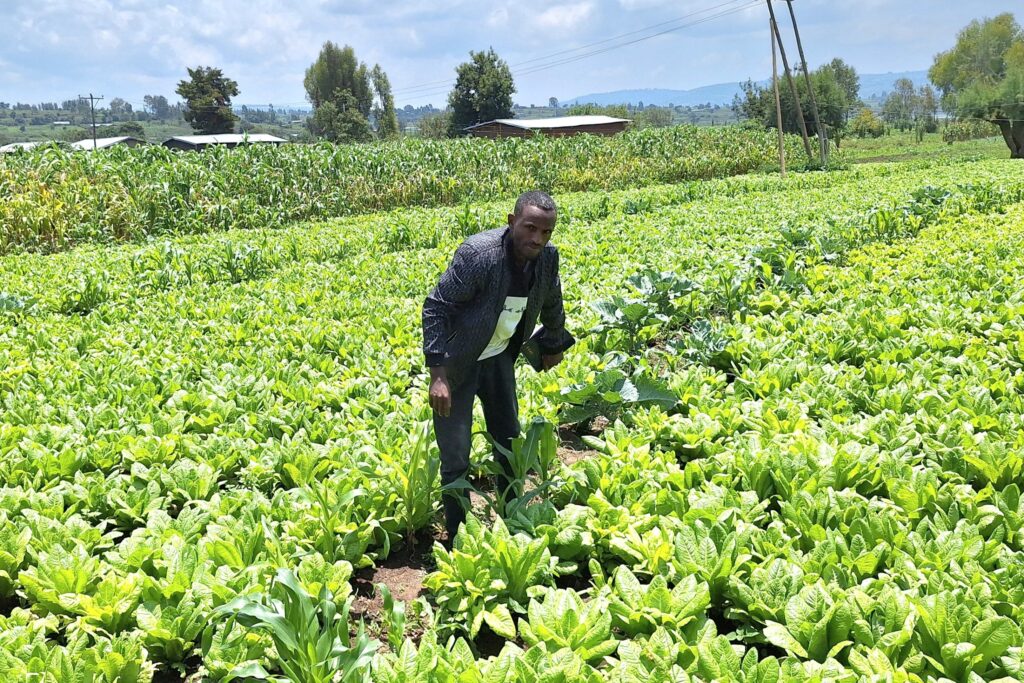
At the national level, PlantwisePlus is supporting the Ethiopian Agricultural Authority (EAA), Ethiopia’s National Plant Protection Organization (NPPO), to identify and prioritize invasive pests that pose a high risk of introduction and strengthen preparedness and response. CABI is also working with the EAA, Ministry of Agriculture and Ethiopian Institute of Agricultural Research (EIAR) to strengthen national pest risk analysis capacity, including training aimed at establishing a multidisciplinary Ethiopian National Pest Risk Analysis team.
Tools such as the Horizon Scanning Tool help identify and prioritize potential pest threats. The Pest Risk Analysis Tool supports more detailed assessments of those risks. Both support this national-level preparedness and decision-making.
Together, these tools help connect local plant health observations with national planning and decision-making. As such, they are supporting a more coordinated approach to surveillance, preparedness, and biosecurity in Ethiopia.
Looking ahead
The most effective biosecurity often goes unnoticed. It depends on farmers recognizing that something unusual is happening in their fields, trusted advisors accurately diagnosing problems, and national systems bringing that information together to guide rapid action.
Plant clinics are helping make this possible by connecting local observations with national action.
As countries face increasing risks from invasive pests and climate change, locally embedded plant health services will become more important. With the support of PlantwisePlus, the Ethiopian Agricultural Authority (EAA), the National Plant Protection Organization (NPPO), will identify and prioritize invasive pests at high risk of introduction to Ethiopia. In addition, they will build capacity to enhance preparedness and response to these pests. Plant clinics, pest risk analysis tools, other digital tools and strong national partnerships are essential for creating a more resilient plant health system that protects farmers and strengthens national biosecurity.
Further reading
PlantwisePlus restarts plant clinics following conflict in Tigray region of Ethiopia
Plant health services in Ethiopia boosted through PlantwisePlus partnership
PlantwisePlus
PlantwisePlus gratefully acknowledges the financial support of the Directorate-General for International Cooperation, Netherlands (DGIS); European Commission Directorate General for International Partnerships (INTPA); UK International Development from the UK government; the Swiss Agency for Development and Cooperation (SDC); and the Australian Centre for International Agricultural Research (ACIAR).
Interested in learning more about PlantwisePlus?
PlantwisePlus works with partners including governments, research institutions, local NGOs, and regional plant protection organizations to strengthen plant health systems and improve food security.
>> Discover more about our approach and how we’re delivering sustainable impact.
Related News & Blogs
How IPM is helping Vietnam’s tomato farmers manage invasive tomato leafminer
Tomato farmers in Lam Dong Province, Vietnam, are gaining practical knowledge on managing the invasive South American tomato leafminer. The pest, Phthorimaea absoluta (formerly Tuta absoluta), can be difficult to control once established. Through integ…
14 October 2026