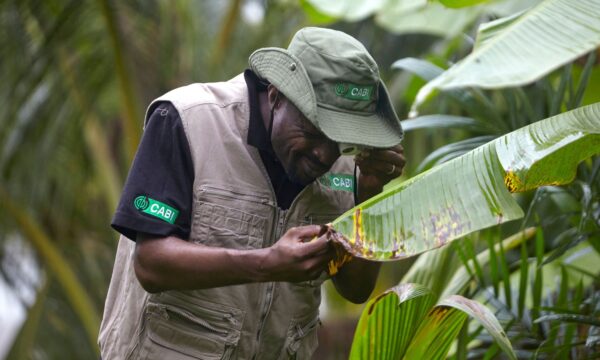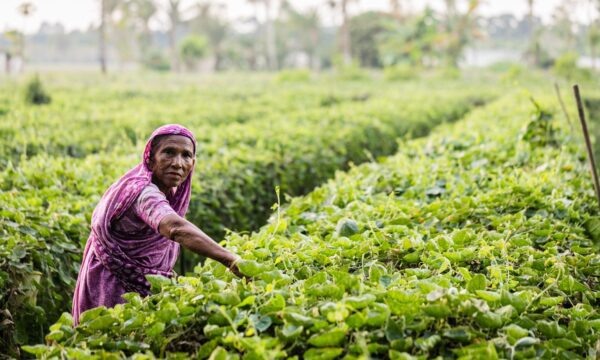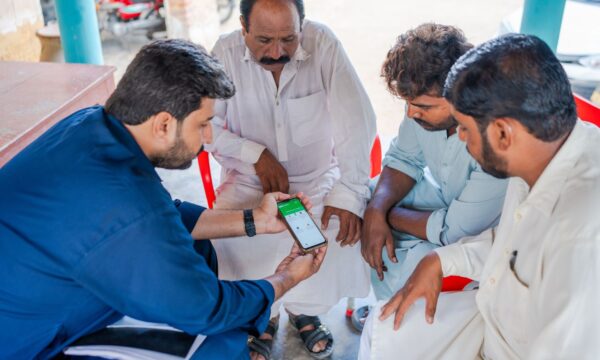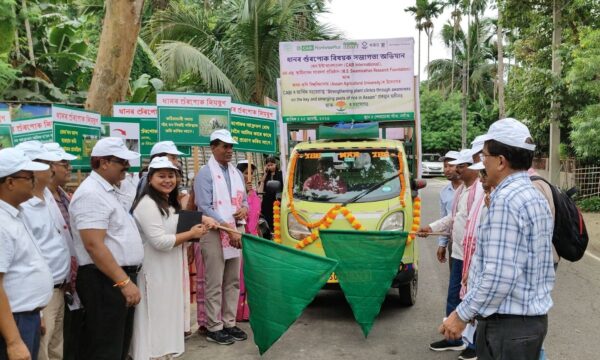
While institutional pest preparedness is essential, farmers are often the first to notice the spread of crop pests. In Ghana, invasive pests continue to make their way across borders through trade, travel, and tourism. Farmers and farm labourers form the frontline of pest discovery. They are among the earliest to identify unusual symptoms in affected crops. Women, who frequently work as farm labourers, are also among the first to detect the arrival of new pests. Once established, the pests are costly and difficult to control, making rapid discovery and preparedness critical.
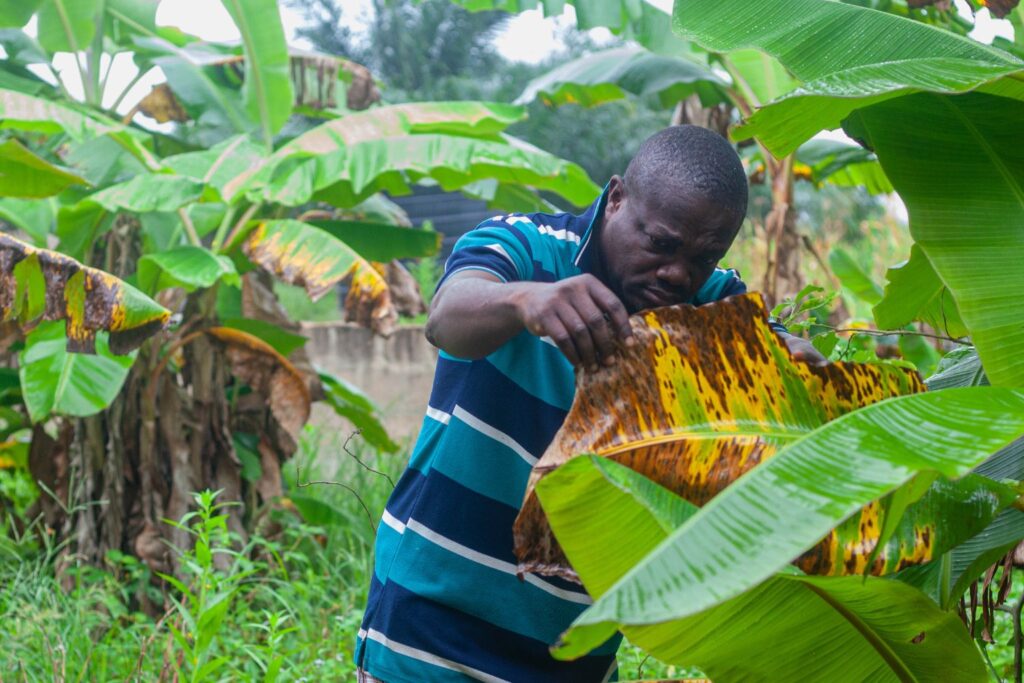
Recognizing this risk, CABI collaborated with the Plant Protection and Regulatory Services Directorate (PPRSD) of Ghana to conduct a horizon scanning exercise in 2020. The work was undertaken through PlantwisePlus. The goal was to strengthen national systems that prevent the introduction and spread of invasive agricultural pests. Training farmers in early pest detection formed an important part of the initiative. Coordinated surveillance training and targeted pest risk communication campaigns were a central part of the initiative. The partnership helped Ghana’s smallholders quickly detect and respond to pests, safeguarding food security, trade, and rural livelihoods.
Identifying pest risks
The initiative identified pests that could pose serious threats to Ghana’s agriculture and biodiversity. Pest risk analyses confirmed seven priority pests of national concern. The initiative selected four for intensified community-level preparedness. They were chosen due to their immediate cross-border risk to key crops – banana, plantain, cassava, and citrus. These are commodities that are central to livelihoods and local markets across the country. The four pests were:
- Banana Bunchy Top Virus (BBTV)
- Citrus Greening Disease (HLB)
- Cassava Brown Streak Disease (CBSD)
- Fusarium Wilt Tropical Race 4 (Foc TR4)
CABI and PPRSD focused on translating this risk intelligence into practical, system-wide action at institutional and community levels. For smallholders, this meant on-the-ground training to help them ensure that pest preparedness starts on the farm.
Empowering farmers as first detectors
In order to empower farmers as first detectors, PlantwisePlus extended pest risk communication campaigns to four high-risk districts along Ghana’s eastern border:
- Ho
- Hohoe
- Afadjato South
- Ketu North
About 1,508 farmers across 28 communities learnt about pest preparedness through farmer engagement forums. Trained advisors and agricultural extension agents (AEAs) in the respective districts facilitated the events. Women accounted for an average of 44% of participants, reflecting an encouraging, though still improvable, level of inclusion in plant health initiatives.
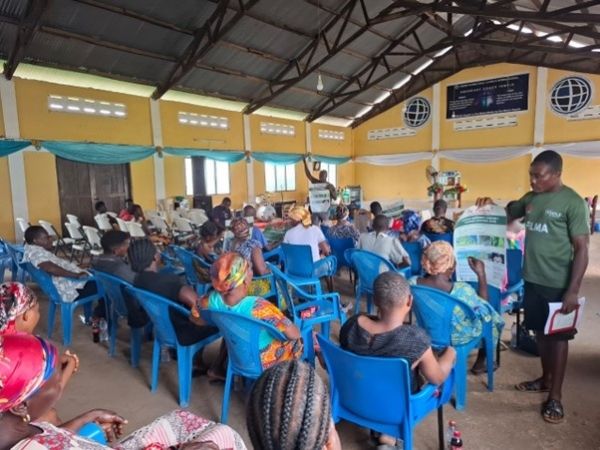
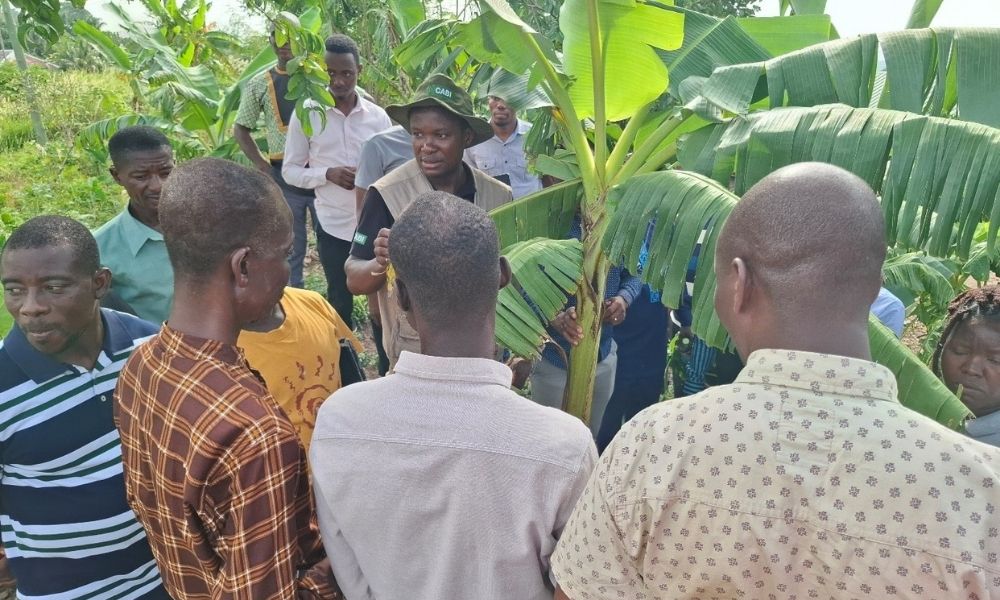
The campaign helped farmers to recognize key pest symptoms. In addition, it helped them to understand how diseases spread through infected planting materials and vectors. The training meant they could promptly report suspected cases to extension officers. The farmers learnt using illustrated posters, local-language explanations, participatory discussions, and practical demonstrations to reinforce new knowledge. In some districts, farmers compared healthy and symptomatic plants. This strengthened their ability to detect early warning signs in their own fields.
Increasing risk awareness
In Ho Municipality, training placed the emphasis on using clean planting materials and avoiding unverified cuttings. These are simple yet powerful actions that reduce the risk of introducing and spreading disease.
Victus S.K. Buoh is the Municipal Agricultural Officer (Extension) in Ho Municipality. He described the transformation in awareness among farmers:
“Many of our farmers were previously unfamiliar with the diseases discussed, but the sensitization programme has become an eye-opener. Farmers are now better able to recognize signs of infection and are more likely to alert agricultural officers quickly when they observe unusual symptoms. This is indeed a crucial step in making sure that we are not taken unawares by another destructive pest as we were with fall armyworm.”
The farmers themselves expressed appreciation for the timely training. Benjamin Danyo is a farmer from Sokode Ando. He explained that the extension officers clearly described signs and symptoms affecting crops. He emphasized the significant damage that pests can inflict on crops and livelihoods. In addition, he stressed the importance of expanding awareness-raising efforts to reach more communities to detect and contain outbreaks before they spread.
Building institutional readiness
In April 2025, 22 phytosanitary inspectors and AEAs assembled in Ho for specialized training. They came from selected high-risk districts and entry points. CABI and PPRSD experts delivered the training events. The workshops enhanced their ability to perform risk-based inspections and identify pest symptoms and vectors in the field. In addition, it helped them to apply standardized inspection guides developed for the priority pests.
Instead of relying solely on routine checks, the inspectors learnt about risk-targeted surveillance approaches. These methods allow them to prioritise high-risk pathways and locations. Field demonstrations focused on recognizing pest vectors such as the Asian citrus psyllid and the banana aphid. Moreover, practical diagnostic guidance improved confidence in identifying early signs of infection.
Equipping inspectors with appropriate tools and strengthening communication channels has reaped rewards. Specifically, it has improved the flow of information between field officers and regulatory authorities. This institutional reinforcement is a critical step in the PlantwisePlus Pest Preparedness Impact Pathway. It ensures that advisors can quickly escalate and address early warnings. It also helps farmers receive this information as early detectors of crop pests in the field.
As George Elikem Agbagba, PPRSD Officer and training facilitator in Ho Municipality, reflected:
“The initiative was both timely and necessary. We deliberately prioritized border communities given the high potential of incidence. After learning about disease spread, symptoms and economic risks, there is a renewed commitment to vigilance among inspectors and advisors”.
However, he underscored the need for continued vigilance, particularly given that some pest vectors are already present in the region.
Strengthening systems through communication
The campaign demonstrates that effective pest preparedness depends not only on technical capacity but also on communication and trust and must include farmers. AEA community mobilization is essential for securing strong participation and maintaining farmer confidence. Smallholders in rural settings find visual tools and locally adapted messaging particularly effective, translating complex plant health information into practical knowledge. However, several operational challenges emerged during the campaign, which the initiative will need to address to strengthen future activities. In some locations, weather disrupted meeting schedules and participation. Moreover, the timing and locations of some sessions were not always fully convenient for farmers, potentially limiting attendance. Women’s participation was encouraging. However, further efforts will be needed to address scheduling and outreach barriers that may limit their involvement.
In some districts, delivery of visual learning materials was delayed. The resources are critical for effective farmer engagement. In most of the campaign locations, farmers drew attention to the lack of available take-home materials to continue learning and reference after the sessions. Addressing these issues will help to improve the reach, effectiveness, and sustainability of future pest preparedness and communication campaigns.
The experience from this campaign also highlighted the need for continuous reinforcement and monitoring of detection and reporting mechanisms. Vigilance can decline over time if risks are not regularly communicated.
A more resilient plant health network
The initiative has strengthened Ghana’s plant health system at multiple levels by linking risk analysis, inspector training, and farmer awareness. Specifically, inspectors are now better equipped to conduct risk-based surveillance at entry points and within production zones. Moreover, farmers are more aware of invasive threats and know when to report suspected cases. In addition, communication channels between communities and regulatory authorities have become more responsive and integrated.
Importantly, farmers are no longer viewed solely as beneficiaries of plant health services; they are active participants in national surveillance efforts. As early-warning actors, farmers form a vital layer of defence against the introduction of invasive pests.
The collaboration between CABI and PPRSD provides a model for integrated pest preparedness in Ghana and West Africa, demonstrating how science-based risk assessment, institutional strengthening, and community engagement can work together to protect agriculture. As pest threats continue to evolve across borders, proactive preparedness remains essential.
Sustaining and expanding pest preparedness
Building on this progress, CABI and PPRSD are committed to sustaining and expanding these efforts in 2026 and beyond. Continued field surveillance activities will focus on collecting and analysing additional plant samples from high-risk locations to support early detection and monitoring of the priority pests. Furthermore, the partners plan to monitor how effectively farmers in the campaign districts apply the knowledge gained through the sensitization activities. By working with agricultural extension agents, CABI and the PPRSD field team will assess how well farmers recognize pest symptoms, adopt preventive practices, and report suspected cases. This feedback will help to strengthen future communication approaches and reinforce farmer vigilance.
In addition, community-level sensitization will be extended to new high-risk districts, ensuring that more farming communities are equipped with the knowledge needed to identify and report invasive pests. Expanding awareness will further strengthen Ghana’s frontline defence by increasing the number of informed farmers who can act as early-warning sentinels.
With support from the CABI PlantwisePlus programme, Ghana is building a more resilient, knowledge-driven plant health system that connects policy to practice and ensures that vigilance begins at the farm gate.
Further reading
Banana bunchy top disease: PlantwisePlus helps to safeguard Ghana’s banana production
How do pest risk registers address the spread of plant pests in Africa?
PlantwisePlus gratefully acknowledges the financial support of the Directorate-General for International Cooperation, Netherlands (DGIS); European Commission Directorate General for International Partnerships (INTPA); UK International Development from the UK government; and the Swiss Agency for Development and Cooperation (SDC).
Related News & Blogs
Reducing pesticide risks through public–private collaboration and long-term capacity building
Across Latin America, misuse and overuse of pesticides continue to pose risks to human health, the environment, and farm productivity. Addressing the improper use of pesticides requires not only technical knowledge but also strong partnerships. Public-…
12 March 2026