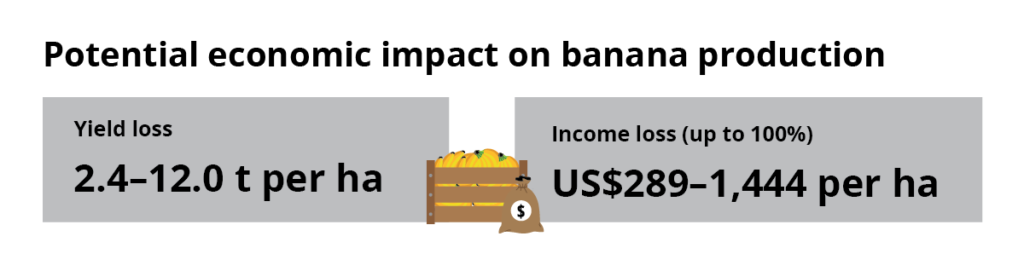
Banana bunchy top disease is one of the most destructive banana and plantain diseases worldwide. Caused by a virus, it poses a considerable risk to commercial and smallholder farmers alike, causing yield losses of 2 to 12 tonnes per hectare and income losses of up to 100%. A recent CABI study estimated that farmer income losses range from US$289 to a substantial US$1,444 per hectare.
In 2020, Ghana became concerned about the possible spread of banana bunchy top disease into the country. It had been reported in 19 African countries, including nearby Benin and Nigeria. Working with the government, CABI conducted pest horizon scanning activities to identify and prioritize invasive species that might threaten Ghana’s agriculture and environment. The results ranked banana bunchy top virus as a high-priority invasive pest for the country. Therefore, the PlantwisePlus programme supported the government to create a plan to prevent, prepare for and respond to the disease. Banana and plantain are important commercial crops in Ghana, and this focus reflects their significant contribution to the economy and food security.
From 2021, the programme began working with local authorities to prevent and prepare for the disease’s spread. It worked with the Plant Protection and Regulatory Services Directorate (PPRSD) and subject matter experts from national universities and research institutes to investigate the situation. Alongside this, PlantwisePlus also researched the disease’s socio-economic impacts and highlighted the risk it brought to the country’s banana and plantain producers. This revealed that farmers were largely unaware not only of the disease, but also of the aphid that spreads it. Farmers were unsure of the potential for severe yield and income losses should the disease become established. Subsequently, PPRSD prioritized immediate action.
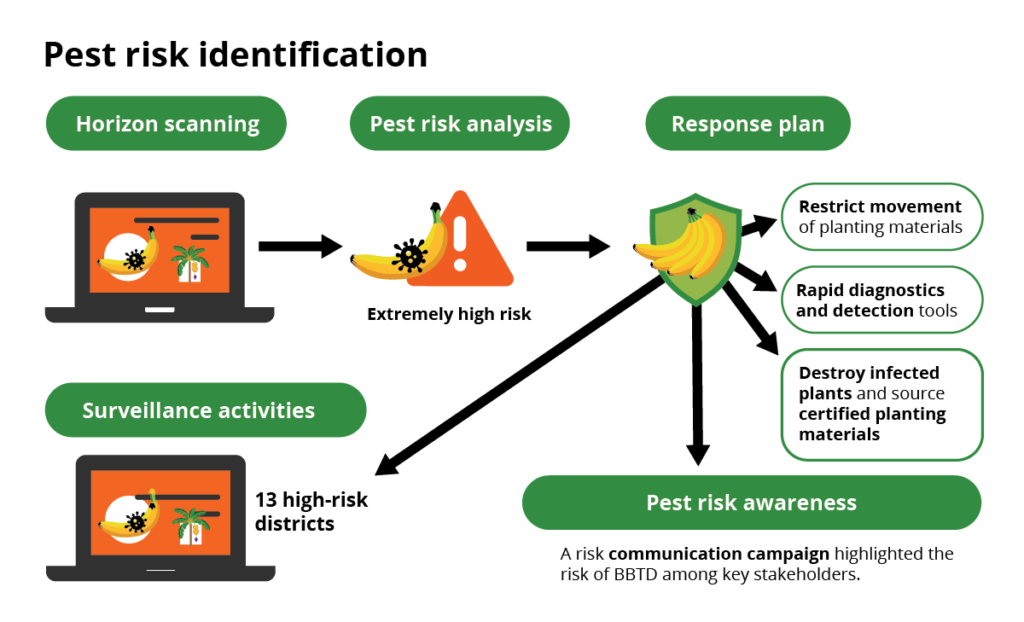
Taking action: Pest risk identification and preparedness
In 2025, PlantwisePlus supported surveillance activities for banana bunchy top disease in Ghana. A team of scientists collected samples from 13 districts across the Eastern, Greater Accra, Oti, and Volta regions. Ghana’s Biotechnology and Nuclear Agriculture Research Institute (BNARI) played a key role in the analysis process. Scientists at the Ghanaian Plant Disease Research Centre, based at BNARI, used molecular technologies to analyse the samples.
The findings were negative for the banana virus, indicating that banana bunchy top disease was not yet present in the surveyed districts and communities. Nevertheless, the Ghanaian government continued its surveillance activities to guard against a future invasion. The worsening spread of the disease in a nearby country such as Benin also made updating the response plan imperative. The partnership with key stakeholders in Ghana continued to address evolving risks, while recent research revealed further details about the potential economic losses caused by the disease.
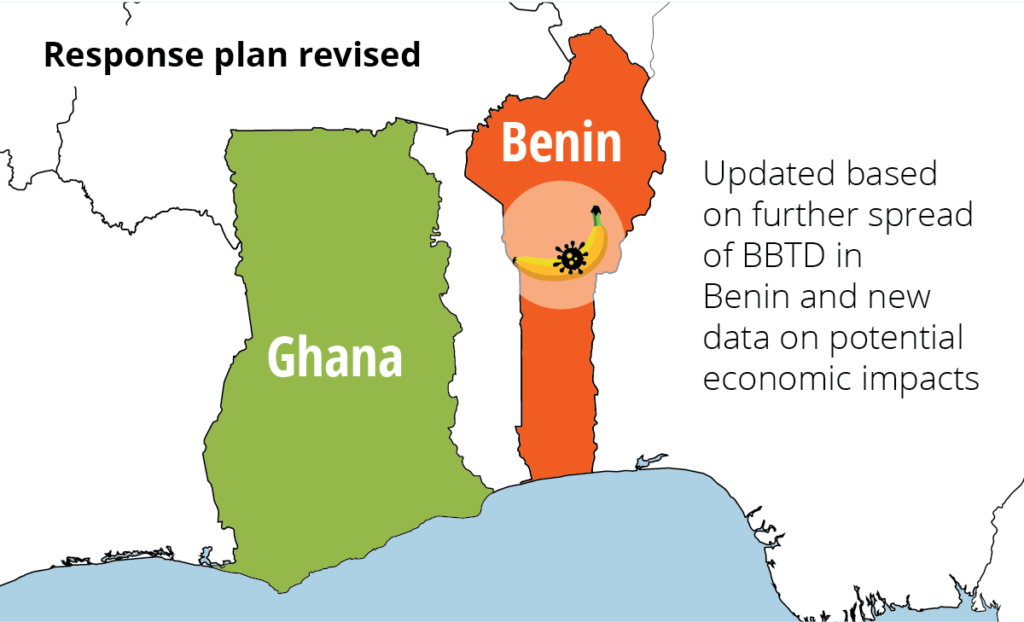
The updated prevention and preparedness plan included more stringent guidelines for importing banana planting materials into Ghana. It also proposed improved inspection protocols to protect banana and plantain production and markets.
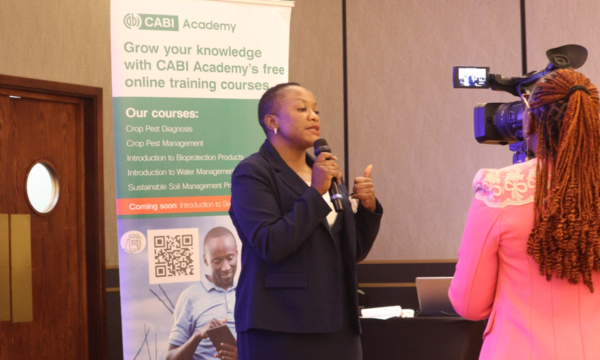
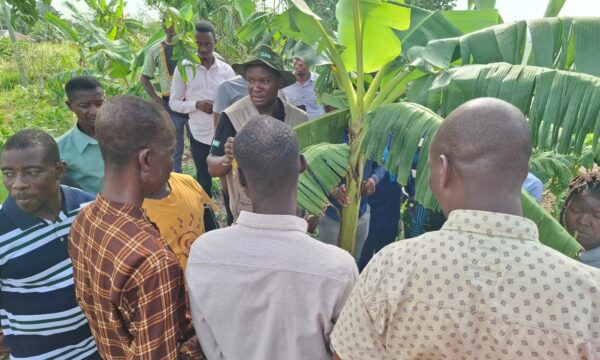
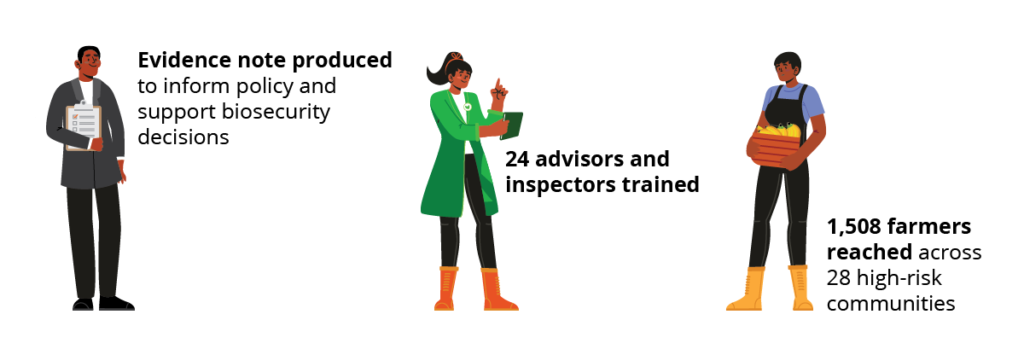
As part of the prevention and preparedness plan, PlantwisePlus implemented pest risk communication activities in partnership with PPRSD. A communication campaign among key stakeholders highlighted the risks posed by the disease and the role they could play in passive surveillance. The team produced an evidence note to inform policy and support biosecurity decisions. In addition, they distributed inspection guidelines for banana bunchy top disease to advisors. They also trained 24 phytosanitary advisors and inspectors to identify the disease. Building on this training, they conducted disease awareness campaigns in four districts of the Volta Region to improve detection and reporting.
Impacting livelihoods; safeguarding economies and food security
The campaigns reached over 1,500 farmers in 28 high-risk local communities. By raising awareness of banana bunchy top disease, farmers felt empowered as first-line surveillance agents. They can now recognize suspected cases of the disease and have a mechanism for reporting them to extension agents for follow-up.
“The initiative was both timely and necessary. We deliberately prioritized border communities given the high potential of incidence. After learning about disease spread, symptoms and economic risks, there is a renewed commitment to vigilance among inspectors and advisors.” – George Elikem Agbagba, PPRSD Officer and training facilitator in Ho Municipality, Ghana
These concerted efforts not only help to protect livelihoods but also safeguard food production. Ghana consumes an estimated 86% to 91% of all plantain grown domestically, making protection of this crop vital. The country’s response to banana bunchy top disease demonstrates the value of taking proactive action against an emerging threat. Early detection, strong biosecurity measures, and raising farmers’ awareness of the disease have, until now, averted the pest’s introduction. Through collaboration, surveillance, and targeted training, PlantwisePlus and its partners have strengthened Ghana’s pest preparedness as well as food security.
Partners included:
- Biotechnology and Nuclear Agriculture Research Institute
- Conservation Alliance
- Council for Scientific and Industrial Research
- CropLife Ghana
- CSIR – Oil Palm Research Institute
- Directorate of Agricultural Extension Services
- District Food and Agriculture
- Environmental Protection Authority
- International Institute of Tropical Agriculture
- Plant Protection and Regulatory Services Directorate
- University of Cape Coast
- University of Ghana
Further reading
Pest preparedness starts on the farm: Discover how Ghana’s farmers are helping protect crops
Banana bunchy top disease: PlantwisePlus helps to safeguard Ghana’s banana production
PlantwisePlus
PlantwisePlus gratefully acknowledges the financial support of the Directorate-General for International Cooperation, Netherlands (DGIS); European Commission Directorate General for International Partnerships (INTPA); UK International Development from the UK government; the Swiss Agency for Development and Cooperation (SDC); and the Australian Centre for International Agricultural Research (ACIAR).
Interested in learning more about PlantwisePlus?
PlantwisePlus works with partners including governments, research institutions, local NGOs, and regional plant protection organizations to strengthen plant health systems and improve food security.
>> Discover more about our approach and how we’re delivering sustainable impact.
Related News & Blogs
Seeing the risk and speaking up: improving pesticide safety in Ghana
In Ahafo Ano North, Ghana, video-assisted community dialogues are moving pesticide education beyond one-way messaging. These videos are helping farmers, agro-input dealers, traders, and community leaders confront the pressures driving pesticide misuse.…
8 October 2026