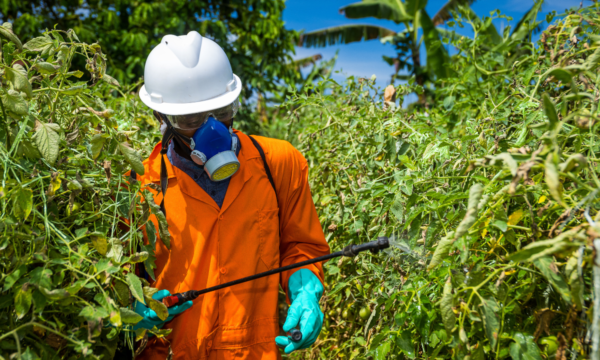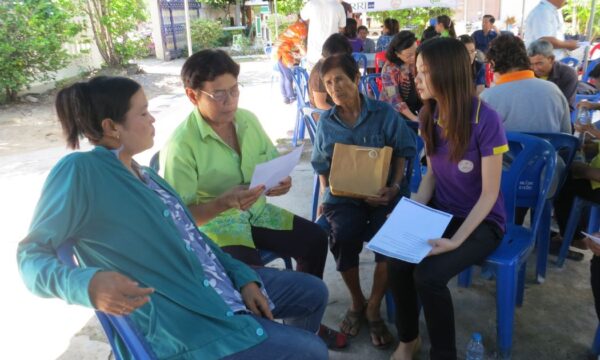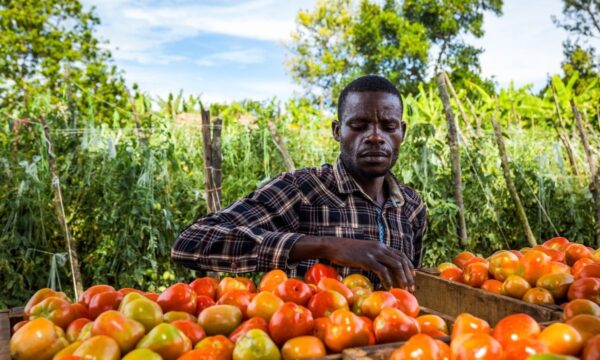
Pesticide risk reduction needs action at many levels, from stronger policies to improved farming practices. PlantwisePlus has supported measures to reduce pesticide risks throughout the food production chain. In this blog, we look at some of those measures and the positive outcomes they have achieved.
Developing pesticide risk reduction policies
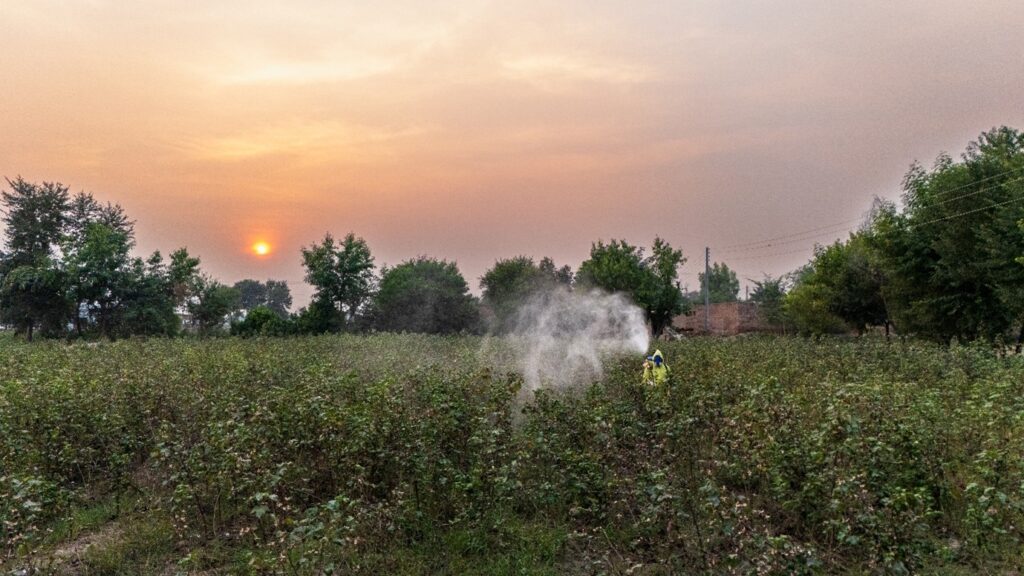
Regulation is one of the most effective ways of minimizing pesticide risks. PlantwisePlus works with regulators globally, helping them put in place more effective ways of registering synthetic pesticides. While reforms take time to implement, they can lead to many benefits, making the process of buying and using pesticides much safer.
Synthetic pesticides often remain registered even when new information or research about their active ingredients reveals a health risk. Ad hoc reviews are useful but can be met with resistance from the agrochemical industry. Farmers are often fearful of reviews in case they disrupt production and trade. However, regular evidence-based re-assessment of the active ingredients can help to reduce risks.
Since 2023, PlantwisePlus has worked alongside national and regional partners to develop policies that reduce pesticide risks. It has also promoted the implementation of these policies, helping governments to deliver farm-level impact. Since 2024, the programme has helped to deliver 16 policy-level strategies. In 2025 alone, 11 policies were created: eight in Kenya, one in Pakistan, and two in Uganda. Each has brought about practical benefits.
Examples of policy in action
In Kenya and Uganda, PlantwisePlus worked with local partners to exchange insights into pesticide risk reduction. Stakeholders identified practical ways to strengthen review systems. Experts, including those from the EU and FAO, joined these exchange meetings to share best practices and strategies for improving regulatory frameworks. Senior decision makers in Kenya and Uganda reviewed and endorsed new draft guidelines and will pilot them in 2026, putting in place regular pesticide reviews.
The work is built on previous successes. For example, in 2024, PlantwisePlus provided technical support to regulators in Kenya. By 2025, Kenyan authorities had decided to revoke all registrations of active ingredients of concern by December 2026, based on the review findings. These included acrinathrin, hexaconazole, and profenofos. These ingredients are all considered toxic and harmful to human, animal , and environmental health. This outcome underscores how structured, robust review systems can lead to decisive, evidence-based regulatory action.
In Kenya in 2024, PlantwisePlus played a key role in supporting the creation of a national pesticide residue framework. The programme coordinated collaboration among stakeholders and, in 2025, piloted a draft framework across various counties in Kenya. The pilot covered domestic and export crops such as French beans, kale, and tomatoes. It highlighted the critical role that local counties play in gathering data, offering guidance to farmers, and promoting food safety practices. The framework will be rolled out further into more counties in future.
In Pakistan, PlantwisePlus supported national authorities with the launch of standardized biopesticide registration. This helped to increase regulatory consistency and reduce the burden of administration for bioproduct innovators. The work will encourage the use of safer, more environmentally friendly biopesticides to improve food quality. In addition, it will help Pakistan achieve international trade standards. This includes reducing issues with maximum residue limits (MRLs) on produce.
Training the people who manage pesticide risks
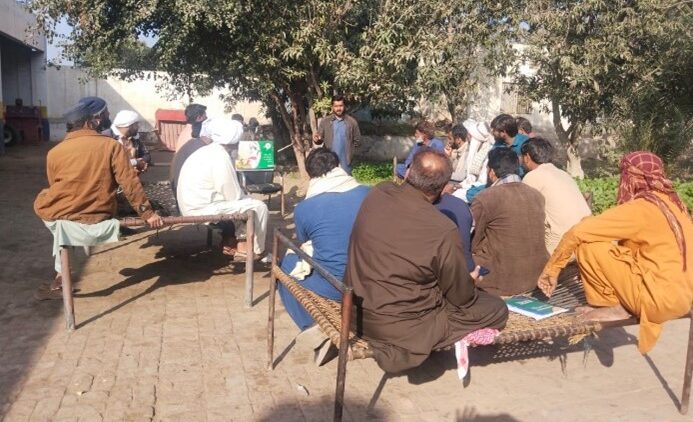
Alongside the policy level, a key objective for PlantwisePlus is to bring about practical changes on the farm. The programme supports pesticide risk reduction practices and the use of lower-risk products in the field. In 2025, over 26,500 stakeholders in Bangladesh, Ghana, Kenya, Pakistan, Sri Lanka, and Uganda were trained on pesticide risk reduction. The training covered the full lifecycle of pesticide use, from the appropriate use of synthetic products to understanding and managing residue risks and alternative pest management approaches.
Trainees came from a wide range of professions, reflecting the programme’s whole-of-system approach to knowledge sharing. They included:
- Farmers
- Aggregators
- Agro-input dealers
- Crop protection industry staff
- Extension officers
- Journalists
- Laboratory personnel
- Regulators
- Spray service providers
- Traders
Mass extension and social and behaviour change (SBC) campaigns complemented this on-the-job training. So far, the campaigns have reached well over three million farmers in PlantwisePlus countries. Together with partners, the programme has delivered localized messaging in various formats, including:
- Community forums
- Expositions
- Field days
- Radio broadcasts
- Voice messages
Guiding farmers towards safer, more sustainable practices
In Ghana, Pakistan, and Kenya, these trainings and other SBC actions are guiding farmers through a step-by-step journey towards safer, more sustainable farming practices.
Since 2024, PlantwisePlus has helped to increase the understanding of pesticide risks and pesticide alternatives among 2.8 million farmers. On average, they have adopted 17 integrated pest management (IPM) practices, such as crop rotation and mulching. In addition, they are making the shift towards lower-risk products, such as natural biocontrol agents and other management techniques, including traps. When using chemical pesticides, the farmers now make more use of protective equipment such as face masks. They also apply pesticides more specifically, reducing spray drift.
In 2025, PlantwisePlus completed SBC campaigns in Kenya and Pakistan. Participants spoke positively about the information they received in Pakistan and the innovative ways in which it was delivered. In their feedback, farmers reported improved awareness of pesticide risks, IPM measures, and safer pesticide disposal. The Ukulima True project in Kenya showed clear links between SBC campaigns and improved pesticide practices, increased uptake of IPM, and greater willingness to pay for biopesticides.
This demonstrates that well-designed two-way communication and engagement can boost knowledge and change behaviour. The campaigns in Pakistan and Kenya have provided valuable lessons learned so that the approaches can be replicated in Bangladesh, Ghana, Sri Lanka and Uganda.

Moving towards a safer future
By connecting policy reform with on-the-ground action, PlantwisePlus is helping to reduce pesticide risks to human, animal, and environmental health. Knowledge sharing and training are critical tools for bringing about lasting and sustainable change. As these approaches are replicated and scaled, they offer concrete solutions to the challenges that pesticides can pose. The changes are bringing benefits to food systems in countries globally.
Further reading
Pesticide dossier evaluation: Global lessons for stronger and safer regulation
In their own words: Uganda’s agro-input dealers on the impact of pesticide safety training
PlantwisePlus
PlantwisePlus gratefully acknowledges the financial support of the Directorate-General for International Cooperation, Netherlands (DGIS); European Commission Directorate General for International Partnerships (INTPA); UK International Development from the UK government; the Swiss Agency for Development and Cooperation (SDC); and the Australian Centre for International Agricultural Research (ACIAR).
Interested in learning more about PlantwisePlus?
PlantwisePlus works with partners including governments, research institutions, local NGOs, and regional plant protection organizations to strengthen plant health systems and improve food security.
>> Discover more about our approach and how we’re delivering sustainable impact.
Related News & Blogs
Seeing the risk and speaking up: improving pesticide safety in Ghana
In Ahafo Ano North, Ghana, video-assisted community dialogues are moving pesticide education beyond one-way messaging. These videos are helping farmers, agro-input dealers, traders, and community leaders confront the pressures driving pesticide misuse.…
8 October 2026