Digital tools can help smallholder farmers access relevant, timely information about sustainable pest management, improving crop production and livelihoods. These are the findings of a study published in the journal Agricultural Systems.
The paper focuses on farming in India. It evaluates the effectiveness of three free-to-access plant health digital tools:
Together, these decision support tools promote sustainable alternatives to synthetic pesticides and help smallholder farmers improve farm performance. We take a look at the management of chilli black thrips (Thrips parvispinus) in southern India to see how the tools can help.
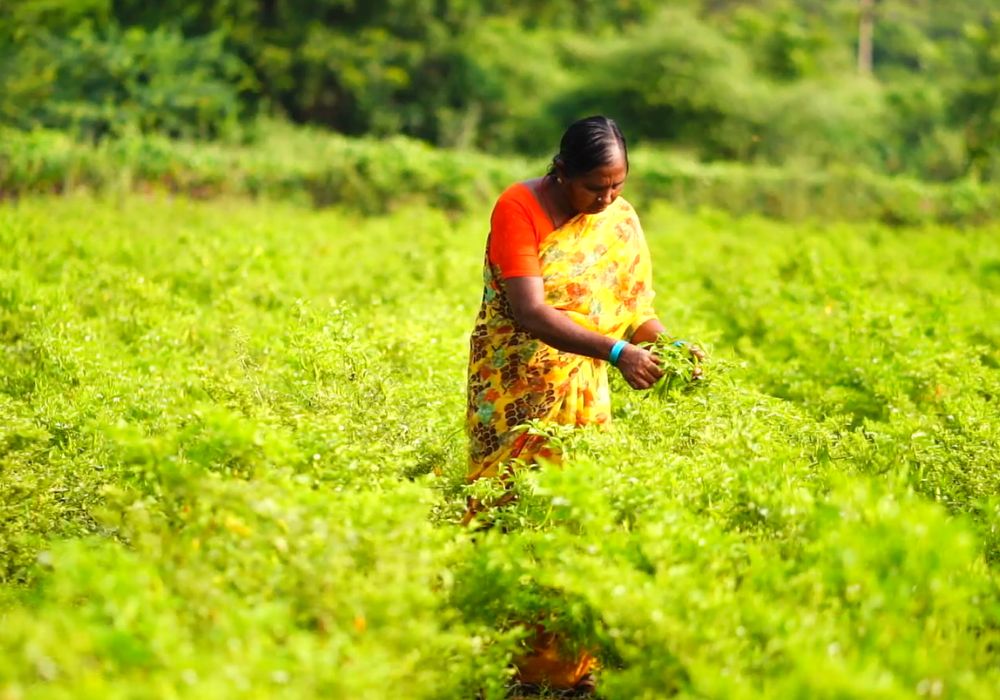
Smallholder farmers face growing pest challenges
Smallholder farmers play a critical role in global food and nutrition security. However, they face growing challenges, not least due to climate change. The problems include, for example, climate-induced crop pest outbreaks and the spread of invasive species. They both pose a major threat to agricultural productivity worldwide, particularly in smallholder farming systems.
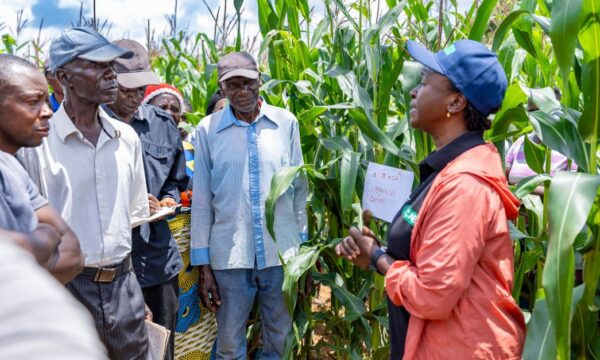
Traditionally, farmers have relied on public extension services for pest management advice. Agricultural advisors travel to rural locations to share farming knowledge and support. However, these services often have limited capacity and geographic reach. This leaves many smallholders without timely access to information, particularly those in remote areas.
Digital tools can help to bridge this gap by delivering practical information directly to users. Rapid advances in digital technology are gradually making it easier for farmers to access evidence-based agricultural advice and information. Indeed, in 2023, an estimated one billion people worldwide used mobile devices to access agricultural services. Many were living in low- and middle-income countries.
As chemical pesticides become increasingly regulated, farmers need greater access to sustainable pest management solutions. In particular, digital tools can be helpful for sharing evidence-based knowledge about more environmentally friendly products. These include biopesticides and nature-based integrated pest management (IPM).
Previous studies have explored the potential of digital agriculture. However, this recent study examined how plant health digital tools influence farmer outcomes. More specifically, it investigated whether the tools improved knowledge of biopesticides and IPM. In addition, it considered whether their use was associated with improved profitability.
Tackling chilli black thrips in India
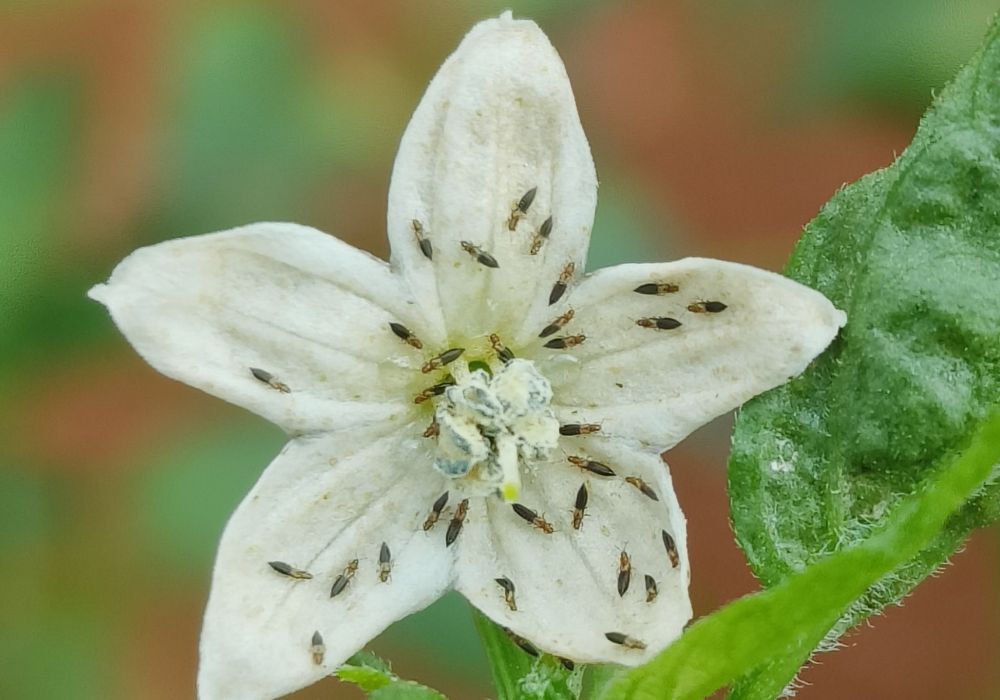
The study focused on the use of three CABI digital tools by agricultural advisors and chilli farmers responding to outbreaks of chilli black thrips in southern India. Chilli black thrips are a highly destructive invasive crop pest. They have caused significant damage to chilli production in India since 2021. Consequently, yield losses can reach up to 100%, posing a serious threat to farmer incomes. The crop provides an important source of income for millions of smallholder farmers. Furthermore, yield losses impact India’s valuable export markets. The country is the world’s largest exporter of chilli.
The three tools evaluated were:
- The CABI BioProtection Portal: provides information on locally available bioprotection products for managing crop pests.
- The Crop Sprayer app: helps farmers accurately calibrate sprayers and optimise pesticide application.
- The PlantwisePlus Factsheets app: provides access to practical pest management information. This includes information and AI tools to support pest identification.
Through PlantwisePlus, CABI worked with local partners in Southern India. The team collected survey data from nearly 1,000 smallholder chilli farmers. In certain areas, infestations of chilli black thrips have led to severe economic losses and increased use of synthetic pesticides.
Digital tools help to increase farmer incomes
The study concludes that plant health digital tools can play a central role in boosting farmers’ adoption of sustainable pest management. They also support input cost savings and increased farm profitability.
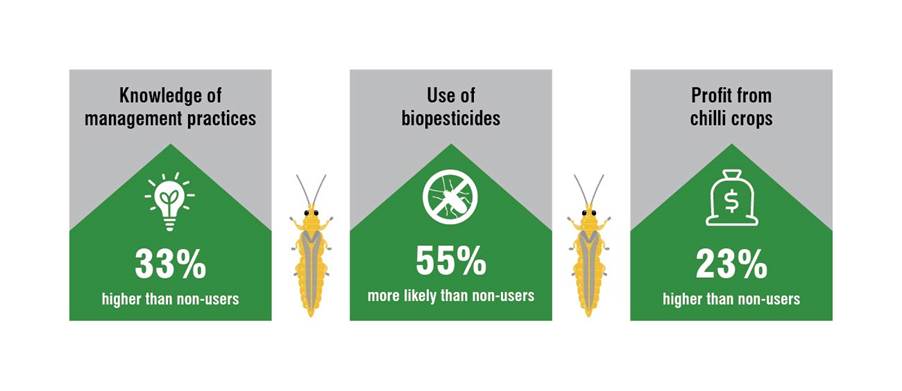
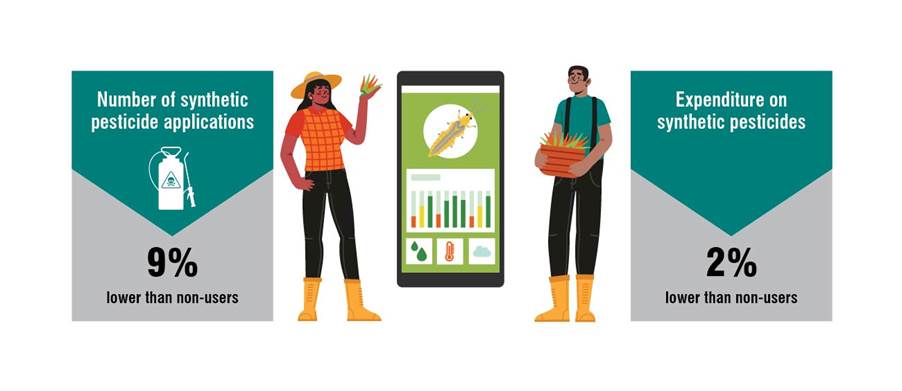
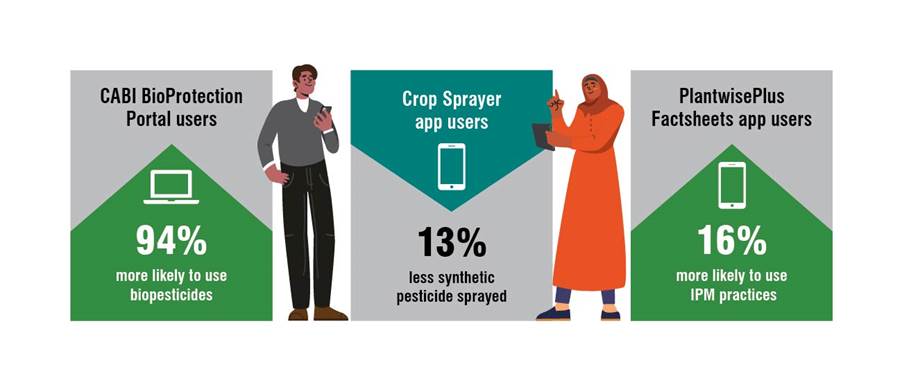
The results indicated a link between the use of digital tools and significant increases in farmers’ knowledge. They showed a connection with the adoption of environmentally friendly pest control strategies. For example, farmers using digital tools adopted 11% more IPM practices and were 55% more likely to use biopesticide products against chilli black thrips than farmers who did not. In addition, the findings showed that digital tools were associated with reduced reliance on synthetic pesticides. This included reduced usage of pesticides, which equated to less spending on them, too. At the same time, users increased their chilli profits by an average of 23%.
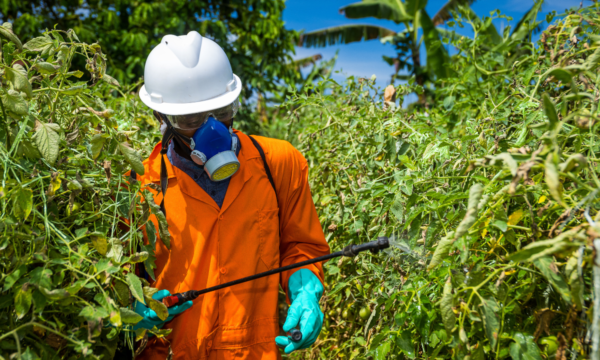
The study suggests that all three digital tools contributed to enhancing farmers’ pest knowledge. Moreover, they encouraged the adoption of sustainable plant health practices. Researchers noted some differences. For example, the BioProtection Portal appears to have contributed more to biopesticide adoption. However, the Crop Sprayer app contributed more to reducing chemical pesticide usage. Notably, results showed better results among farmers who used the tools with support from agricultural advisors. The pesticide reductions are particularly important since global trends in pesticide use are upward. Moreover, governments are increasing regulations to reduce the use of highly hazardous pesticides.
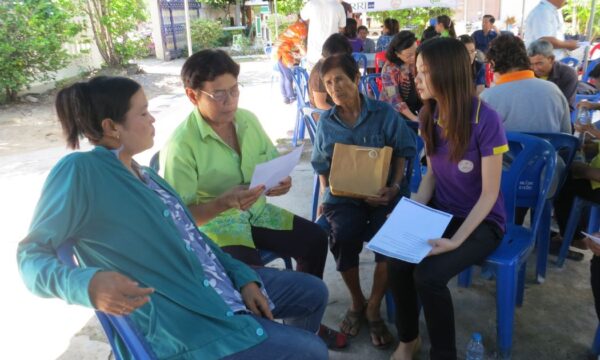
Digital tools bring benefits to farmers. The challenge now is encouraging more farmers and advisors to use them to achieve these benefits. Improving rural digital infrastructure, including internet connection and smartphone access, is essential. Enhancing farmers’ digital skills is also critical. Furthermore, the study’s findings highlight the potentially important role of agro-dealers. These input specialists have become a key source of plant health advice for many smallholder farmers in India and beyond. The creation and use of digital tools is a strong first step to improving farmer yields and incomes. Ultimately, the next step is to broaden their usage and reach more farmers with digital pest management knowledge.
Read the full research article: Promoting sustainable pest management through digital decision support tools: Insights from India
Interested in learning more?
PlantwisePlus works with partners including governments, research institutions, local NGOs, and regional plant protection organizations to strengthen plant health systems and improve food security.
>> Discover more about our approach and how we’re delivering sustainable impact.
PlantwisePlus
PlantwisePlus gratefully acknowledges the financial support of the Directorate-General for International Cooperation, Netherlands (DGIS); European Commission Directorate General for International Partnerships (INTPA); UK International Development from the UK government; and the Swiss Agency for Development and Cooperation (SDC).
Related News & Blogs
How IPM is helping Vietnam’s tomato farmers manage invasive tomato leafminer
Tomato farmers in Lam Dong Province, Vietnam, are gaining practical knowledge on managing the invasive South American tomato leafminer. The pest, Phthorimaea absoluta (formerly Tuta absoluta), can be difficult to control once established. Through integ…
14 October 2026