
A partnership between CABI and NIPHM has strengthened plant health capacity building by embedding CABI Academy’s digital learning courses into India’s postgraduate curriculum. It provides a model that agricultural colleges across India and beyond can follow.
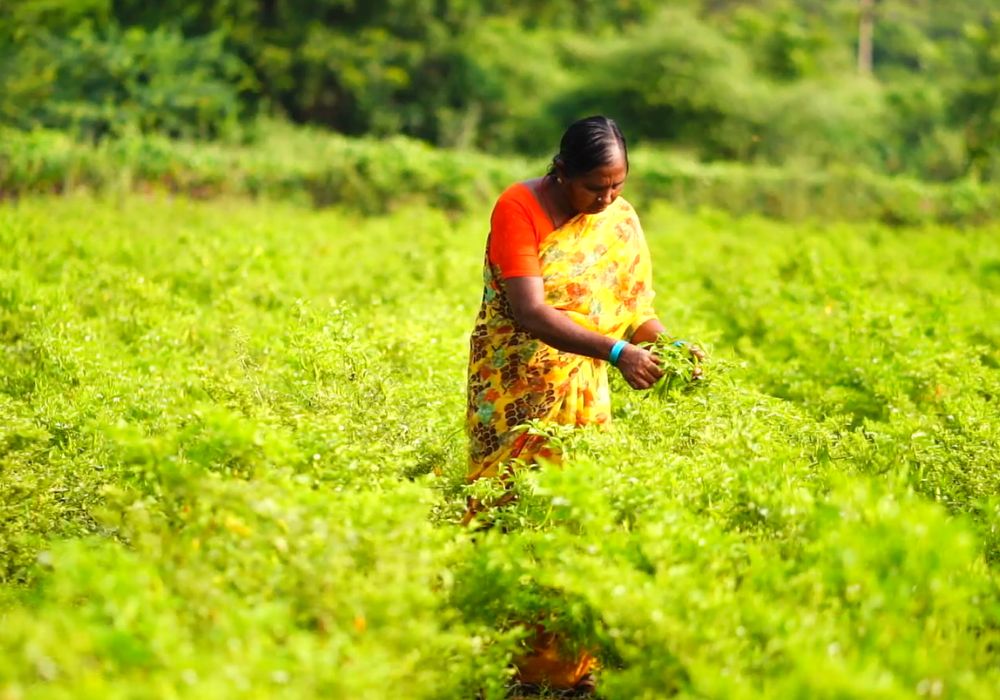
Agriculture employs nearly 44% of India’s workforce, yet pests and diseases destroy up to 40% of the country’s crops every year. To help address this, smallholder farmers need access to the right knowledge at the right time. Without it, they risk misdiagnosis, which can lead to improper pesticide use and increased crop losses.
Farmers often turn to extension workers for advice on managing pests and diseases. These advisors bring the latest technology into practice. To do this effectively, they need strong training in plant health. CABI and the National Institute of Plant Health Management (NIPHM) are addressing this challenge. They have embedded CABI Academy courses, Crop Pest Diagnosis Fundamentals, and Integrated Pest Management Fundamentals into India’s postgraduate plant health curriculum.
A decade of working together on plant health
CABI and NIPHM have collaborated on plant health for more than ten years. As a leading institution for plant health capacity building in India, NIPHM is a key partner for CABI’s work under the PlantwisePlus programme.
The relationship has steadily evolved. Initial collaborations included pest preparedness, pest risk analysis, and joint training sessions on digital tools. CABI and NIPHM are now exploring new possibilities for how plant health can be taught at the postgraduate level in India.
In 2023, CABI met with NIPHM’s Director General. Together they explored how CABI’s digital tools and learning resources could be more formally integrated into NIPHM’s programmes. The following year, a joint workshop explored how CABI digital tools and digital learning courses could feature across NIPHM courses. An immediate option identified was to integrate CABI Academy courses into the Postgraduate Diploma in Plant Health Management (PGDPHM) curriculum. CABI and NIPHM co-branded the certificates issued on course completion, formalising the partnership and giving the collaboration tangible recognition.
CABI Academy’s online courses give PG Diploma students of NIPHM a powerful edge by strengthening practical plant health skills and deepening scientific knowledge essential for modern agriculture. The structured and regularly updated content helps learners stay aligned with global best practices, making them more confident, industry-ready professionals who can combine practical agricultural knowledge with digital learning tools.
Dr Vidhu Kampurath P, Joint Director, National Institute of Plant Health Management
From optional to mandatory: a significant step for plant health capacity building in India
In 2025, the partnership reached a new milestone. NIPHM made it mandatory for PGDPHM students to complete a CABI Academy elective course. It also integrated the learning programme into courses delivered under India’s National Education Policy (NEP). Students now see CABI Academy options when applying to the PGDPHM programme. This is a formal institutional endorsement that signals a real change in how plant health is structured and taught across the country.
Over 2024 and 2025, PGDPHM students completed 298 CABI Academy courses.
Many CABI Academy courses focus on skills such as diagnosis, Integrated Pest Management (IPM), scientific communication, and data interpretation, which are valuable for both field and research work. The certifications also support career advancement by adding internationally recognised competencies to students’ profiles, while helping them prepare for agricultural entrance examinations, interviews, and fellowship opportunities
Dr Vidhu Kampurath P, Joint Director, National Institute of Plant Health Management
Why this matters for farmers
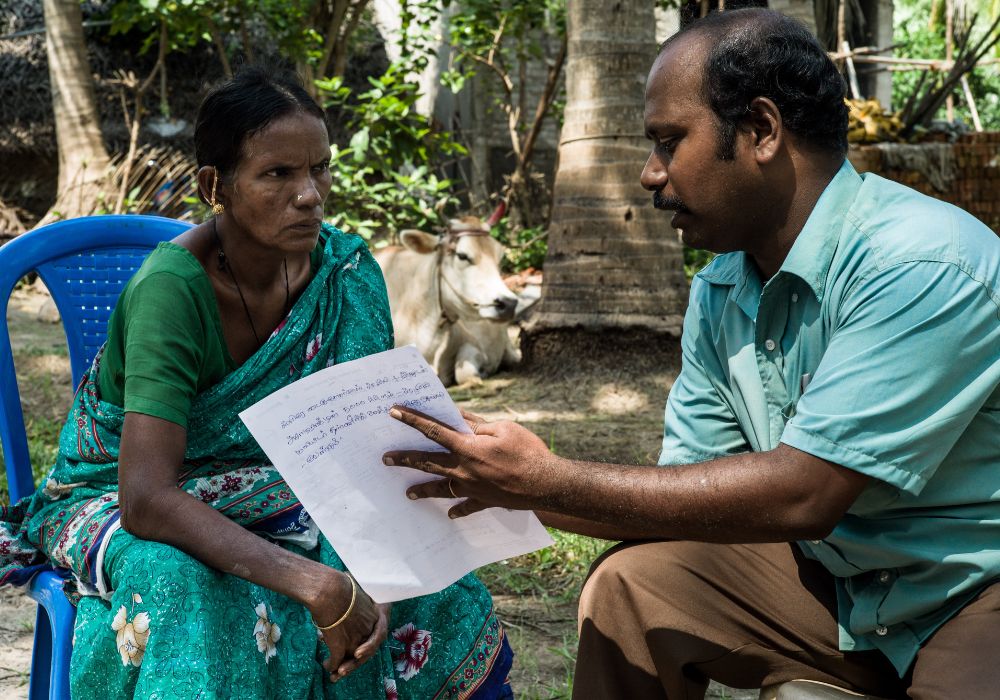
These learners will become the next generation of agricultural extension workers supporting smallholder farmers across India. When extension professionals receive training in accurate pest identification and sustainable management, their timely advice helps farmers effectively adopt low-toxicity alternatives.
India’s agricultural extension system faces challenges. The ratio of extension officers to farmers is widening, with one extension agent now serving around 5,000 farmers. Equipping the next generation of professionals with practical knowledge can help address that gap. The CABI Academy courses offered through NIPHM cover sustainable production practices and prepare students for the realities of advisory work.
A model for wider adoption
One of the most important aspects of this partnership is its potential for scaling and replication. By integrating CABI Academy’s digital learning courses into a nationally accredited postgraduate curriculum and aligning them with India’s National Education Policy, CABI and NIPHM have created a model that other agricultural institutions can adapt to strengthen capacity building through digital learning in India and beyond.
This kind of institutional embedding also means that knowledge transfer does not depend on continued CABI intervention. Once the courses are part of the curriculum, students benefit year on year.
Looking ahead
As more institutions adopt this approach, incorporating digital learning into existing higher education curricula can strengthen the capacity of future extension workers and agricultural professionals. That will help farmers access better advice, improve crop health, and strengthen food security.
Further reading
“Before CABI Academy, I used to avoid fieldwork because I lacked confidence.“
CABI Academy plant health management courses are helping to improve extension support
PlantwisePlus
PlantwisePlus gratefully acknowledges the financial support of the Directorate-General for International Cooperation, Netherlands (DGIS); European Commission Directorate General for International Partnerships (INTPA); UK International Development from the UK government; and the Swiss Agency for Development and Cooperation (SDC).
Interested in learning more?
PlantwisePlus works with partners including governments, research institutions, local NGOs, and regional plant protection organizations to strengthen plant health systems and improve food security.
>> Discover more about our approach and how you can get involved.
1 Comment
Leave a Reply
Related News & Blogs
How IPM is helping Vietnam’s tomato farmers manage invasive tomato leafminer
Tomato farmers in Lam Dong Province, Vietnam, are gaining practical knowledge on managing the invasive South American tomato leafminer. The pest, Phthorimaea absoluta (formerly Tuta absoluta), can be difficult to control once established. Through integ…
14 October 2026
I really enjoyed reading this article. Keep it up!