In Ahafo Ano North, Ghana, video-assisted community dialogues are moving pesticide education beyond one-way messaging. These videos are helping farmers, agro-input dealers, traders, and community leaders confront the pressures driving pesticide misuse. Together, they are identifying ways to reduce the risks.
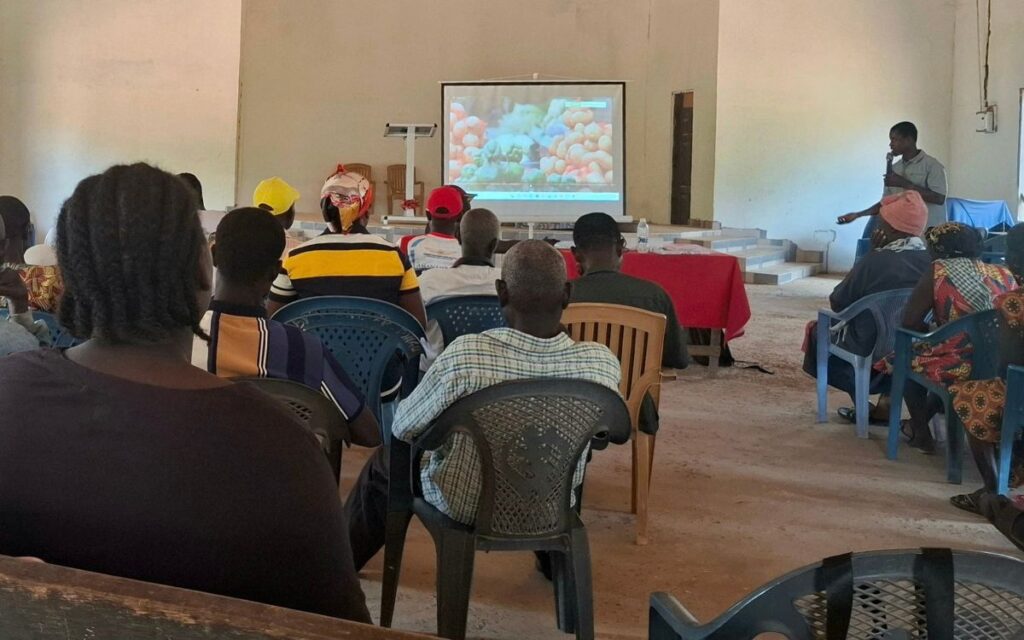
A video-assisted community dialogue campaign in the Ahafo Ano North District is helping communities address the misuse of highly hazardous pesticides and improve pesticide safety in Ghana. It tackles not only unsafe practices, but also the social, psychological and economic pressures that drive them.
CABI’s PlantwisePlus programme is implementing the campaign in collaboration with the Ahafo Ano North Department of Agriculture. It is part of a wider social and behaviour change communication initiative in eight of Ghana’s major tomato- and vegetable-producing districts.
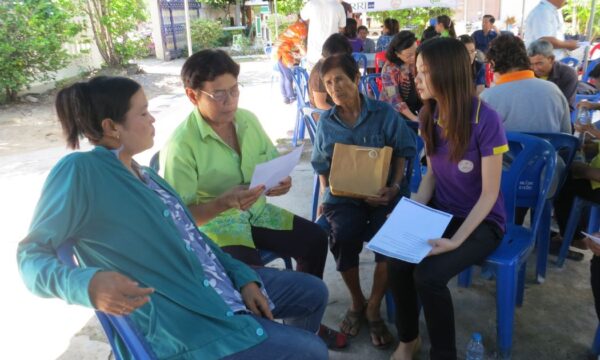
Unlike conventional pesticide education, which often relies on experts instructing farmers, the initiative takes a different approach. It creates open and non-judgemental spaces where different groups can explore the issues together. These include farmers, agro-input dealers, spray service providers, traders, produce aggregators, traditional leaders, and agricultural officers, who can explore the issue together.
Videos featuring actors speaking in accessible local language showed the health, environmental, and food-safety consequences of unsafe pesticide use, while demonstrating safer practices. The screenings then served as a springboard for facilitated discussions in which participants could ask questions, challenge assumptions and relate the messages to their own experiences.
Market pressures and difficult choices
Combining visual learning and community dialogue brought sensitive issues into the open. Discussions revealed that pesticide misuse stems from more than limited technical knowledge.
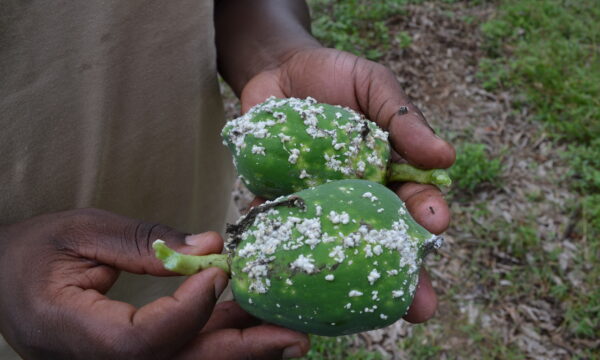
Farmers face intense pressure to protect their crops and incomes. At the same time, traders and consumers often judge vegetables by their appearance. Other barriers include the high cost and limited availability of safer alternatives, and poor access to trained spray service providers. Low literacy, inadequate use of personal protective equipment, and limited consultation with agricultural extension officers also play a part.
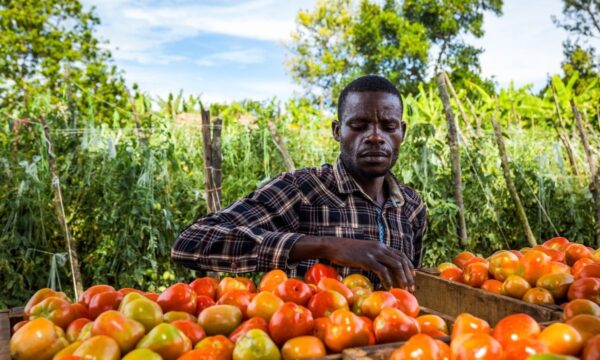
Some participants noted that demand for spotless, brightly coloured vegetables encourages dangerous practices. Aggregators reported that some farmers apply hazardous products, including household detergents, on vegetables such as eggplant. They do this to improve their appearance.
“Consumers want tomatoes and other vegetables that look beautiful and attractive,” one aggregator explained during the dialogue. “As long as appearance determines what people buy, farmers and traders will continue to feel pressure to use products that make the vegetables look brighter, even when those products may be dangerous.”
Another account highlighted the difficult moral choices farmers can face. Economic survival can compete with concerns about health and food safety. An aggregator described meeting a farmer who had divided his eggplant field into separate portions. He used highly hazardous pesticides on the larger section intended for sale and reserved a smaller, untreated section for his household.
“He told me that the vegetables from the unsprayed portion were for his family,” she recounted. “That experience made me realise how serious the problem is: some people know there may be risks, but market pressures and the need to earn an income still influence what they sell to others.”
Personal stories also transformed pesticide risk from an abstract warning into a lived reality. A woman participating in the Mabang dialogue recalled helping her husband fetch mixed pesticide from a barrel. At the same time, he sprayed their tomato farm at Akomadan. She soon felt weak and nauseated, began vomiting, and eventually collapsed.
“At first, my husband thought I was only being lazy,” she said. “But we ended up at the hospital, and since that incident I have never returned to the farm. This training is crucial because the information can save lives.”
A wider conversation and signs of change
The campaign initially planned to engage seven tomato-producing communities. However, strong public interest prompted the Department of Agriculture to expand the campaign. Few traders and aggregators joined the community sessions, creating a gap. The team therefore held an eighth dialogue specifically for these groups at the Tepa market.
Across the eight dialogues, 635 people took part, almost twice the original target of 350 participants. The team also shared micro-videos through farmer and social-media networks, reaching a further 375 people. This helped extend the conversation beyond those attending in person.
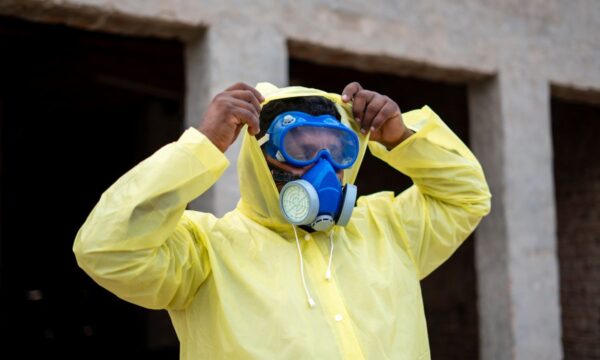
Participants also began identifying changes they could make themselves. Farmers said they were more willing to consult extension officers before purchasing or applying pesticides; avoid buying and using unregistered and highly hazardous products; observe pre-harvest and re-entry intervals; reduce pesticide mixtures; use appropriate protective equipment; and adopt integrated pest-management practices.
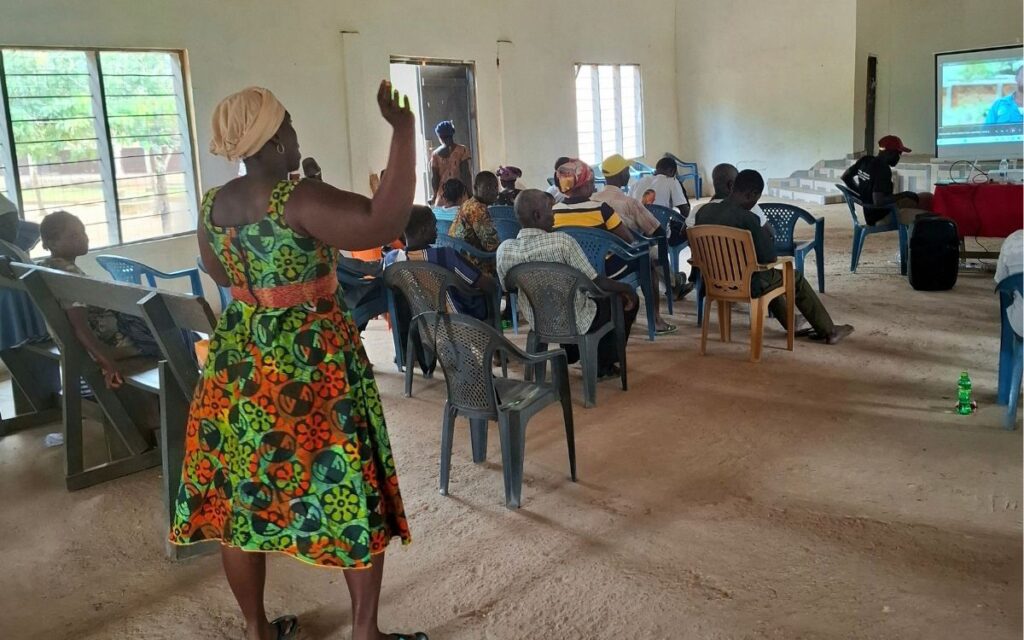
Community leaders and market actors also called for the campaign to continue. “We have discovered that we may be dying slowly through some of these practices,” the chief of Abonsuaso-Danyame said. “This education should not be a one-time activity; it should be organized regularly for all farmers in the community.”
The Tepa vegetable market queen similarly urged organizers to sustain the engagement. Recalling a farm worker who sprayed throughout the day without protective equipment and later died, she said: “People need to hear this message repeatedly. Training all actors along the vegetable value chain can help prevent illness, protect lives and make our food safer.”
Improving pesticide safety in Ghana
The dialogues also made clear that individual commitment alone is insufficient. Participants called for safer pesticides to be made available and affordable. They also want better training and regulation of agrochemical dealers, improved access to extension advice and stronger action against dangerous and unregistered products.
The dialogues have brought together people who influence how others buy, use and perceive pesticides, helping communities talk openly about both the risks and the pressures behind unsafe practices.
The challenge now is to turn that willingness to change into safer decisions on farms, in agrochemical shops and throughout vegetable markets.
PlantwisePlus
PlantwisePlus(opens in new tab) gratefully acknowledges the financial support of the Directorate-General for International Cooperation(opens in new tab), Netherlands (DGIS); European Commission Directorate General for International Partnerships(opens in new tab) (INTPA); UK International Development(opens in new tab) from the UK government; the Swiss Agency for Development and Cooperation(opens in new tab) (SDC); and the Australian Centre for International Agricultural Research(opens in new tab) (ACIAR).
Interested in learning more about PlantwisePlus?
PlantwisePlus works with partners including governments, research institutions, local NGOs, and regional plant protection organizations to strengthen plant health systems and improve food security.
>> Discover more about our approach and how we’re delivering sustainable impact.
Further reading
Pesticide risk reduction: Strengthening policy, supporting practice
PlantwisePlus and pesticide risk reduction – why changing minds, not just rules, reduces risks
Related News & Blogs
Banana bunchy top disease prevention in Ghana – proactive strategies help reduce risks
Banana bunchy top disease is one of the most destructive banana and plantain diseases worldwide. Caused by a virus, it poses a considerable risk to commercial and smallholder farmers alike, causing yield losses of 2 to 12 tonnes per hectare and income…
22 September 2026