
Across rural Kenya, young people face significant barriers to employment and entrepreneurship. At the same time, farming communities often struggle to access reliable agricultural advice, quality inputs and market opportunities. Youth-led agri-services are proving to be a powerful solution to both challenges.
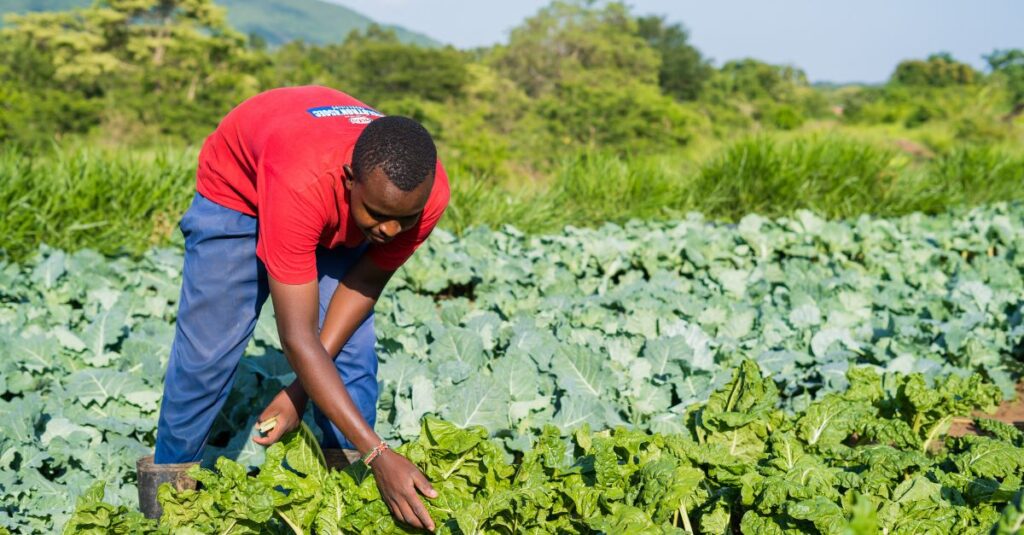
The PlantwisePlus Agri-service Model empowers local youth by transforming them from individual, unemployed or underemployed rural youth farmers into organized, market-driven agricultural service providers. They deliver advisory support, input supply, and market linkages, positioning themselves as key actors in strengthening agricultural systems.
Operating across five counties in Kenya— Baringo, Homa Bay, Machakos, Makueni, and Nakuru—the model bridges critical gaps in rural agri-advisory services, while tackling youth unemployment. It creates meaningful and sustainable employment opportunities for young people, while enhancing productivity and resilience in farming communities.
By investing in young entrepreneurs, PlantwisePlus is generating benefits that extend beyond individual livelihoods. These youth-led businesses are expanding access to agricultural services, creating jobs and strengthening local economies.
A business-first approach in Homa Bay
The PlantwisePlus standard graduation model always begins with technical skills followed by business skills. However, in Homa Bay County, the team reversed this sequence, drawing on valuable insights from earlier programmes to pioneer a business-first approach.
The PlantwisePlus team traditionally equips youth with tailored technical training and business modelling to help them establish sustainable agri-service enterprises. In Homa Bay, they flipped the script, starting with comprehensive business development, entrepreneurship training, market analysis, and commercial modelling.
“In past trainings, we learned the farming techniques first, but struggled to find customers or make a profit. Starting with market analysis completely changed our mindset. By the time we design our services, we already know who is paying, what they need, and how much they will spend.”
Collince Ochieng’, trainee and entrepreneur who started producing fodder planting material for sale to farmers following the training.
This strategic shift enabled the youth to assess local market opportunities, identify viable business niches, and establish strong commercial structures before diving into technical skills.
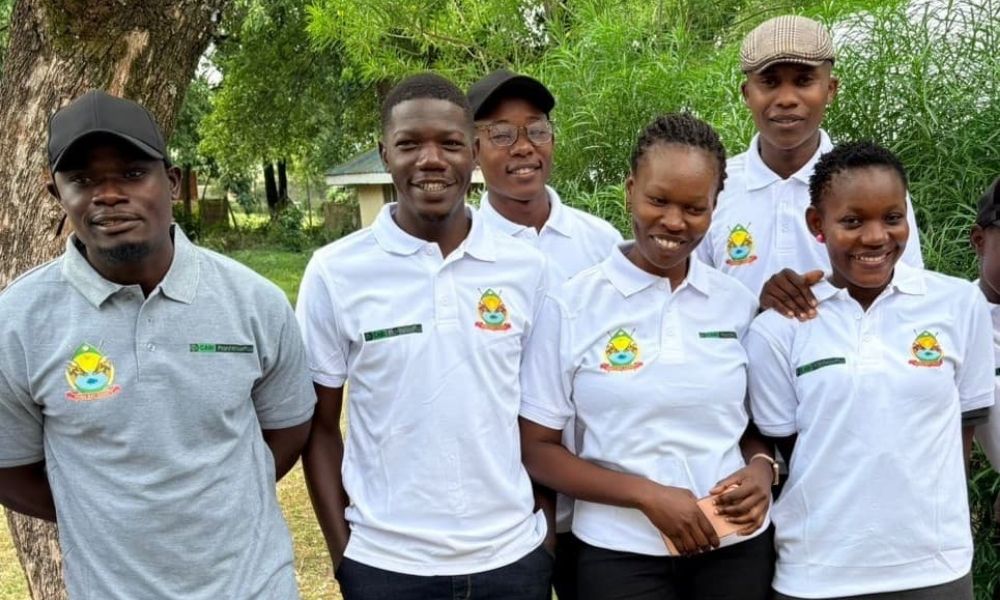
The progress has been incredible. Following the initial business skills training in December 2025, participants immediately used the market-modelling framework to transition into organized agribusiness entrepreneurs and emerging service providers. By the April 2026 review meeting, jointly organized by CABI and local partners First Bridge Foundation (FBF) and County Government of Homa Bay, the youth reported rapid progress in leadership, cooperative action, and professional service provision.
Rather than waiting for opportunities to emerge, they were actively identifying local market needs and building businesses around them. The early focus on entrepreneurship helped young people see agriculture as a viable business. The results suggest that developing commercial thinking first helps young people identify clear pathways to growth before receiving technical training.
“We have seen many programs provide great technical tools that ultimately sit idle because the business structure wasn’t there. This cohort proved that when you build business thinking first, youth discover the money before they even touch the tools. The county is eager to support the scaling of this framework across other sub-counties.”
Judith Ombok, Chief Officer for Agriculture and Irrigation, County Government of Homa Bay
To build on this momentum, the next phase will deliver targeted technical training to further enhance their operational confidence and expand their service delivery.
The profound impact of this business-first approach is perfectly demonstrated by the following two standout cases:
The Rise of the Young Agripreneur Alliance

Following the December 2025 training, graduates rejected working in isolation and united to form a registered Community-Based Organization (CBO) called the Young Agripreneur Alliance (YAA).
Led by Chairperson Pollince Ojijo Ogweno, YAA has grown to 40 members—including 22 women—proving the vital role of inclusive youth leadership.
Today, the CBO operates as a cohesive, structured unit bridging critical gaps in local farming. By offering essential services like crop spraying, agricultural advice, produce aggregation, and extension support, these young leaders have transformed into a unified economic force.
Working collectively has strengthened members’ credibility, expanded their reach, and helped them respond more effectively to farmers’ needs. It has also opened opportunities that would have been difficult to achieve individually.
Turning environmental challenges into business opportunity
Juliet Kodieny used the market-modeling framework to take immediate, proactive initiative. Instead of waiting for formal technical instruction, she independently mastered the technical skills needed to launch an innovative agri-service enterprise.
Today, Juliet owns and manages the fully registered company, Ler en Ngima. Her business tackles local environmental challenges through “agricycling”, harvesting invasive water hyacinth to manufacture eco-friendly cooking briquettes and organic manure.
By transforming an environmental challenge into a business opportunity, Juliet has developed a model that delivers both economic and environmental benefits. Her enterprise contributes to cleaner waterways while creating useful products for local communities.
What is more, by combining management principles with self-taught technical expertise, she has expanded her community footprint, actively employing and mentoring other local youth to scale up sustainable green services.
Her success highlights the potential for young entrepreneurs to create innovative solutions that address local challenges while generating income and employment.
Creating impact beyond individual businesses
The Homa Bay experience shows that giving young people the business skills to see agriculture as an opportunity can be transformative. Whether through collective action or individual enterprise, youth-led agri-services are already improving livelihoods and supporting farming communities. With technical training still to come, the impact is likely to grow further.
Further reading
In their own words: Uganda’s agro-input dealers on the impact of pesticide safety training
Employment pathways and business models that empower African youth engagement in agriculture
From monitoring to impact: how evidence is driving youth agripreneurship
PlantwisePlus
PlantwisePlus gratefully acknowledges the financial support of the Directorate-General for International Cooperation, Netherlands (DGIS); European Commission Directorate General for International Partnerships (INTPA); UK International Development from the UK government; and the Swiss Agency for Development and Cooperation (SDC).
Interested in learning more?
PlantwisePlus works with partners including governments, research institutions, local NGOs, and regional plant protection organizations to strengthen plant health systems and improve food security.
>> Discover more about our approach and how you can get involved.
2 Comments
Leave a Reply
Related News & Blogs
How IPM is helping Vietnam’s tomato farmers manage invasive tomato leafminer
Tomato farmers in Lam Dong Province, Vietnam, are gaining practical knowledge on managing the invasive South American tomato leafminer. The pest, Phthorimaea absoluta (formerly Tuta absoluta), can be difficult to control once established. Through integ…
14 October 2026
So encouraging 👏👏 congratulations CABI
Thank you for sharing this detailed post. The way you explained the topic makes it much easier to understand and apply in real situations.