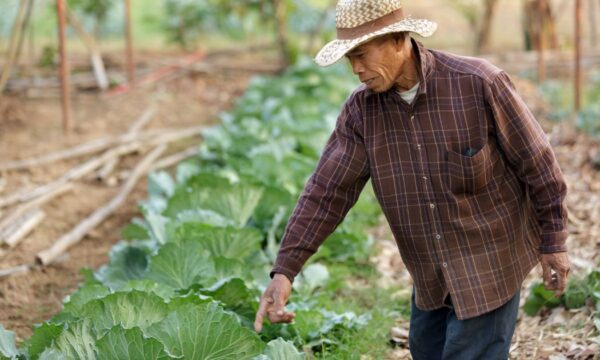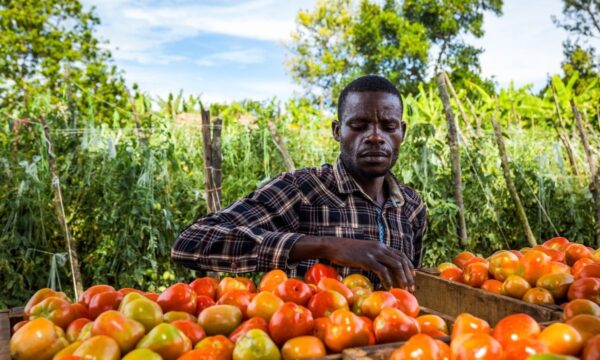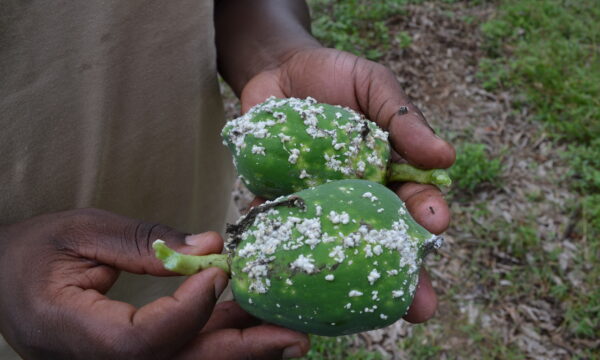
PlantwisePlus works with partners to help farmers protect their crops and livelihoods, strengthening plant health systems. By integrating capacity development, digital advisory tools, and evidence-based decision-making, the programme is creating more resilient agricultural systems. These systems are better equipped to respond to evolving pest and disease threats.
Youth engagement is driving the expansion of agricultural service delivery while addressing the growing challenge of rural youth unemployment. PlantwisePlus activities are strengthening youth participation in plant health service delivery by supporting the development of youth agripreneurship. The aim is to equip young people with both practical skills and business knowledge. This enables them to build livelihoods as agricultural advisors and youth entrepreneurs in their communities.
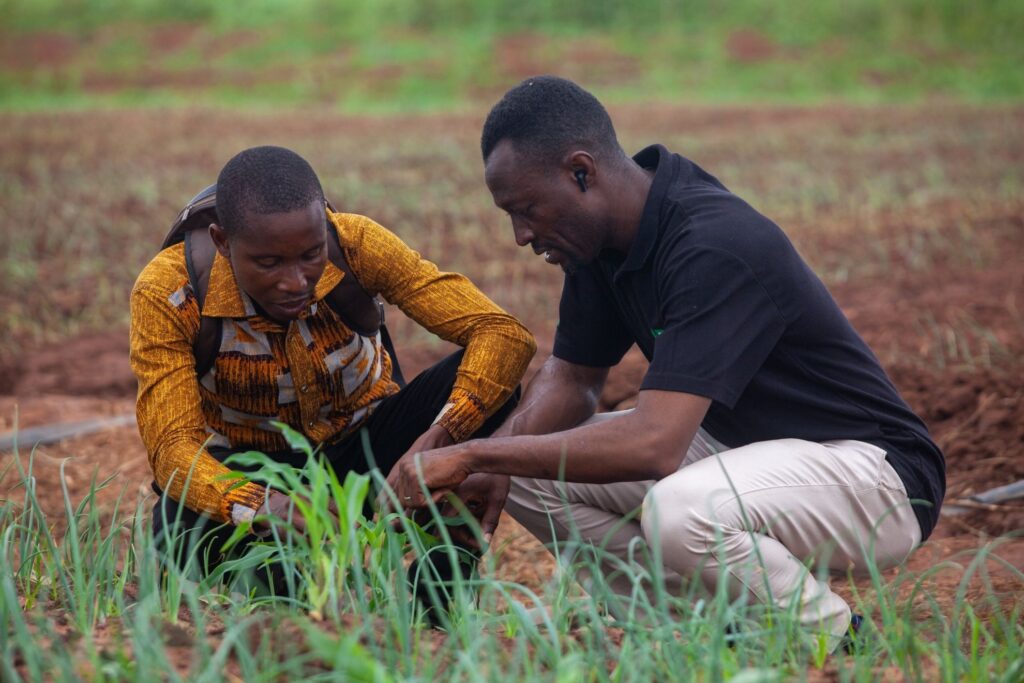
PlantwisePlus recruited the first cohort of youth in selected counties in Kenya and districts in Uganda in 2022. These participants received training in Integrated Pest Management (IPM) using the PlantwisePlus training modules. Topics covered included pest and disease diagnosis, advisory services, and farmer recommendations. In parallel, youth received agribusiness training that positioned them to operate as agripreneurs while delivering integrated plant health services.
While the immediate aim was capacity building and job creation, the key question the programme wanted to answer was: were young people actually turning their training into real incomes and lasting businesses?
With programme-level indicators already in place, Monitoring, Evaluation and Learning (MEL) focused on generating evidence on income, farmer reach, service delivery, enterprise development, and business stability. This shifted the emphasis from reporting training outputs to assessing livelihood outcomes and the quality of youth engagement in agricultural service markets.
MEL: programme design and decision-making
The programme tracked key outcomes, including employment, income, service delivery, and enterprise development. MEL went further. Before training, the team collected information and data on existing skills, assets, and ambitions. This meant MEL could track not just whether youth succeeded, but how far they had come and what had made the difference.
This approach ensured MEL was not only a reporting tool but also supported strategic decision-making, linking capacity building to measurable economic outcomes.
Learning and review sessions
Annual review forums became opportunities for young people to share their experiences rather than routine reporting events. Participants discussed challenges, including limited access to diagnostic tools, inputs, and farmer networks. Cooperatives reported productivity gains linked to youth services, while farmers shared firsthand experiences of improved pest management and advisory support.
The stories from these forums helped the team communicate impact and make real adjustments to how they delivered activities in Kenya and Uganda.
Importantly, MEL data presented during reflection meetings revealed low participation of women in some cohorts. In response, the programme adopted a targeted inclusion strategy. Women were deliberately identified and trained in enterprises that fit around their lives, responsibilities, and the resources they had available. Further support enabled them to obtain Kenya Plant Health Inspectorate Service (KEPHIS) certification, enhancing seedling quality assurance, market trust, and income potential. This targeted response led to real improvements in women’s participation, enterprise ownership, and leadership within youth service groups. It demonstrates how MEL can drive more gender-responsive programming.
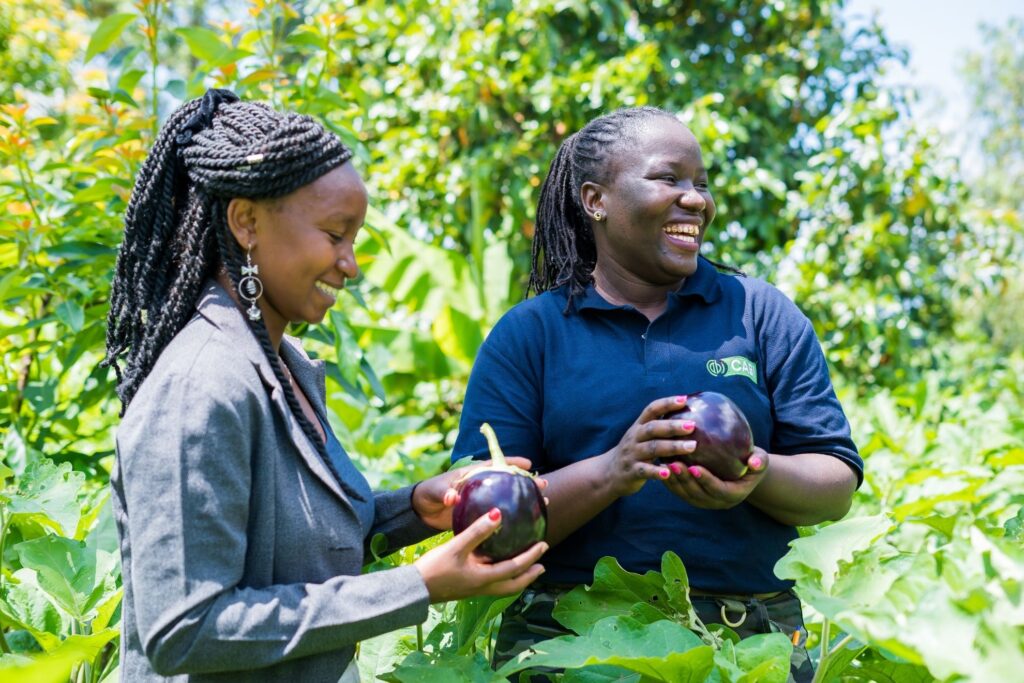
That shift is evident in how participants themselves describe the experience: “Before the training, I had an interest in agriculture, but I did not know how to turn it into a business. Through the programme and the follow-up monitoring meetings, I began to see that my work as a plant health advisor could also generate income. The MEL reviews helped us reflect on what was working and what was not. For me, it encouraged me to start a small poultry enterprise and participate in the tree nursery group. Today I earn from both services, and I feel more confident working with farmers.” Female youth agripreneur, Kenya.
MEL and youth agripreneurship
The combination of IPM and agribusiness training enabled youth to diversify beyond advisory roles into input supply, nursery enterprises, aggregation, and other services. Tracking these numbers showed that training was genuinely leading to sustainable businesses and incomes.
By documenting incomes and service offerings, MEL demonstrated the link between technical capacity, market integration, and dignified employment.
Peer support and mentorship
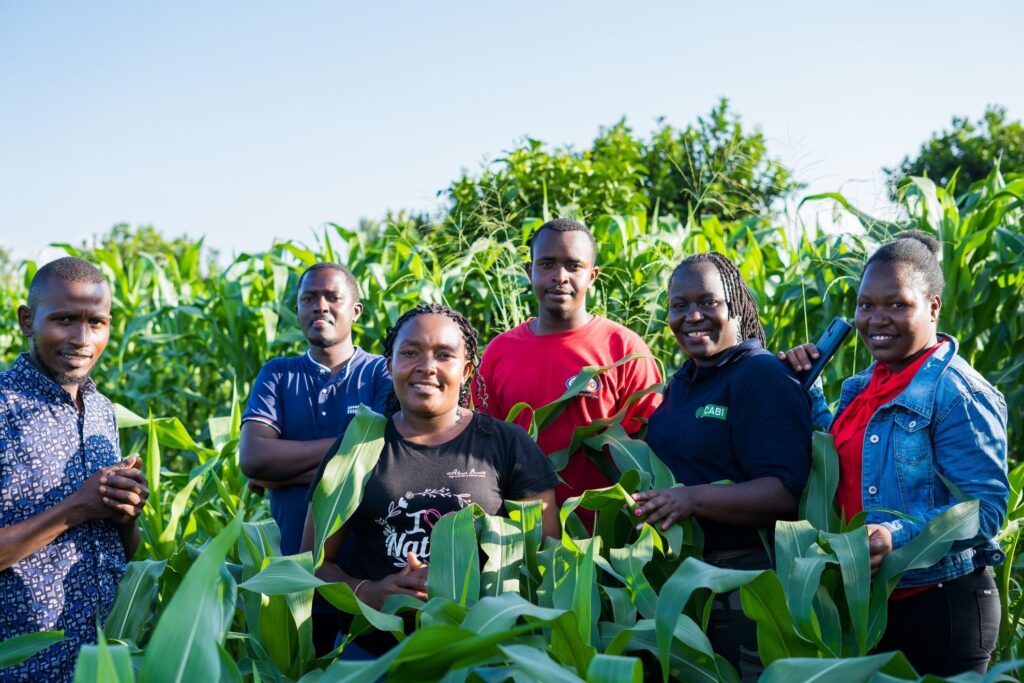
Monitoring data highlighted the importance of peer networks to youth agripreneurship development. Youth embedded in functional networks and offering integrated services performed better. This led to a formalised mentorship model in which first-cohort youth trained those who came after them.
MEL evidence showed that mentees acquired practical skills faster, had lower dropout rates, and launched services more efficiently. The model also enabled programme expansion without proportional increases in training costs.
“The training gave us knowledge, but the monitoring and mentorship are what helped me grow as a service provider. When we met during the reflection forums, we shared how many farmers we had reached and how we were charging for services. That motivated me to expand my work beyond advisory to selling inputs and linking farmers to markets.” Male youth service provider, Kenya.
The formalised mentorship model is designed to replicate this progression, from knowledge to practice to market integration, more widely. First-cohort youth now guide those who come after them.
Communicating success
MEL-generated quantitative data and qualitative change stories strengthened communication in review forums, learning events, and stakeholder engagements. Although expansion into new districts in Kenya and Uganda was part of the programme design, MEL evidence guided the adaptation of training intensity, enterprise support, and local extension alignment to each local context.
By documenting functioning youth-led businesses, mentorship systems, and farmer reach, MEL provided the confidence and evidence base for scaling.
Key lessons for youth agripreneurship
Tracking incomes and services from the start moved the focus from “how many were trained?” to “how many are now earning?” Regular review forums gave young people a say in how the activities evolved, and the stories that emerged from them were just as valuable as the numbers.
When data showed that women were being left behind, the programme adapted, and this targeted support led to real improvements in women’s participation, enterprise ownership, and leadership. What’s more, when data showed the value of peer mentorship, with mentees progressing faster and dropping out less, the programme built it formally into the model.
By embedding MEL into programme design, implementation, and communication, PlantwisePlus has turned youth training into real youth agripreneurship opportunities. MEL has demonstrated livelihood impacts, shaped gender-responsive adaptations, and guided programme scaling. MEL, therefore, is not an add-on. It is central to creating dignified work opportunities, inclusive enterprise development, and resilient local advisory systems in Kenya, Uganda, and beyond.
Further reading
Employment pathways and business models that empower African youth engagement in agriculture
Empowering a continent: How youth and cooperatives are revolutionizing agriculture in East Africa
PlantwisePlus gratefully acknowledges the financial support of the Directorate-General for International Cooperation, Netherlands (DGIS); European Commission Directorate General for International Partnerships (INTPA); UK International Development from the UK government; and the Swiss Agency for Development and Cooperation (SDC).
Interested in learning more?
PlantwisePlus works with partners including governments, research institutions, local NGOs, and regional plant protection organizations to strengthen plant health systems and improve food security.
>> Discover more about our approach and how you can get involved.
Related News & Blogs
Agricultural service providers are transforming rural livelihoods – here’s how
Agricultural service providers play an important role in farming. In addition to offering support, they also help to fill gaps in public extension systems. They deliver services such as pest and plant health diagnosis and integrated pest mana…
10 September 2026