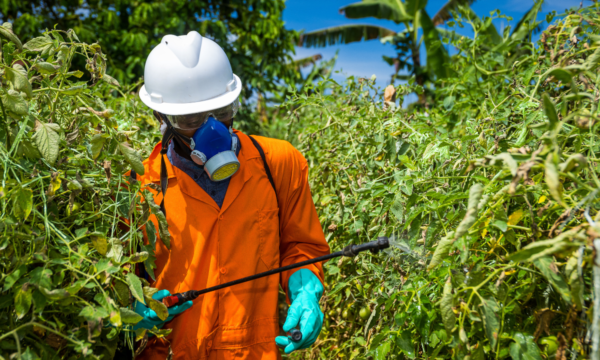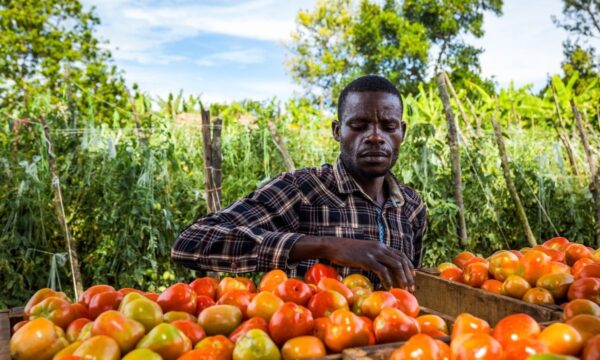
Papaya mealybug is a devastating invasive polyphagous pest. This means it can feed on many different plants, making it a greater threat to plant health. In East Africa, it causes yield losses of 57-91% and annual household economic losses of up to £2,224/ha. Managing it effectively can help to save papaya harvests and safeguard farmer livelihoods. Around half of the farmers in the region currently rely on pesticides to manage the pest. However, these chemical products can harm beneficial insects and reduce biodiversity. Scientists are helping farmers to adopt pesticide alternatives to control papaya mealybug, with impressive results.
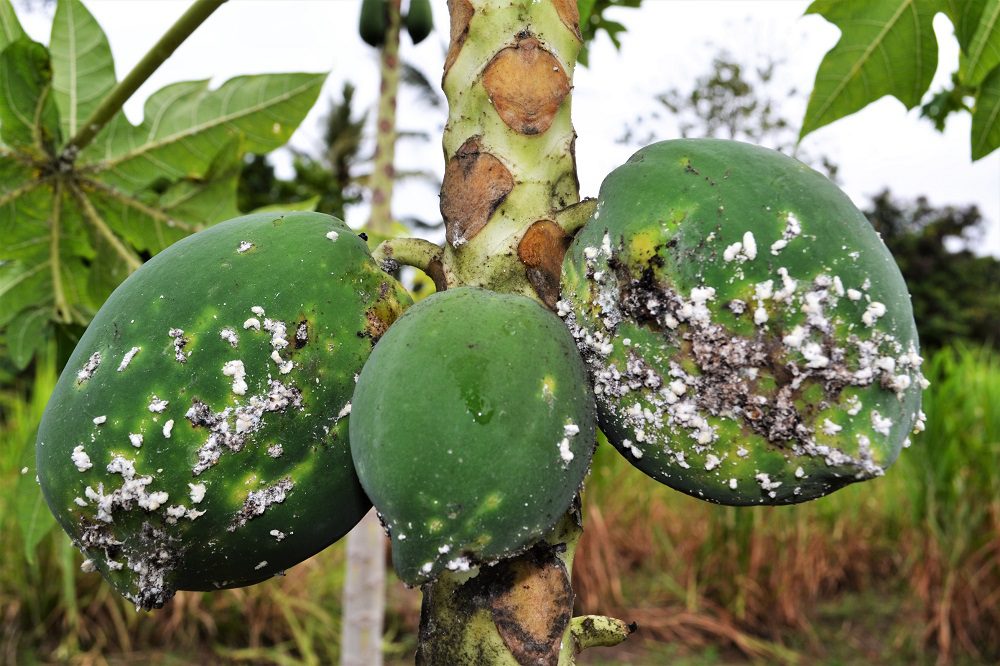
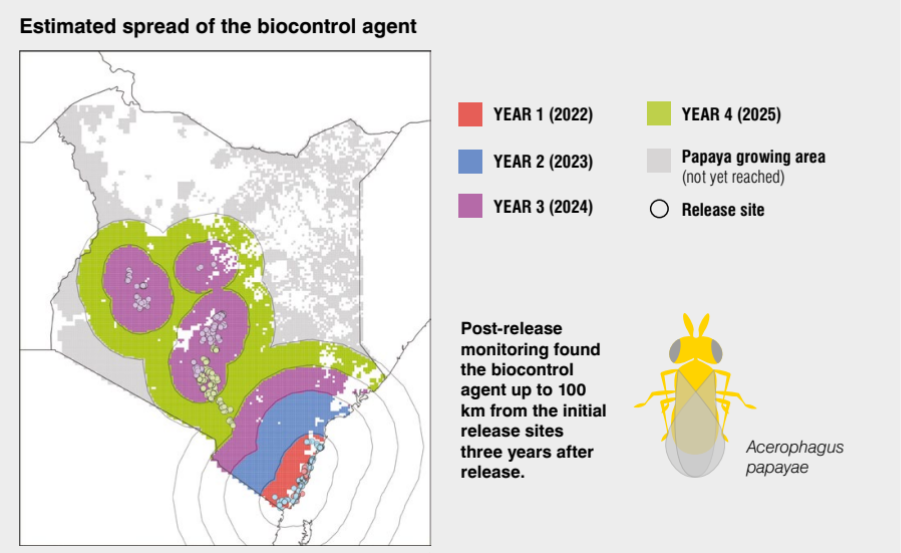
Management of this pest through classical biological control (biocontrol) has become one of the most visible success stories under PlantwisePlus. In Kenya, a tiny parasitic wasp – a natural enemy of the mealybug – has been introduced and is now established across much of the country. In 2025, scientists released the wasp on more than 440 farms and confirmed its establishment in at least 17 counties. Wherever the wasp has become established, farmers have reported rapid declines in mealybug infestations, accompanied by strong recovery of papaya trees.
How does papaya mealybug biocontrol work?
Classical biocontrol is an environmentally friendly alternative to pesticide use. It has successfully controlled many agricultural pests, including papaya mealybug using the parasitic wasp, Acerophagus papayae. Through the Kenya Standing Technical Committee on Imports and Exports (KSTCIE), KEPHIS approved the parasitic wasp for import, confined trials, and field release. PlantwisePlus then introduced the wasp into papaya farms in Kenya. In addition, the project supported farmers and extension services in adopting climate-smart conservation biocontrol practices. These practices complement biodiversity conservation and strengthen food security.
The impact of papaya mealybug biocontrol
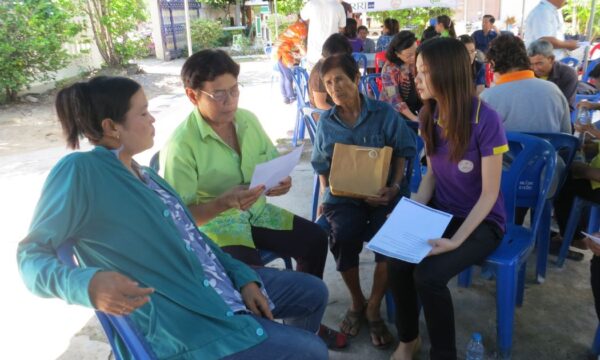
A socioeconomic study conducted in Kenya in 2025 revealed the impact of the wasp’s introduction. The research involved 405 farmers across four counties. Compared with a 2019 baseline, the introduction of the biocontrol agent increased yields by 19%. It subsequently increased sales by 18% and household income by 57%.
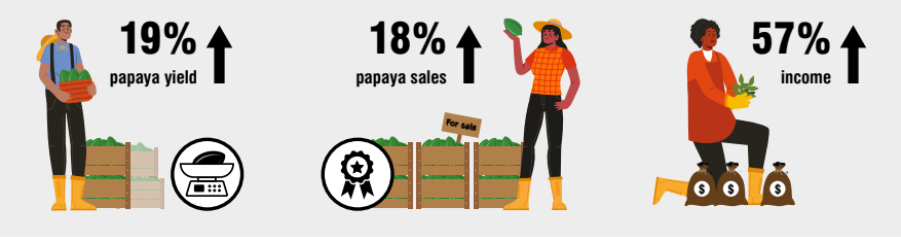
These figures are considerable but probably still underestimate the long-term benefits of the wasp. When the study took place, many farms had only just received the biocontrol agent, and its full impact takes time to develop. These positive outcomes complement findings from 2024, showing that papaya farmers reduced their reliance on insecticides following the intervention. This, in turn, led to increases in local biodiversity, demonstrating that biocontrol can make a tangible contribution to ecosystem health.
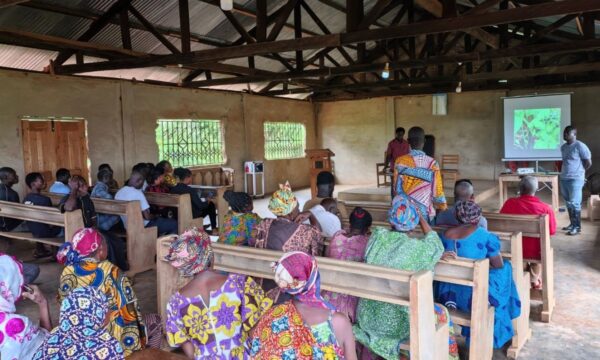
PlantwisePlus has also delivered extensive training to maximise the impact of this nature-based solution. In 2025, CABI trained 494 farmers and 54 agricultural officers in the classical biocontrol of papaya mealybug. Knowledge sharing reached every county where releases of the biocontrol agent took place. Farmers learned how to identify papaya mealybug, understand how its natural enemies suppress the pest, and support the wasp’s establishment by reducing the use of synthetic pesticides.
The wider benefits of papaya mealybug biocontrol
The training was well received across the participating counties. In Makueni County, for example, some farmers formed groups to raise awareness of pest risks and promote improved farming practices. Training also emphasised the EPESAC approach to pest management:
- Effective
- Practical
- Economical
- Safe to humans and the environment
- Easily available
- Culturally acceptable
An additional benefit is that agricultural officers can apply these skills to other biodiversity conservation initiatives. This work builds on earlier efforts, bringing the total reach since 2021 to more than 4,400 farmers, 500 agricultural officers, and 37 KEPHIS crop inspectors, alongside national researchers and students who partnered closely with CABI throughout the project. These achievements will support a smooth transition to national leadership.
Progress in Uganda during 2025 further demonstrated the scalability of the papaya mealybug biocontrol approach. Here, the project is now led almost entirely by the National Agricultural Research Organisation (NARO) and its National Crops Resources Research Institute, with PlantwisePlus providing technical backstopping and supervision. A fully functional production unit now supplies the parasitic wasps for nationwide releases, which expanded to 12 new districts in 2025. Monitoring shows that the wasp is spreading rapidly, both naturally and through farmer-led distribution, suppressing mealybug populations while boosting fruit production. Outreach activities during community events and national celebrations have also helped to embed biocontrol within broader agricultural education activities.
Both countries will continue releases and monitoring, alongside further socioeconomic assessments in 2026. Together, they provide an excellent example of the sustainability of classical biocontrol. This publicly owned, community-driven solution is helping to overcome the once-devastating papaya mealybug problem.
Further reading
Biocontrol that goes the distance: Acerophagus papayae in Kenya
What are Natural Enemies Field Reservoirs, and how do they help farmers control crop pests?
PlantwisePlus
PlantwisePlus gratefully acknowledges the financial support of the Directorate-General for International Cooperation, Netherlands (DGIS); European Commission Directorate General for International Partnerships (INTPA); UK International Development from the UK government; the Swiss Agency for Development and Cooperation (SDC); and the Australian Centre for International Agricultural Research (ACIAR).
Interested in learning more about PlantwisePlus?
PlantwisePlus works with partners including governments, research institutions, local NGOs, and regional plant protection organizations to strengthen plant health systems and improve food security.
>> Discover more about our approach and how we’re delivering sustainable impact.
Related News & Blogs
How IPM is helping Vietnam’s tomato farmers manage invasive tomato leafminer
Tomato farmers in Lam Dong Province, Vietnam, are gaining practical knowledge on managing the invasive South American tomato leafminer. The pest, Phthorimaea absoluta (formerly Tuta absoluta), can be difficult to control once established. Through integ…
14 October 2026