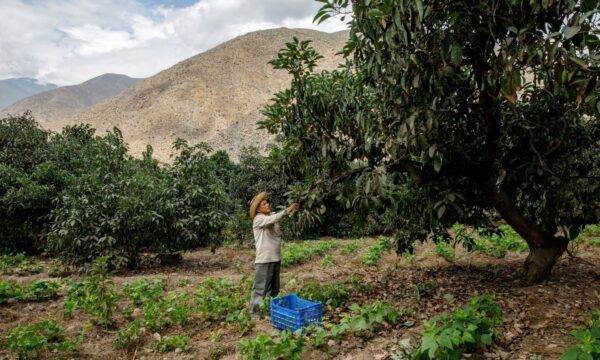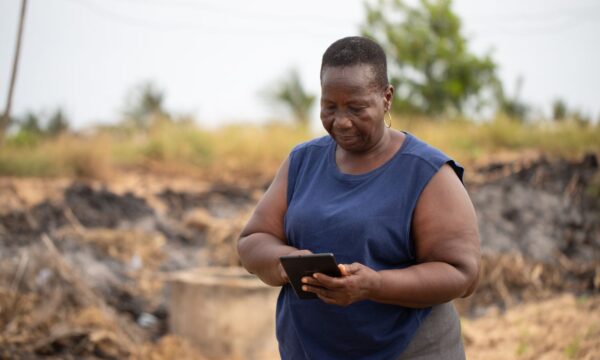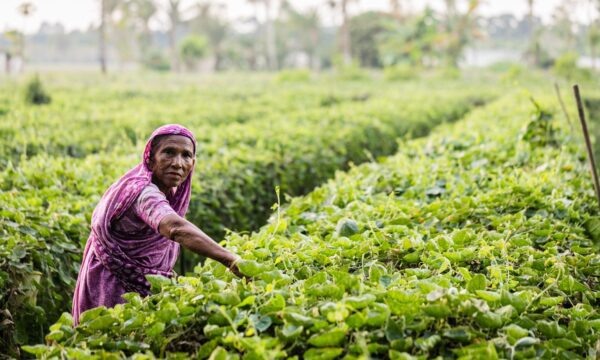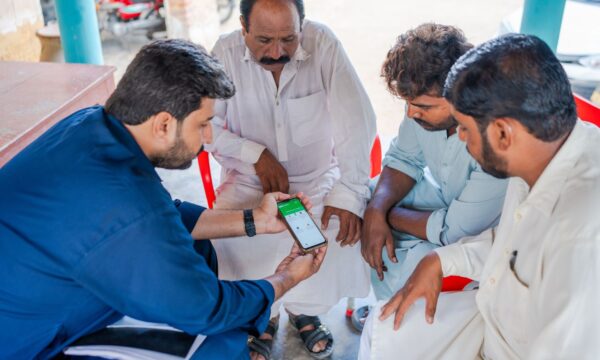
Across low- and middle-income countries, the rapid expansion of digital technologies is reshaping agriculture. Yet for many women smallholder farmers, limited access to mobile phones, internet connectivity, and digital skills creates a persistent gender digital divide. In this 2026 International Year of the Woman Farmer, it’s important to not only acknowledge the impacts of this divide on women’s productivity and incomes, decision-making power, market access, and resilience, but also to proactively address it through action.
Building digital skills capacity for women farmers
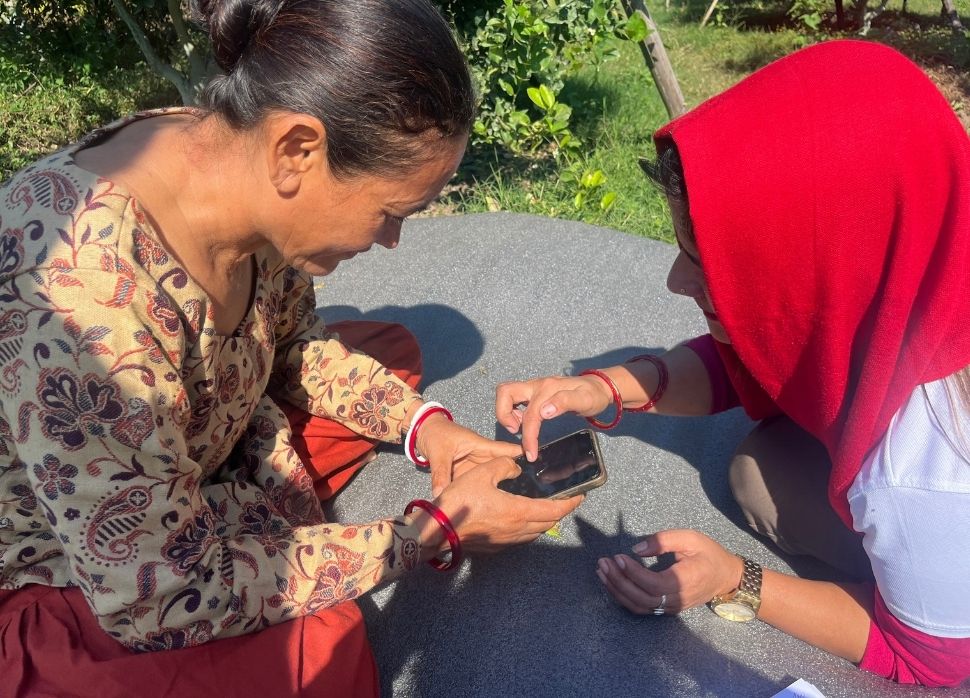
Last year, CABI launched an initiative to train women extension officers and farmers with digital skills to better support farming decision-making. The training was based on the CABI Academy Digital Skills resources, which cover topics such as digital security, trusted information sources, responsible use of AI, using and updating apps, and communications tools.
PlantwisePlus piloted the initiative in Nepal, training 17 integrated pest management (IPM) farm facilitators, who regularly advise smallholder farmers, using a Training of Trainers model. The participants developed action plans to reach at least 1,000 women farmers and IPM facilitators across the country with basic digital literacy by November 2025. The programme also piloted the training in Ghana, Uganda, Bangladesh, and Pakistan, with plans to expand to further countries in 2026.
The impact of training and peer-to-peer support
CABI’s Malvika Chaudhary and Mahesh Handiganala Munireddappa joined Lead Farmer and IPM Farmer Facilitator Rita Bastakoti in Nepal in November 2025 to revisit and observe the impact of the training. The stories they encountered showed that change is already taking place. It’s increasing confidence, giving a new understanding of the potential benefits of mobile devices, and shifting household dynamics around access to information.
Before the training, women farmers rarely used digital tools, relying on their spouses and children for agricultural information. However, they wanted to be self-reliant to access information.
By November 2025, trainings had reached 352 IPM farmer facilitators (66% women) across three districts. They, in turn, passed on their skills to an estimated 2100+ farmers through community engagement and peer-to-peer support. Trainees rated their confidence across 37 digital skills before and after the training, and every single measure improved, with a 38% increase in the number of trainees reporting overall confidence in using digital tools. In particular, trainees appreciated learning more about security and the risks of sharing personal data, as these are often perceived as risks for women using mobile devices.
Beyond the training room: early signals of change
Focus group discussions and interviews with both IPM facilitators and smallholder farmers revealed how the trainings are already changing women’s lives.
“For a village like ours, where technicians are not available, it feels like an agricultural doctor has come right into our hands,” reported a lead farmer in Ilam district.
An IPM facilitator in Chitwan explained that the training made them more aware of how much agricultural information can be accessed: “The knowledge that so much information could be gained from a mobile phone felt like an eye-opener. Whatever information we look for can be found!”
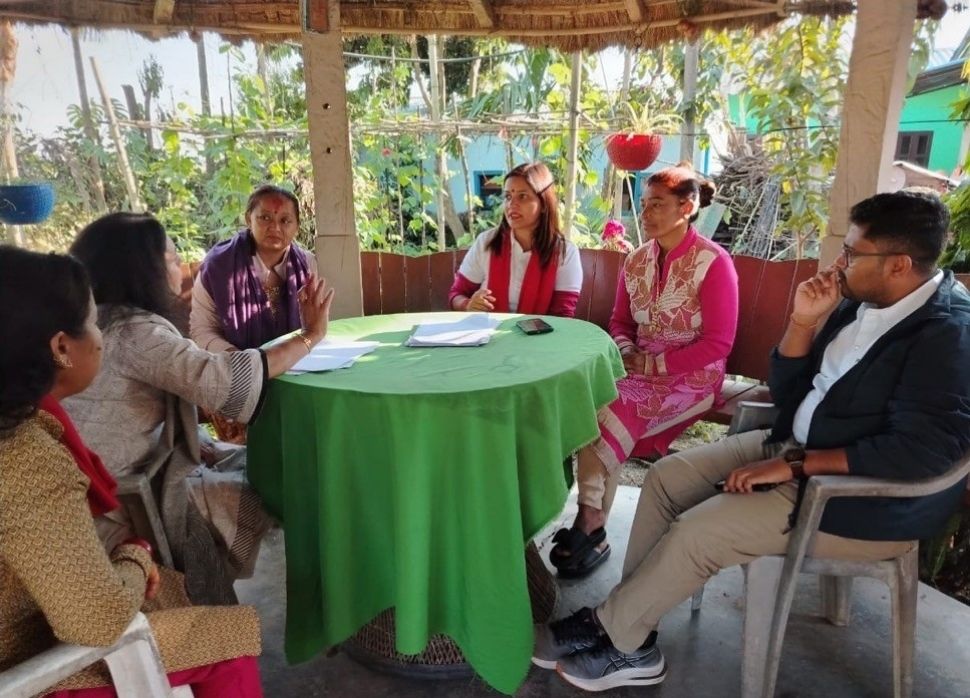
The independence this can provide was recognised by another IPM facilitator in Tanahun district: “After learning how to use search engines properly, we can now look up agricultural skills on our own.”
Kamala, an older woman farmer, told her story of being widowed at a young age. She relies on her son for access to a mobile device but was excited to learn that mobiles are not just for entertainment but also for getting useful information: “After the digital skills training, I began to understand the real value in accessing information that helps me make better decisions on my farm”. In the future, she will still rely on her son, but is more likely to ask him to help her find agricultural advice on his device, now that she knows what it can do.
The theme of community support from young people and family groups was repeated by another farmer who said, “I am willing to learn how to access information using digital tools along with my children, who will support me in this process.”
Digital skills training: common themes
Common themes coming out of the interviews with both farmers and IPM facilitators include:
- Women can be more self-reliant in using mobile information, handling their accounts and keeping their data secured.
- Mobile devices are not only for entertainment but also for getting useful information
- Digital skills give them scope to learn more on agriculture through online trainings such as CABI’s digital learning products.
- They can make informed decisions using digital decision support tools such as the PlantwisePlus Factsheets App.
- Young farmers are willing to engage more farmers in their community to give information using digital tools.
- With digital skills, women farmers learn about new pests and technologies and feel better equipped with information to adopt IPM practices.
There were also early signals of changes in household and community decision-making:
- Women farmers were increasingly initiating discussions within their households about accessing digital advisory information
- Many reported instances of women farmers negotiating shared use of mobile devices with male family members.
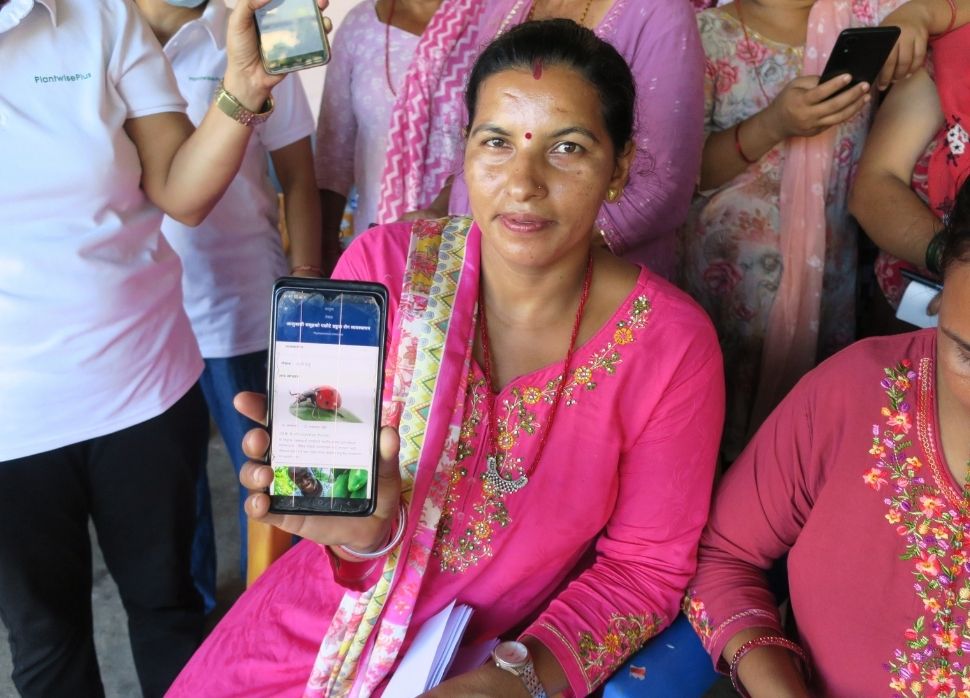
Image: Mahesh Handiganala Munireddappa, CABI
Looking ahead
Both the data and the stories gathered are compelling and demonstrate the impact of digital skills training on women farmers and the advisors who support them. Training not only helps break down the gender digital divide by providing confidence to access digital tools, but also empowers women to proactively seek information and engage in household decision making. And even better, the extent of the impact likely reaches far beyond into other areas of day-to-day life.
So what’s next? In Nepal, Ghana, Uganda, Bangladesh, and Pakistan, our implementation partners continue to scale up the trainings by passing on knowledge to other farmer advisors and farmers in their communities. In 2026, we plan to roll out the training in further PlantwisePlus countries according to needs and in collaboration with Gender Technical Working Groups steered by in-country implementation partners.
If you are keen to take action on the gender digital divide, please get in touch with us to discuss how we can partner to take this work further in the future.
Further reading
Digital skills training: Enabling access to digital advisory tools for women in Nepal
PlantwisePlus gratefully acknowledges the financial support of the Directorate-General for International Cooperation, Netherlands (DGIS); European Commission Directorate General for International Partnerships (INTPA); UK International Development from the UK government; and the Swiss Agency for Development and Cooperation (SDC).
Related News & Blogs
From monitoring to impact: how evidence is driving youth agripreneurship
PlantwisePlus works with partners to help farmers protect their crops and livelihoods, strengthening plant health systems. By integrating capacity development, digital advisory tools, and evidence-based decision-making, the programme is creating more r…
23 March 2026