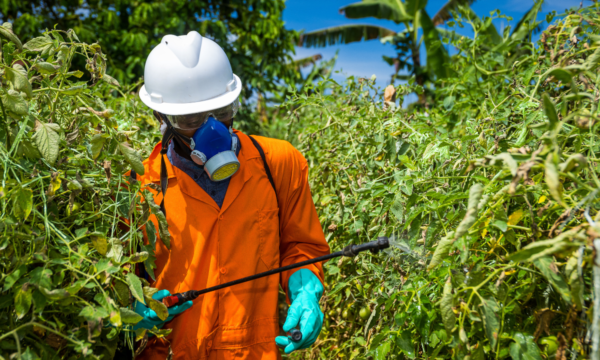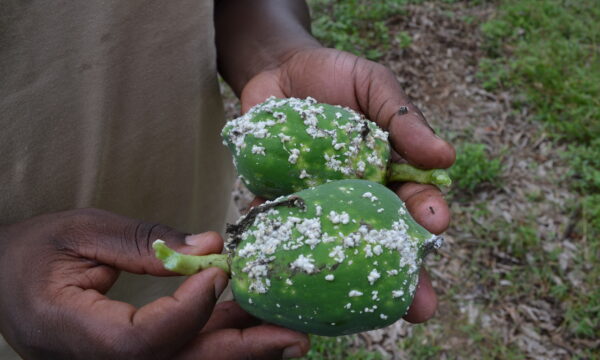
Zambia is strengthening its ability to prevent and respond to invasive pests through the implementation of a National Pest Risk Register (PRR), a tool designed to safeguard agriculture, food security, trade and the environment. The register, developed through a partnership between the Plant Quarantine and Phytosanitary Services (PQPS) and CABI under the PlantwisePlus programme, provides information on pests not yet present in Zambia but considered likely to enter and establish themselves in the country. It is expected to support early warning systems, pest surveillance, risk assessment, and informed decision-making across the agricultural sector.
Supporting countries to anticipate and respond to pest risks
In a speech read on his behalf by PQPS Director Dr Kenny M’siska during the official PRR launch on 25 November 2026, Zambia’s Minister of Agriculture Reuben Mtolo described the register as a one-of-a-kind resource in the Southern Africa region, providing countries with a critical tool to strengthen pest surveillance and preparedness against emerging threats.
Mr Mtolo added that invasive pests such as fall armyworm, locusts and Tuta absoluta have already caused significant losses across Africa, while new threats continue to emerge in the region. He stressed the importance of regional cooperation, saying pests do not respect national borders.
CABI Regional Director for Southern Africa, Dr Natasha Mwila, said tools such as the National Pest Risk Register enable authorities and stakeholders to identify high-risk pests before they arrive, prioritize resources and strengthen preparedness measures across the value chain. She noted that the achievement reflects CABI’s broader commitment to supporting member countries through science-based solutions, capacity strengthening and institutional partnerships.
“By investing in proactive surveillance, evidence-based risk assessment and coordinated response mechanisms, Zambia is now better positioned to detect threats early, protect farmer livelihoods and safeguard national food security,” she said.
Dr Mwila added CABI works closely with member countries to ensure its interventions align with national development goals and local needs, adding that the PlantwisePlus programme is designed to strengthen national systems that can be sustained and owned by countries over the long term.
Strengthening Zambia’s pest preparedness
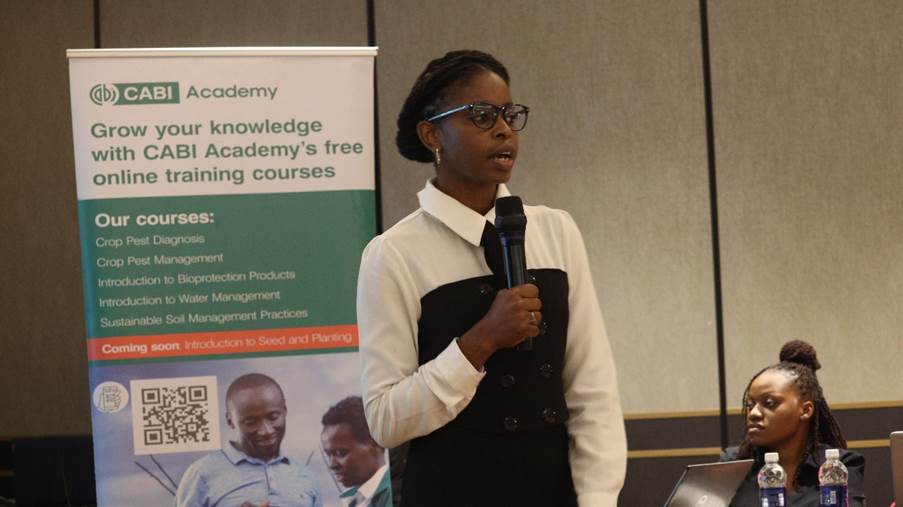
The Pest Risk Register was among the major achievements highlighted by the PlantwisePlus country coordinator Dr Chapwa Kasoma during the PlantwisePlus Technical Steering Committee Meeting held in Lusaka on 5 May 2026. The meeting brought together representatives from government institutions, research organizations, development partners, and the private sector to review progress under the PlantwisePlus programme and identify pathways for sustainable agricultural development. Participants included the University of Zambia (UNZA), Zambia Agricultural Research Institute (ZARI), Seed Control and Certification Institute (SCCI), CropLife Zambia, Kasisi Mission, PQPS, the Department of Agriculture, the Gender Division and CABI.
Stakeholders at the meeting highlighted the register as one of the programme’s key achievements, alongside efforts to expand farmer advisory services, promote biological pest control and strengthen digital agriculture tools. Discussions also explored opportunities to integrate the tool into national digital platforms such as Smart Zambia to enhance accessibility and long-term sustainability.
Advancing pesticide risk reduction through biological control
Beyond pest preparedness, the steering meeting reviewed progress in promoting safer and more sustainable pest management practices. Participants heard updates on efforts to reduce pesticide risks through the use of biological control agents, including the local strain of Metarhizium rileyi, an entomopathogenic fungus which is an environmentally friendly alternative to conventional pesticides.
Dr. Léna Durocher-Granger, Project Scientist, Entomologist at CABI, also highlighted ongoing efforts to combat Fall Armyworm (FAW) and tomato leafminer, two pests that continue to threaten crop production across Africa.
“Biological control offers a long-term and cost-effective solution because it works with nature rather than against it,” she said. “Once established, these beneficial organisms can help keep pest populations below damaging levels, providing lasting benefits for farmers and farming communities.” Dr. Durocher-Granger also announced progress in the planned release of parasitoids to control the pests, pending final regulatory approvals.
Advancing farmer advisory services and sustainable agricultural practices
Farmer advisory systems also featured prominently in the discussions, with stakeholders exploring strategies to enhance the reach and effectiveness of agricultural extension services through digital innovations, agro-dealer networks, and plant clinics. Participants highlighted the growing role of platforms such as the Plantwise Knowledge Bank and other digital tools in providing smallholder farmers with timely, accurate and accessible information.
The meeting also drew on global experiences from the PlantwisePlus programme, with Mr Abdul Rehman, Deputy Director Programmes, CABI,sharing lessons from farmer advisory initiatives implemented across Asia and East Africa. He outlined successful approaches to strengthening extension systems, leveraging digital technologies and building partnerships, noting that these experiences could help inform the scale-up and long-term sustainability of advisory services in Zambia.
The Seed Control and Certification Institute (SCCI) also showcased the impact of its collaboration with CABI in addressing Cassava Brown Streak Virus, highlighting how the intervention improved disease surveillance and management while benefiting farmers in affected districts. The institute called for continued cooperation in areas such as molecular diagnostics, disease detection and seed health management to strengthen Zambia’s capacity to respond to emerging agricultural threats.
Additional information
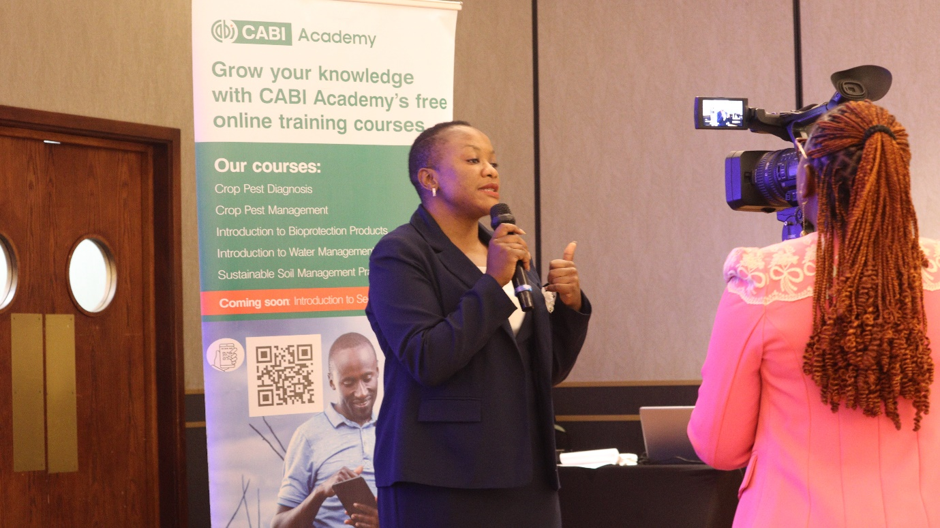
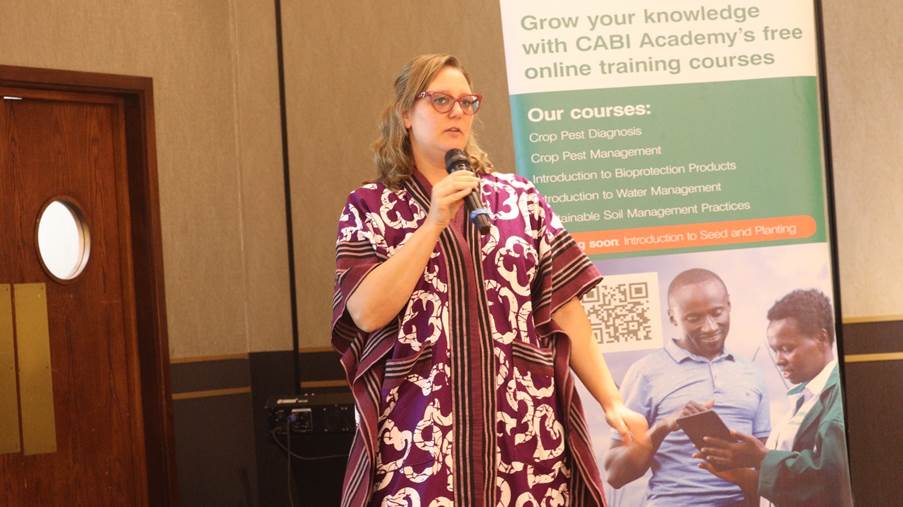
Main image: Dr Natasha Mwila, CABI Regional Director for Southern Africa, gives opening remarks, highlighting the importance of collaboration in strengthening plant health systems.
Further reading
- How do pest risk registers address the spread of plant pests in Africa?
- Horizon scanning for climate-driven pest threats can prevent biodiversity loss
- Pest preparedness – boosting food security, farmer incomes and agricultural trade
PlantwisePlus gratefully acknowledges the financial support of the Directorate-General for International Cooperation, Netherlands (DGIS); European Commission Directorate General for International Partnerships (INTPA); UK International Development from the UK government; the Swiss Agency for Development and Cooperation (SDC); and the Australian Centre for International Agricultural Research (ACIAR).
Interested in learning more about PlantwisePlus?
PlantwisePlus works with partners including governments, research institutions, local NGOs, and regional plant protection organizations to strengthen plant health systems and improve food security.
>> Discover more about our approach and how we’re delivering sustainable impact.
Related News & Blogs
Fall armyworm control starts with farmers, and collective action is key
Fall armyworm is a highly mobile crop pest that moves quickly between maize fields. Since it arrived in Africa, the pest has quickly spread across land managed by millions of smallholder farmers. The speed at which it moves makes its management co…
1 October 2026