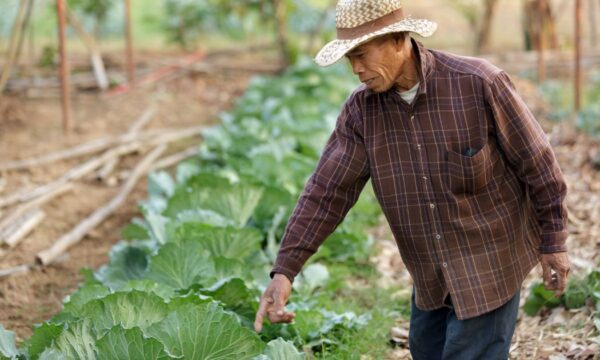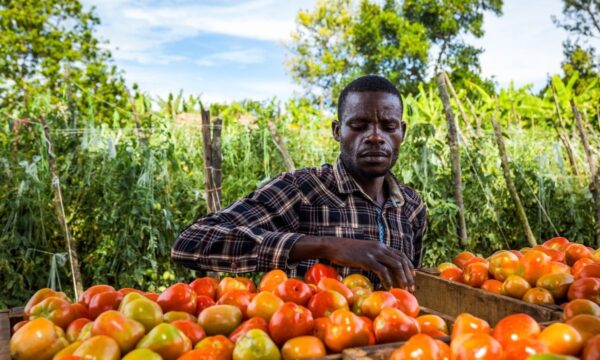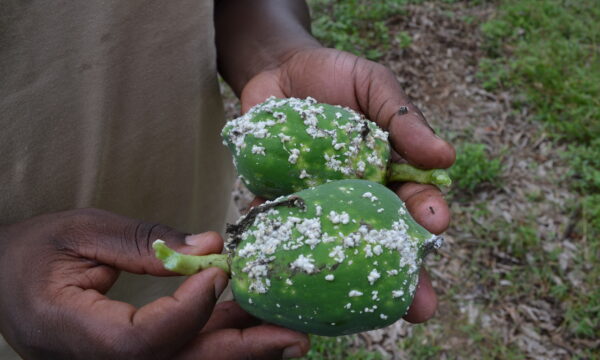
Every year, World Youth Skills Day celebrates the importance of equipping young people with the skills they need for employment, entrepreneurship, and sustainable livelihoods. Across East Africa, PlantwisePlus is helping young men and women turn those skills into successful agribusinesses that strengthen farming communities.
Agriculture is increasingly being recognized not only as a source of food and income but also as a pathway to entrepreneurship and employment for young people. Yet across East Africa, many young people still struggle to turn this potential into sustainable livelihoods. Limited access to training, finance, markets, and mentorship prevents them from developing the skills, confidence, and networks needed to build successful agricultural careers.
CABI’s PlantwisePlus programme addresses this challenge by training young people in agripreneurship, plant health, and integrated pest management (IPM). The training also develops business knowledge and leadership skills, while providing participants with mentorship opportunities.
The programme is already demonstrating what young people can achieve when they are equipped with the right skills, networks, and support. Young trainees are creating diversified business models that combine production, advisory services, input supply, environmental restoration, training, and market linkages. In doing so, they are strengthening rural service economies and improving access to agricultural knowledge and technologies.
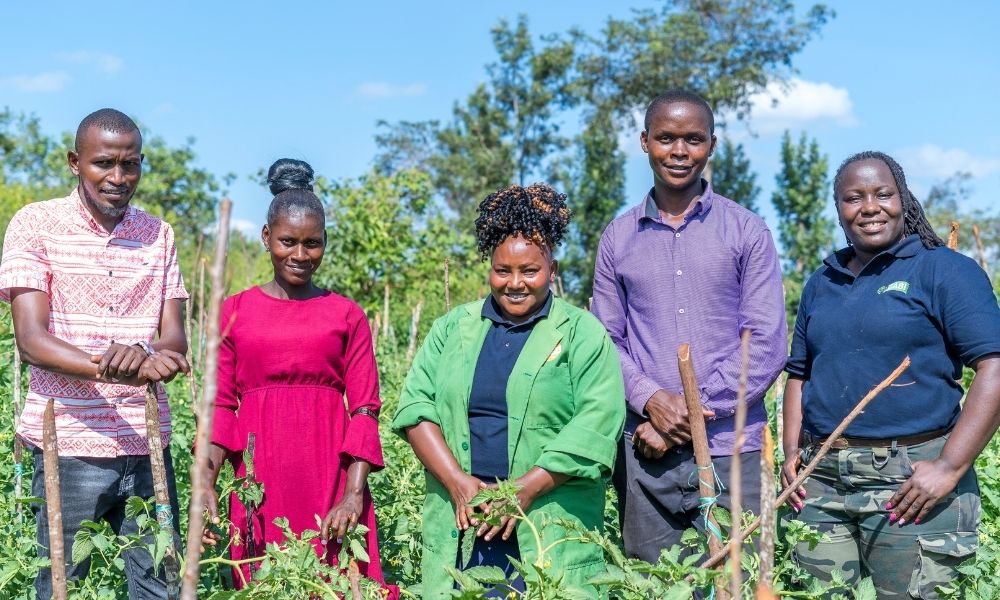
Across Kenya and Uganda, the programme has trained 878 youth mentors who have subsequently mentored 3,512 young people. Through demonstrations, advisory services, farmer groups, and business networks, they have collectively reached more than 131,000 farmers. The five profiles below come from a small cohort of agripreneurs. Together, they estimate they reach up to 3,800 farmers annually and mentor more than 200 young people. Their stories show how investing in youth skills creates benefits that extend far beyond the original trainees.
“PlantwisePlus is about more than technical training. By combining plant health expertise with business development, mentoring and practical experience, we’re helping young people build enterprises that generate income while strengthening the agricultural support available to local farmers.”
Dr Monica Kansiime, Deputy Director, Development and Outreach, Africa, CABI
Meet the agripreneurs
Kelvin Musyoki: one enterprise, many opportunities
Kelvin Musyoki began with a modest tree nursery venture. After receiving PlantwisePlus training in agribusiness, plant health, and advisory services, he diversified his enterprise to provide agricultural consultancy, farmer training, orchard establishment and management, digital advisory services, market linkage support, and smart farming solutions. He has also developed a specialized mango orchard management service that includes pruning, crop husbandry, pest management, and farm advisory support. More recently, he has expanded his nursery into agroforestry and seedling supply, creating new revenue streams while contributing to landscape restoration.
Kelvin’s story is an example of the training’s multiplier effect. He started with a small youth group of four members. That group has grown into a network of approximately 35 young entrepreneurs, many of whom now operate their own nursery and agricultural service enterprises. Kelvin estimates he supports between 500–800 farmers annually through training events, demonstrations, and digital extension platforms. He also mentors 35–50 young agripreneurs.
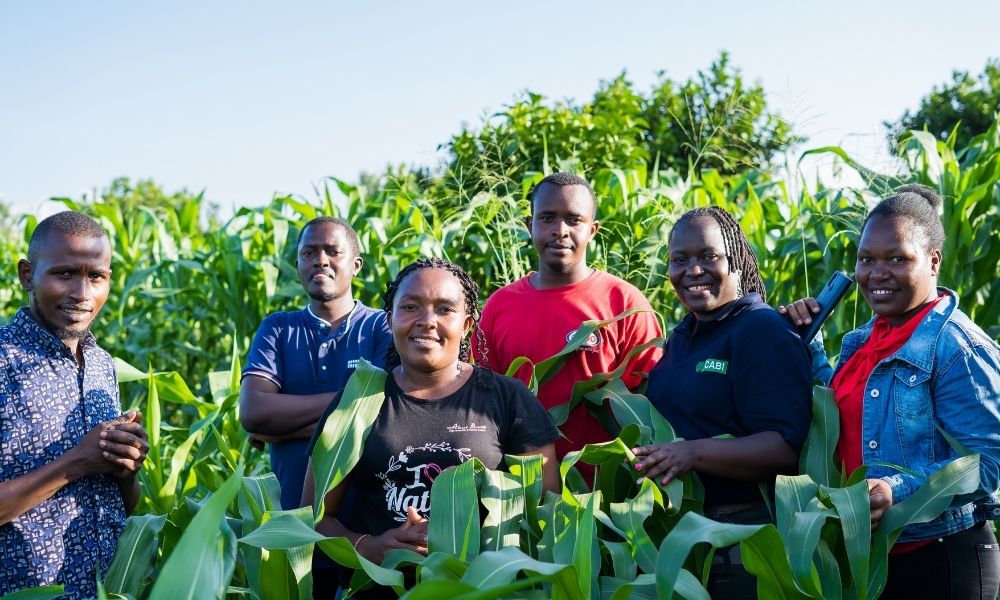
Zipporah: a community hub for agricultural services
Another inspiring example is Zipporah, who transformed her training experience into a community-focused agricultural service enterprise. Her Zipporah Farmers Center supports women, youth, and farming households with training, technical advice, access to quality farm inputs, agribusiness development, climate-smart agriculture practices, and market linkages.
Instead of seeking support from multiple providers, farmers can access a range of agricultural services through a single trusted centre. Through training programmes, input sales, advisory services, and farmer mobilization, Zipporah reaches around 600–1,000 farmers annually. She also mentors 50–100 young people and women entrepreneurs.
The center also promotes sustainable agriculture, climate resilience, and environmental conservation, helping communities adopt practices that improve livelihoods while protecting natural resources.
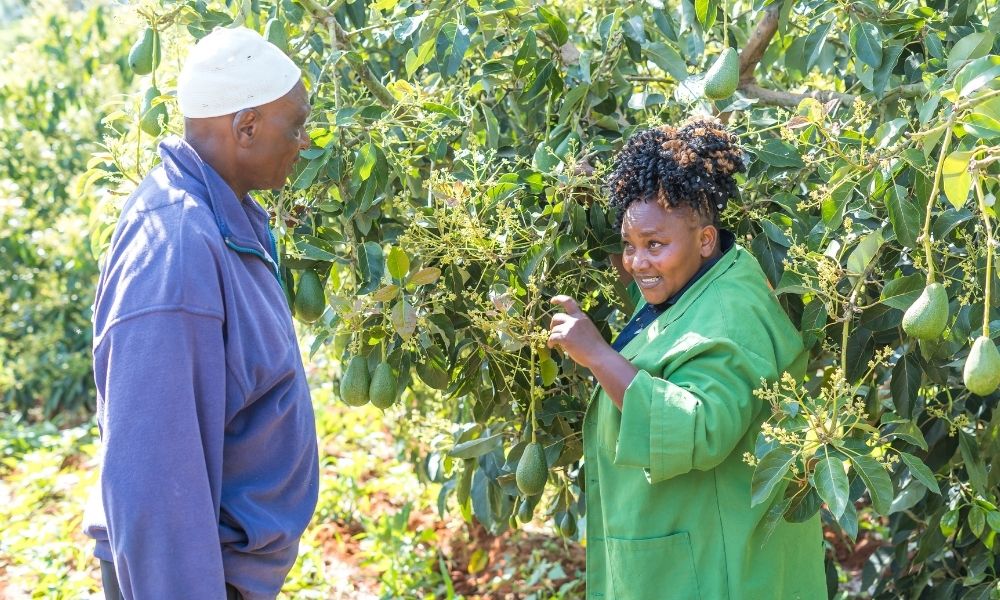
Monica Ndambuki: production and advisory services in dairy
Monica Ndambuki’s business illustrates that production and service delivery can reinforce each other. While generating income from milk production, she provides guidance to other farmers on dairy management, fodder production, and farm planning. This approach strengthens both her own enterprise and the performance of the farmers she supports.
Monica’s combined enterprises generate an estimated KES 400,000 to KES 700,000 annually. She supports about 50 dairy farmers and mentors 10 to 20 young farmers. What is more, being both a practitioner and an advisor strengthens her credibility with her customers.
Mirriam Mutua: seed production and sustainable farming
Mirriam Mutua combines certified seed production with conservation agriculture training and support for farmer organizations. She also trains farmers on sustainable farming practices and climate-smart agriculture, integrating technical extension directly into her production business.
This diversification creates multiple revenue streams while expanding farmers’ access to both quality inputs and information on sustainable farming practices. Mirriam’s activities generate an estimated KES 600,000 to KES 1 million annually, reaching approximately 400 farmers and mentoring around 15 to 30 young farmers.
Steven Muviu: from one farmer group to eight
Steven Muviu began his career as an extension service provider. Since attending the PlantwisePlus training, he has become a professional agricultural trainer. Steven combines extension services, climate-smart agriculture training, ecosystem restoration awareness, pollinator conservation education, and farmer mobilization.
His network has expanded from one farmer group to eight. Steven estimates he supports 400–700 farmers annually, mentors 30–50 youth champions, and generates approximately KES 500,000 annually through training and consultancy assignments.
Skills that create a lasting impact
On World Youth Skills Day, these five stories demonstrate how investing in young people’s skills strengthens not only individual livelihoods but also the farming communities they serve. Equipped with technical, business, and leadership training through PlantwisePlus, these agripreneurs have built diversified enterprises that combine production, advisory services, training, and market linkages, making agricultural support more accessible to local farmers.
This matters for farmers, who no longer need to travel long distances or consult multiple providers to access agricultural support. It also matters for rural economies, where youth-led service hubs are creating employment, accelerating the adoption of improved technologies, and strengthening local responses to pest and disease outbreaks. Moreover, these agripreneurs are supporting the uptake of sustainable farming practices, including climate-smart agriculture and conservation techniques.
With the right skills, networks, and support, young people in East Africa are demonstrating that agriculture can be an innovative career path. They are building more resilient, more profitable businesses while providing farmers with the information, services, and expertise they need.
Further reading
Employment pathways and business models that empower African youth engagement in agriculture
PlantwisePlus
PlantwisePlus gratefully acknowledges the financial support of the Directorate-General for International Cooperation, Netherlands (DGIS); European Commission Directorate General for International Partnerships (INTPA); UK International Development from the UK government; and the Swiss Agency for Development and Cooperation (SDC).
Interested in learning more?
PlantwisePlus works with partners including governments, research institutions, local NGOs, and regional plant protection organizations to strengthen plant health systems and improve food security.
>> Discover more about our approach and how you can get involved.
Related News & Blogs
Agricultural service providers are transforming rural livelihoods – here’s how
Agricultural service providers play an important role in farming. In addition to offering support, they also help to fill gaps in public extension systems. They deliver services such as pest and plant health diagnosis and integrated pest mana…
10 September 2026