
Plant health system developing well in Zambia
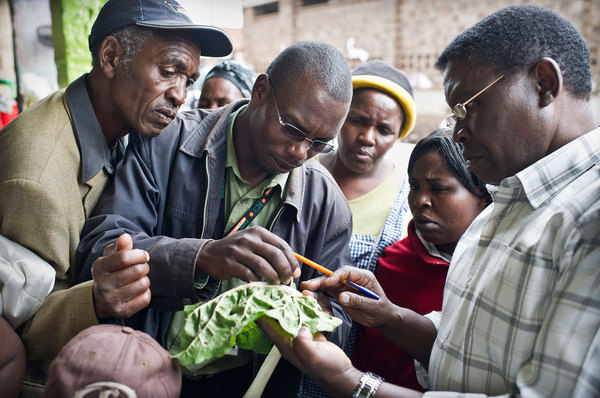
Since the launch of Plantwise in Zambia last year, much progress has been made to build capacity within the national plant health system. In collaboration with the Zambia Agriculture Research Institute (ZARI), CABI staff have successfully trained crop officers and extension staff from the Department of Agriculture, ZARI, and Self Help Africa on ‘how to…
Tuta absoluta: combating the tomato leafminer [Video]
A recent IPM workshop in Ethiopia focussed on the tomato leafminer – a pest that causes devastation on tomato crops in Europe, Africa and South America. This video shows how the workshop attendees dedicated their time to finding out more about the pest, seeing it in the field, and working on recommendations for control. To…
Horizon Scanning for Invasive Species
This article from the CABI Invasives Blog highlights the importance of looking to the future when determining the threat of pests to a country.
UK Needs Increase In Agriculture Graduates To Tackle Global Food Security
Increasing the production of food in an environmentally sustainable way is a major global issue. A report produced by the UK Cabinet Office in 2008 predicted that the global population will rise to 9 billion by 2050 from a current 6.8 billion. This increase in population will substantially increase demand for food, with food production…
Bread from the ‘Tree of Life’
Breadfruit has been coined the new ‘super-fruit’ and according to some has the ability to alleviate world hunger. However, it has recently been discovered that breadfruit may also have a very different role in saving lives. Scientists have isolated three chemicals produced in the male inflorescence of the breadfruit that are extremely effective at repelling…
Update: Plant Health News (18 Dec 13)
Here’s a taste of some of the latest stories about plant health, including the use of technology to improve the detection of papaya viruses, toxins discovered in banana root tissue kill root pests and the vital importance of water conservation in Nigeria to avoid food crises. Click on the links to read more of the…
See Xanthomonas bacteria infecting a tomato plant [Video]
If you’ve ever wondered what exactly happens when a disease infects a plant, watch this video. This detailed animation shows Xanthomonas bacteria infecting a tomato plant, causing bacterial spot disease. For more information about Xanthomonas in plants, and how to control it, visit the Plantwise Knowledge Bank.
Typhoon Haiyan Devastates Agriculture in the Philippines
Typhoon Haiyan, one of the most powerful storms on record tore through the Philippines on 8th November. With a confirmed death toll of 4,460, 4 million people displaced and 13 million people affected, the typhoon has undoubtedly caused widespread destruction and devastation. The destruction to the country’s agricultural sectors is becoming increasingly evident. An estimated…
The Bird, the Borer and the Bean
A recent study carried out in Costa Rica found that insectivorous birds such as the Yellow Warbler help to reduce infestations of the Coffee Berry Borer Beetle on coffee plantations by 50%. This free pest control service is estimated to save a medium sized coffee farm up to $9,400 per year. The study carried out by…
Could Spider Venom Be Used As A Novel Insecticide For Major Crop Pests?
A new protein discovered in the venom of Australian tarantulas can also kill insect pests that consume the venom orally. The protein known as orally active insecticidal peptide-1 (OAIP-1) was found to be highly toxic to insects that consumed it, with a similar efficacy to the neonicotinoid insecticide imidacloprid. In particular, the protein was found…