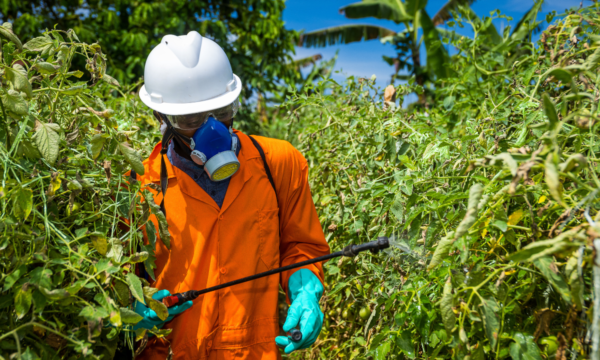
An estimated 40% of crops worldwide are lost to pests every year. In response, farmers often rely on pesticides to secure yields and support their incomes. But when these are misused, human health and ecosystems can suffer.
In Pakistan, many farmers apply chemicals without adequate guidance on dosage and safety precautions. Women and children are among the most vulnerable to the risks. Despite playing a central role in farming and household pesticide management, women often lack access to training, extension services and mass media.
Pesticide dealers and spray operators are key influencers of farmer behaviour. Yet they are not consistently regulated or adequately trained. Addressing pesticide risk in Pakistan, therefore, requires more than technical solutions. It requires sustained changes in knowledge, attitudes and everyday practices.
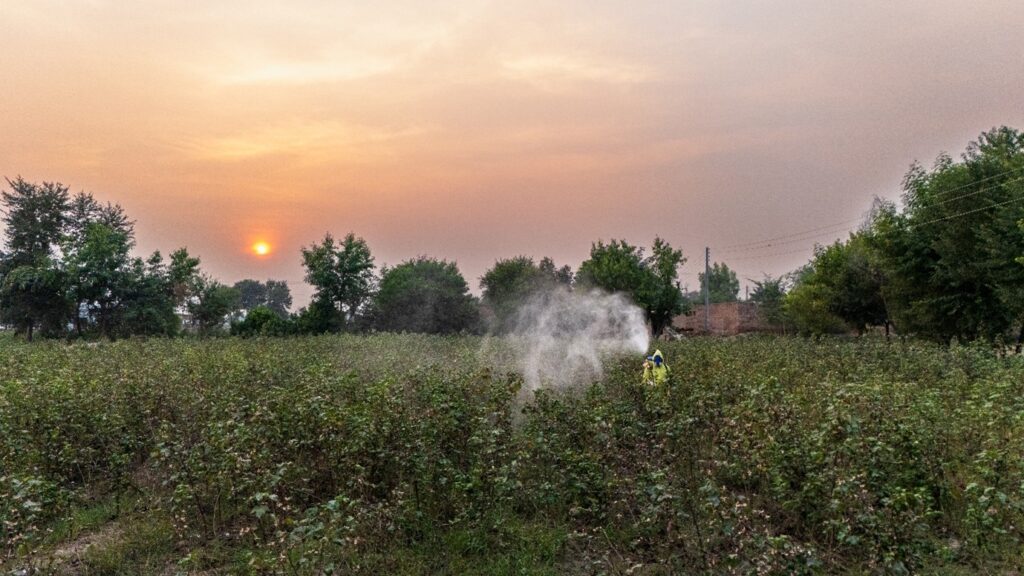
Why behaviour change, not pesticides, is the answer
Under their PlantwisePlus programme, CABI implemented Social and Behaviour Change Communication (SBCC) activities in Pakistan.
The aim was to go beyond technical pest management. Using targeted communication, media engagement and community-level action to influence behaviours, shift social norms and address barriers to safer practices. The approach promoted less harmful practices and built capacity from farm level through to agro-dealers and journalists.
Azmat Abbas, Development Communication Manager said: “Farmers often know about pesticides, but information alone does not change what happens in the field. Behaviour change helps translate knowledge into safer, more practical decisions.”
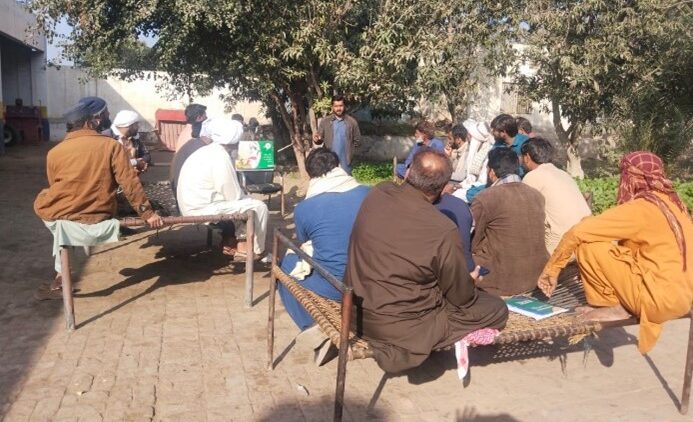
Real change in farming communities
Following the SBCC activities, stories from farmers highlighted the impact. Many described abandoning long-standing but dangerous habits. “We used to bring empty pesticide bottles home,” one farmer shared. “Now we know how harmful that is, and we don’t do it anymore.”
Women’s participation also revealed important shifts. Female farmers spoke with growing confidence about precautions that were previously unfamiliar. “These sessions opened my eyes,” one woman explained. “Now I know how to keep my children and animals safe.”
Practical demonstrations, particularly those using flipbooks, proved helpful. Farmers noted how these visuals helped reshape their understanding. “When we saw it with our own eyes, we understood. That’s when we realized we could reduce pesticides and still protect our crops,” one farmer shared.
The change extended beyond farms and households. Agro-dealers began improving their safety practices. As one trainer recalled: “A farmer saw me wearing gloves while handling pesticides. The next day, I saw him handling pesticides using plastic bags as improvised gloves.”
A rapid qualitative assessment at the end of the campaign reinforced these observations. Farmers reported increased awareness of health risks such as skin irritation, breathing problems, headaches, and nausea. Meanwhile, their knowledge of safe handling and storage also improved.
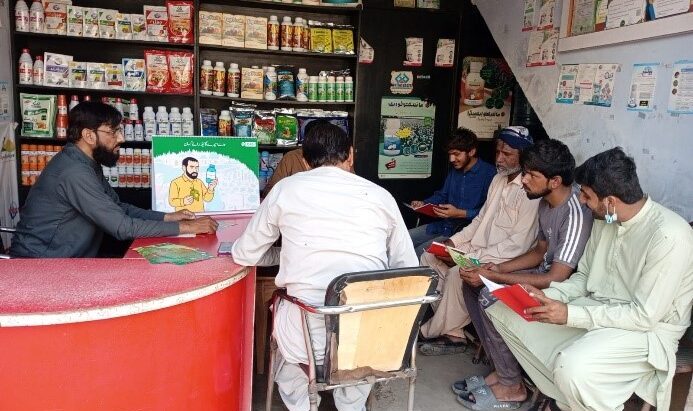
Effecting change on the ground
Pilot field outreach activities in 2025 focused on tomato farming in Multan and Muzaffargarh. During this period, the team held nearly 280 awareness sessions, reaching around 5,900 farmers, pesticide dealers and sales staff. These sessions combined discussion, demonstrations and problem-solving tailored to local areas.
Agriculture extension officers led most of the sessions. Community groups played an important role mobilizing women and sustaining engagement. Meanwhile, sessions led by trained chemical pesticide dealers helped reinforce safety messages at the point of sale.
Media as a catalyst for change
Media advocacy played a key role in strengthening journalists’ capacity to report on pesticide risk reduction. Press clubs in major cities helped build a national network of reporters. These clubs equipped them with knowledge to cover pesticide risk reduction and integrated pest management (IPM) more effectively.
Pakistan’s first agri-journalist forum further expanded coverage of pesticide safety, sustainable farming, and women’s roles in agriculture. More than 200 journalists received awareness raising sessions on pesticide risk reduction. As a result, leading media outlets across Pakistan published stories on pesticide risk reduction. More than 20 reports in the print media and 10 television talks shows on the topic during 2025 alone.
Broadcast media amplified these efforts. In southern Punjab, radio spots in Punjabi and Saraiki aired more than 5,400 times. Messages covered IPM, safe pesticide use and alternatives such as Trichogramma rearing. Eleven local talk shows broadcast discussions on safer practices led by farmers. Even with access gaps, especially for women, wider media outreach still helped more people engage with the SBCC-led messages.
Sustaining change
The assessment findings and field experiences point to clear opportunities for strengthening and maintaining progress achieved through the SBCC approach.
Dr Naeem Aslam, Pakistan Country Coordinator, explained: “To sustain the progress achieved through the SBCC approach, we need consistent reinforcement of key messages and better access to practical resources like PPE. Extension services, agro-dealers, community leaders and media professionals can continue supporting safer pesticide use through everyday interactions, demonstrations, peer learning and local reporting.”
The experience has also built confidence among extension staff, pesticide dealers, journalists and community activists. It shows that local stakeholders are well positioned to gradually expand efforts to reduce pesticide risks as part of their routine work.
Additional information
Related blogs:
Pakistan launches agri-journalist forum to promote sustainable farming
Changing behaviour around pesticide use can make farming safer – here’s how
Pesticide risk reduction in Pakistan: Building a safer future for farming
Interested in learning more?
PlantwisePlus works with partners including governments, research institutions, local NGOs, and regional plant protection organizations to strengthen plant health systems and improve food security.
>> Discover more about our approach and how you can get involved.
Related News & Blogs
How IPM is helping Vietnam’s tomato farmers manage invasive tomato leafminer
Tomato farmers in Lam Dong Province, Vietnam, are gaining practical knowledge on managing the invasive South American tomato leafminer. The pest, Phthorimaea absoluta (formerly Tuta absoluta), can be difficult to control once established. Through integ…
14 October 2026