Agro-dealers in Nepal can play a pivotal role in reducing the risks associated with pesticide use, such as harm to human health and the environment. They are a key source of pest management advice for smallholder farmers. However, many lack access to accurate information about risk reduction and safer plant protection products. How can we implement better risk reduction strategies by working with agro-dealers?
One way is through voluntary sustainability standards (VSSs). These standards set sustainability requirements for businesses, including agro-dealers. They cover areas such as health and safety, and businesses’ impact on the environment. The Rainforest Alliance, for example – a VSS model – uses sustainability certification to protect forests.
However, while consumer and farmer views on VSSs are well studied, we know much less about agro-dealers’ views. To address this, PlantwisePlus investigated agro-dealers’ perspectives of a hypothetical VSS scheme. The study focused on the proposed promotion of environmentally friendly plant protection products. The results give us valuable insights into preferences and thus solutions that might work best among agro-dealers. In this blog, we look at the agro-dealers’ perspectives of VSS.

What are agro-dealer preferences for voluntary sustainability standards?
Nepal is an interesting case study. The quantity of pesticides imported into the country has nearly doubled over the past decade. Moreover, reports suggest that the government is keen to promote sustainable plant protection products and integrated pest management (IPM). This makes the country highly suited to this area of research.
The study aimed to test VSS assumptions among agro-dealers in Nepal. Firstly, the study assumed agro-dealers might support a VSS to gain a competitive edge by selling certified, environmentally friendly pesticides. Secondly, it anticipated that through a VSS, agro-dealers may be able learn about pesticide risk reduction to protect their own health. Thirdly, it assumed that environmentally aware agro-dealers would want to promote sustainable products.
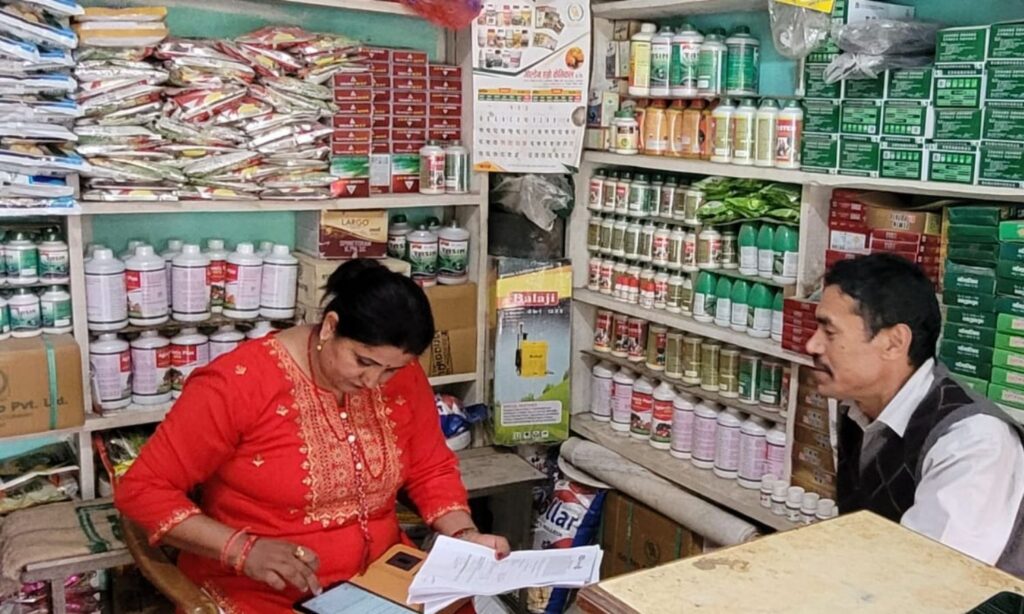
CABI conducted the survey from September to November 2022 across all seven provinces and three ecological regions of Nepal. In total, 538 pesticide retailers were surveyed. A local team visited each pesticide shop and carried out face-to-face interviews. In addition to the interviews, the team recorded the types of products sold. They also checked for regulatory compliance and discovered that the majority of agro-dealers in Nepal (95%) had attended mandatory training.
What do the findings reveal?
Results revealed that pesticide retailers were interested in VSSs aimed at reducing pesticide risks. Agri-dealers’ curiosity about standards was high, and they wanted to learn more.
Health and PPE are priorities when it comes to standards
Unsurprisingly, agro-dealers in Nepal preferred standards that could potentially help them to increase their incomes. They also showed a keen willingness to pay to avoid the environmental and health and risks associated with pesticides. However, while the study found all shops sold pesticides, only 45% sold personal protective equipment (PPE). This means most retailers sold pesticides without offering the equipment that customers need for protection. The shortage of PPE in shops is often cited as a key reason that smallholder farmers use it so little in Nepal and elsewhere. VSSs could help to overcome this challenge by raising standards for the sale of PPE.
Training would be welcomed as part of the standards
The pesticide retailers also showed a preference for VSSs that provide training opportunities. Moreover, they placed a greater value on face-to-face training compared to e-learning. A 2017 study in Nepal revealed, perhaps unsurprisingly, that training significantly increased agro-dealers’ knowledge about pesticide risks. It also led to a reduction in the sale of unregistered pesticides. The PlantwisePlus study went further and revealed that agro-dealers in Nepal desired training in crop protection. They were willing to pay 13,000 NPR annually for a VSS that provides online training, and 5,000 NPR more for face-to-face training.
Sale of lower-risk products would be supported – with some caveats
Concerning nature-based alternatives, 65% of the surveyed agro-dealer shops sold environmentally friendly biopesticides alongside synthetic pesticides. The results show that they are willing to pay 10,000 NPR annually to take part in a VSS that allows the sale of registered lower-risk products and offers crop pest advisory services to farmers.
Interestingly, agro-dealers in Nepal were not very supportive of selling only lower-risk registered products. This may be because demand for lower-risk products like biopesticides is low and inconsistent. Chemical pesticides remain in high demand in Nepal, so restricting high-risk products could harm agro-dealers’ businesses.
The findings show retailers feel selling only lower-risk products would put them at a disadvantage. In fact, the results showed that biopesticide retailers do not see the prohibition of certain pesticides under a VSS scheme as useful. High-risk pesticide products constitute the best-selling products for most pesticide vendors in the country. Moreover, should farmers wish to buy them, cheaper high-risk products can be obtained easily from neighbouring countries. The study also found retailers might accept selling only lower-risk products if they could offer pest diagnostic and advisory services that boost their competitiveness and income.
What does the study tell us?
Agro-dealers in Nepal show a clear interest in sustainability standards, especially those that improve safety, training, and business opportunities. However, any effective VSS must balance sustainability goals with the realities of retail. The paper helps to fill the knowledge gap about the reception of a potential VSS among pesticide retailers. Its insights can help to shape practical, well-supported standards that strengthen both pesticide risk reduction and agro-dealer livelihoods.
Looking to the future, CABI will support Nepal’s national authorities with mandatory training to certify and license pesticide retailers. CABI is currently working with the federal Plant Quarantine and Pesticide Management Centre, adapting an existing training curriculum so that provincial governments can use them. This is because Nepal’s local authorities now have responsibility for training and licensing agro-dealers. In 2026, CABI’s work will continue, focusing on adaptation of existing training to align with new curriculum materials.
Read more on this topic:
Read the full study: Pesticide retailers’ preferences for sustainability standard attributes: evidence from Nepal
Safer pesticide use: Voluntary standard for agro-dealers launched in China
Digital skills training: Enabling access to digital advisory tools for women in Nepal
Training Sri Lanka’s agro-dealers in pesticide risk reduction
How agro-dealer training in Uganda is reducing pesticide risks and making farming safer
Related News & Blogs
From monitoring to impact: how evidence is driving youth agripreneurship
PlantwisePlus works with partners to help farmers protect their crops and livelihoods, strengthening plant health systems. By integrating capacity development, digital advisory tools, and evidence-based decision-making, the programme is creating more r…
23 March 2026