CABI Academy is a global learning hub for people who want to boost their expertise in agriculture under the CABI-led global programme, PlantwisePlus. Since 2020, it has been home to a range of interactive, self-paced online courses, including Crop Pest Diagnosis (CPD) and Crop Pest Management (CPM). Designed to strengthen learners’ skills in crop pest diagnosis and management, these two courses build valuable knowledge covering a wide range of pests, from plant diseases to invasive insects.
Climate change has made pest diagnosis and management a critical skill for crop protection. Specifically, as weather patterns change, pests will spread further, impacting food security and farmer livelihoods. Courses like CPD and CPM can give farmers and the people who support them the knowledge they need to address climate-change induced losses, safeguarding food production. However, it is important to understand the extent to which online learning brings about benefits and positive change.
Last month, CABI published a working paper evaluating the uptake and impact of both courses. Understanding their performance is essential. It reveals how effectively learners are progressing and what impact the training is having. In addition, these insights help to improve content, enhance user experience, and ultimately ensure the courses deliver real value. In this blog, we look at highlights from this CABI Academy evaluation from 2022. The report examined the outcomes of the CPD and CPM courses across three countries (Bangladesh, Bolivia, and Rwanda) representing three regions (Asia, Latin America, and Africa). What benefits and changes have come about as a result of this online learning?
How does CABI Academy fit into the PlantwisePlus programme?
In 2020, the PlantwisePlus team recognized the need to develop a range of digital support tools to strengthen farmer advisory services. This led to the creation of CABI Academy – a global platform for training, education, and professional certification for people working in crop health management. The CPD and CPM courses were adapted from plant doctor materials developed under the PlantwisePlus programme. As a result, they enabled training to be scaled, strengthening extension services across more countries.
The two courses guide learners on a journey into the world of crop pests. They help to sharpen their skills in identifying and managing the insects and diseases that threaten food production. Whether a budding agronomist or a seasoned professional, the courses turn real-world pest challenges into opportunities to prevent crop losses.
Reviewing the course, overcoming challenges
Barriers to enrolment and the impact of promotion
The first step to evaluating a course is understanding barriers to enrolment. What keeps learners from accessing it and signing up? The review revealed that challenges included:
- Language limitations
- Sign-up and login processes
- Internet connectivity, and
- Limited availability of time for independent study
Subsequently, PlantwisePlus is taking measures to help learners overcome these barriers, including financial support. When it comes to promotional activities, although they occurred during the COVID pandemic, the online nature of the training was much less impacted. Many people accessed CABI Academy directly by simply inputting its URL.
Learner demographics and participation patterns
Results show the courses reached their target age group of 18-57 in lower-income countries. Most engagement with CABI Academy came from those in farming advisory roles. Overall, similar numbers of men and women appeared to access the courses. However, this depended on the country. A significant proportion of users access CABI Academy through mobile devices. This has subsequently highlighted the need to make the courses fully mobile responsive.
Learner progression and perceived content value
There is a predictable and expected decrease in participation as learners progress through the course modules. However, passing assessments to gain certification is important to them. Evaluation can be challenging. Far more learners attempted the assessments than completed them. Overall, learners felt the module contents were important for helping them to complete the assessments. Moreover, most people who completed the course felt they would be able to successfully apply skills gained in their current role.
The practical application of knowledge
Learner responses reveal that the courses are being converted into real-world practices and skills. For example, an agricultural extensionist from Bangladesh explained how he can now take a systematic approach to diagnosis, addressing plant health problems effectively using the CPD course methodology. An extensionist from Bolivia shared how the course helped him to advise farmers with more specific pest management recommendations. In addition, a plant doctor from Rwanda shared how they applied the knowledge learned from the courses to identify bacterial wilt in a farmer’s field.
Overall, from improved plant health diagnosis to clearer pest management recommendations, learners have been able to practically apply the methodology from the CPD and CPM courses. Subsequently, learners are improving the ways in which they support smallholder farmers. The courses are strengthening their confidence by giving clarity around the different symptoms caused by crop pests and diseases, and by improving professional practices.
This is important because PlantwisePlus aims to deliver sustainable solutions to plant health. The course feedback shows that achieving this aim is on track, especially in relation to the programme’s farmer advisory objective.
The effects of knowledge transfer
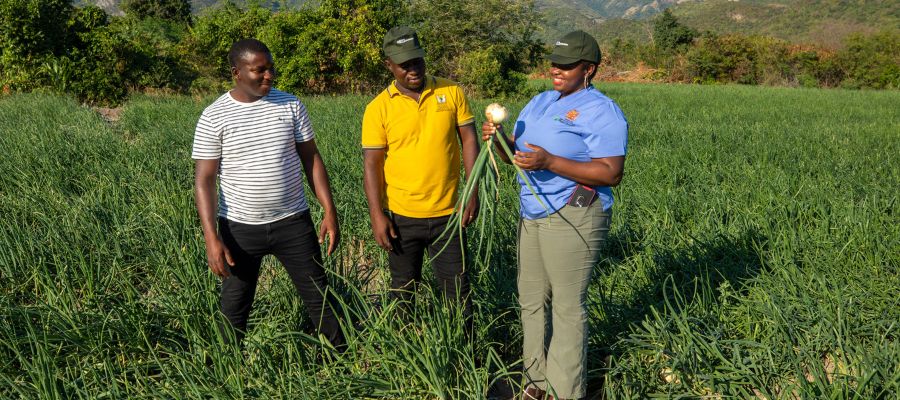
PlantwisePlus developed the CPD and CPM courses for learners in farmer advisory and academic roles. The aim was to improve professional practices that support smallholder farmers and ultimately reduce crop loss. This makes sharing the course information with wider communities central to the programme’s aims. The evaluation revealed that learners feel they are actively achieving this.
For example, a researcher from Rwanda explained how he applied the course skills in the field. He shared knowledge with farmers in rural communities. Here, they have improved crop production and, as a result, have increased their incomes and livelihoods. He applies integrated pest management (IPM) principles on farms and teaches smallholders how to stop overusing pesticides. Moreover, he trains them to consider IPM first – a core aim of the pesticide risk reduction pillar of PlantwisePlus.
This feedback demonstrates how the course supports wider communities with sustainable agricultural practices. It is encouraging to see that learners are using the CPD and CPM courses to inform their professional practices. The methodologies are being practically applied in the field directly supporting the farmer advisory goal of PlantwisePlus.
Impactful courses to support the future of sustainable farming
Upon evaluation, we can see how the CABI Academy CPD and CPM courses have had an impact on the real-life application of plant health knowledge. Moreover, better plant health is leading to better crop production and incomes. The courses equip advisors – and therefore farmers – with essential skills to protect their yields and livelihoods. Despite challenges such as language, connectivity, and time, participants are improving their diagnostic skills. They are learning about and then applying more effective pest management advice. The feedback shows how the courses are moving the overarching PlantwisePlus goals forward and contributing to more sustainable, climate-resilient agriculture.
Read the working paper: CABI Academy evaluation 2022
PlantwisePlus
PlantwisePlus gratefully acknowledges the financial support of the Directorate-General for International Cooperation, Netherlands (DGIS); European Commission Directorate General for International Partnerships (INTPA); UK International Development from the UK government; and the Swiss Agency for Development and Cooperation (SDC).
Further reading
Meet the plant doctor bringing CABI Academy to India’s agricultural advisors
Related News & Blogs
From monitoring to impact: how evidence is driving youth agripreneurship
PlantwisePlus works with partners to help farmers protect their crops and livelihoods, strengthening plant health systems. By integrating capacity development, digital advisory tools, and evidence-based decision-making, the programme is creating more r…
23 March 2026