
Understanding mango mealybug – a significant crop pest
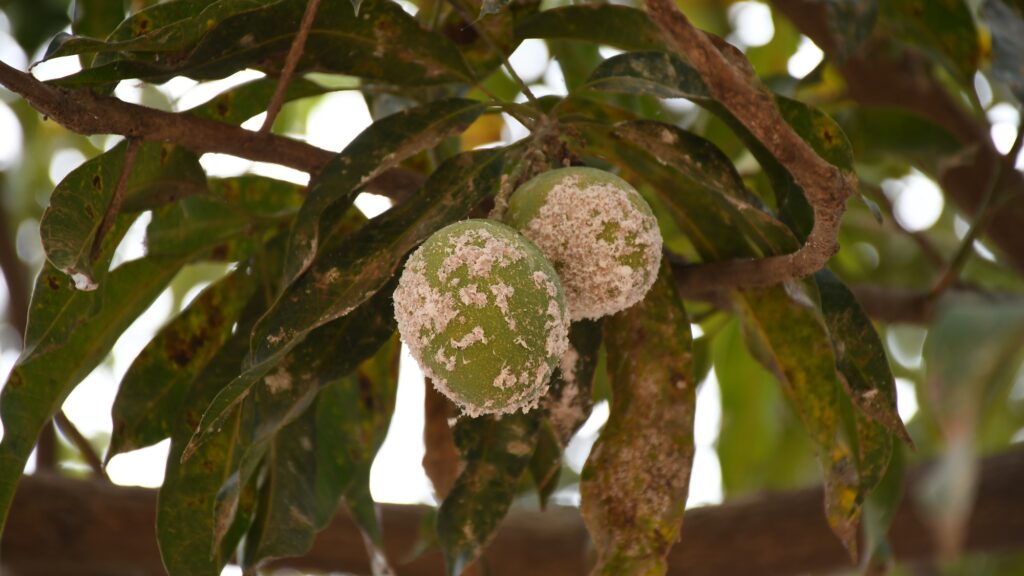
The mango mealybug (Rastrococus invadens) is an invasive pest outside its native home in Southeast Asia. It threatens mango crops, particularly affecting smallholder farmers. This scale insect pest lowers mango yields and quality, and because it’s a quarantine pest, it can also impact trade.
CABI helps develop regional Pest Risk Analysis to prevent/reduce the invasion of new crop pests in West African countries

CABI has teamed up with 15 NPPOs for a workshop held to help develop regional Pest Risk Analysis (PRA) to prevent/reduce the invasion of new crop pests in West African countries.
Celebrating success: Zambian smallholders combat cassava brown streak disease

Cassava is a critical crop to Zambia’s economy and food security. According to a 2019 paper, cassava (Manihot esculenta) is one of the most important root staple crops in Zambia. An estimated 30% of Zambians – over four million people – consume cassava as part of their daily diet. Indeed, this crop is so important…
PlantwisePlus – supporting countries with pest preparedness for food security

On World Food Day, CABI’s Global Lead for Pest Preparedness, Dr Ivan Rwomushana, considers how pest preparedness can safeguard ‘foods for a better life and a better future’ helping smallholder farmers to access the knowledge they need to prepare for and address the spread of pests. When it comes to addressing food security, pest preparedness…
India Update: Pest Risk Analysis workshop

A Pest Risk Analysis (PRA) allows National Plant Protection Organisations (NPPOs) to assess risks posed by pests or pathways of quarantine concern and identify options to manage those risks. In early Jun, CABI, in collaboration with the National Institute of Plant Health Management (NIPHM), conducted a five-day regional workshop on PRA using CABI decision-support tools.…
How does parthenium weed impact maize crop production?

Parthenium hysterophorus, or parthenium weed, is highly invasive in many parts of the world. It is native to Central and South America but is now found in Asia and Africa, among others. In Australia, it has caused millions of dollars in crop yield losses. This is because the weed can produce prolific seeds, germinate, and…
Horizon scanning for emerging pests and diseases in Pakistan: Collaborating to safeguard agriculture

Pakistan’s agricultural sector is constantly struggling with the emergence of pests and diseases that pose a serious threat to the livelihoods of millions of farmers. CABI’s PlantwisePlus programme recently held a five-day Horizon Scanning workshop in Islamabad from April 29 to May 3, 2024.
National Forum stresses importance of partnerships to strengthen Bangladesh’s plant health systems
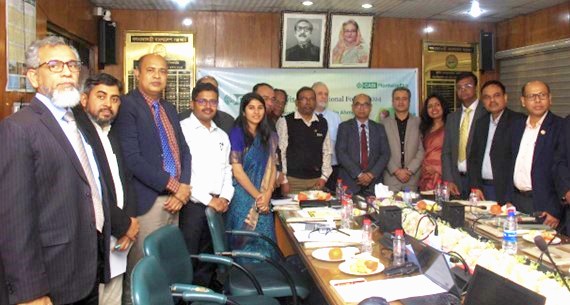
The CABI-led PlantwisePlus National Forum held at the Department of Agricultural Extension (DAE) in Bangladesh has stressed the importance of partnerships to help strengthen the country’s plant health systems.
Strengthening Bangladesh’s pest preparedness and management system

In a landmark initiative, CABI hosted a pivotal stakeholder workshop dedicated to “Strengthening the System for Pest Preparedness and Management in Bangladesh.” The workshop had two primary objectives. Firstly, to validate findings from a national pest management exercise. Secondly, to develop a roadmap to fortify Bangladesh’s pest preparedness and management system through the collaborative commitment…
CABI’s communications campaign aids the fight against Cassava Brown Streak Disease in Zambia

CABI Zambia has recently shared evidence on the impact of its communication campaign on Cassava Brown Streak Disease. The assessment finds that the campaign activities played a pivotal role in the fight against CBSD at both local and national levels.