
Plantwise helps with managing the invasive Fall Armyworm in Vietnam

During a recent visit to a plant clinic session in Vinh Phuc, Vietnam, first-hand evidence of this devastating invasive pest was shown to visiting CABI staff. A 76-year-old farmer, Madam Nguyen Thi Nam brought along damaged maize plant to seek advice from the plant doctor, Mrs Dang Thi Quynh Nga.
Maize lethal necrosis disease on the decline in Kenya
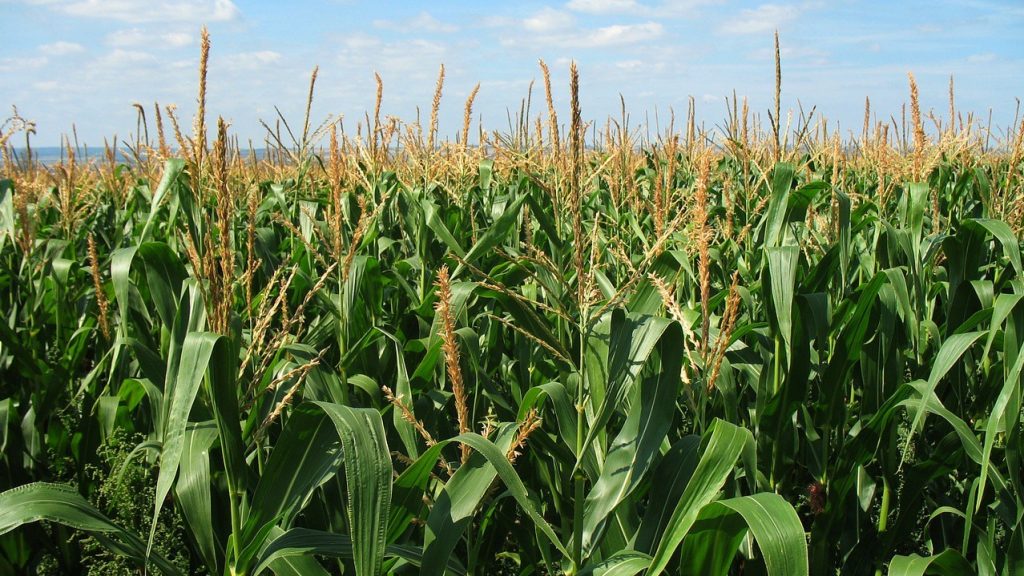
Plant clinic data collected by Plantwise countries in East Africa has corroborated a statement from the International Maize and Wheat Improvement Center (CIMMYT) which said maize lethal necrosis disease (MLN) is “under control but not eradicated”.
Exploring the “art” in “climate-smart”
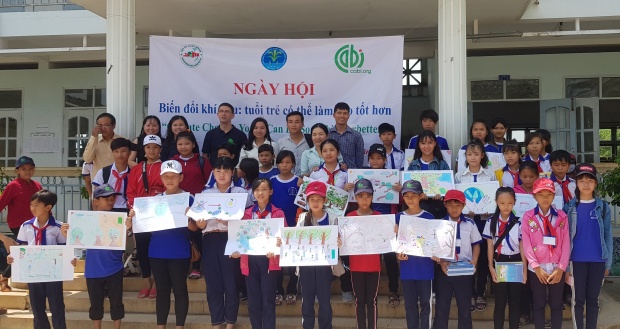
Originally published on CGIAR CCAFS Art has a place in climate discussions. Children, who are usually deemed too young to understand complex topics such as climate change must be involved as well. A campaign with the theme “Climate Change: Youth Can Do Something” was organized on 7 October 2018 in Tra Hat Climate-Smart Village (CSV)…
Delight and degrees all round for Integrated Crop Management students
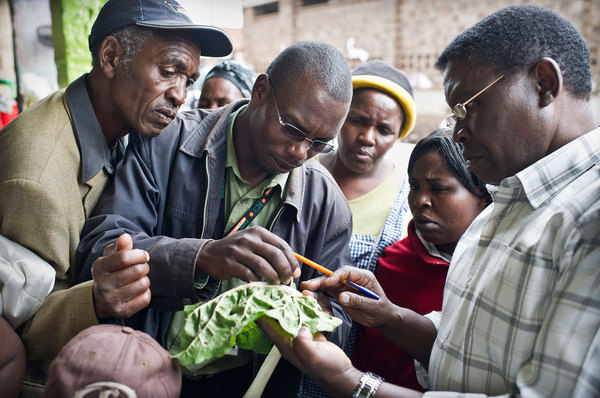
Twelve international students celebrated the completion of the 2018 Masters of Advanced Studies in Integrated Crop Management (MAS in ICM) course at the University of Neuchâtel, Switzerland. Coordinated by CABI and the University of Neuchâtel, the MAS in ICM programme provides students with a comprehensive understanding of the principles of good crop management, with an emphasis on…
Grand Challenges 2018 – solutions for safeguarding food security and sustaining trade and livelihoods
This year’s British Society for Plant Pathology (BSPP) Grand Challenges in Plant Pathology Study Group gathered at Chicheley Hall, Milton Keynes, UK, 25-28 September 2018. Chicheley Hall is a grade II listed country mansion, home of the Kavli Royal Society International Centre. This was the second meeting of its kind, following on from the first…
Too much tea: Weak global prices subject tea farmers to flat returns
Global market prices have weakened as supply exceeds demand for most farmers involved in tea production. The situation; which has devastated the hopes of farmers for lucrative returns was actually enhanced by favourable climatic conditions that brought about increased yields in most tea producing regions.
Madagascan bananas may soon be extinct
Bananas we buy across the world could be threatened with extinction in the future. This claim is due to the decline of wild banana species which could be the last resort for saving the world’s most popular banana, the Cavendish.
Rallying around plant health in Jamaica

The Rural Agricultural Development Authority (RADA), Research and Development Division (R&D) and Plant Quarantine Produce Inspection (PQPI) – all agencies of the Ministry of Industry, Commerce, Agriculture and Fisheries of Jamaica – teamed up with CABI Plantwise to prepare the first of a series of rallies on different plant health topics. A two-day workshop was…
Fall Armyworm: A new collaboration to disseminate best management practices to farmers
From the 13th to the 15th of November 2017, USAID and CIMMYT held a Regional Training and Awareness Generation Workshop on Fall Armyworm Pest Management for Eastern Africa in Addis Ababa, Ethiopia. Participants from 11 countries attended the workshop to discuss short, medium and long term strategies to control Fall Armyworm in Africa. Following its…
Plant Doctors in Ghana go digital
The operation of plant clinics in Ghana received a major boost with the introduction of digital devices to facilitate the work of plant doctors. The introduction of tablets and Android phones has proven to help plant doctors improve the quantity and quality of data generated from plant clinic operations.