
Fall armyworm could cost Africa $2bn+ in lost harvest
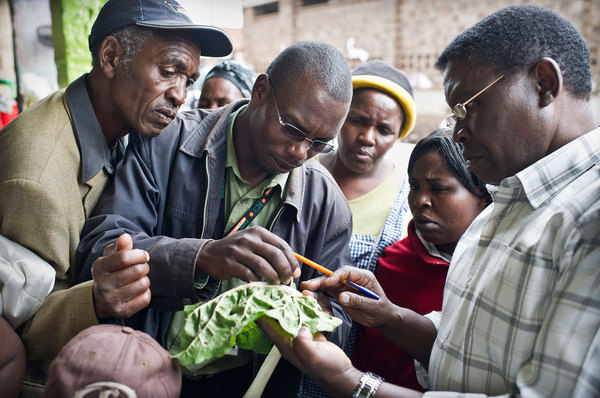
Last week, CABI confirmed that since it arrived in Africa in 2016, the Fall Armyworm (FAW) has been reported in 28 African countries, presenting a now permanent agricultural challenge for the continent. FAW mainly affects maize and can cut yields by up to 60%. In research funded by the UK’s Department for International Development (DFID), CABI…
Managing Tuta absoluta in Agricultural production systems

Adapted from ‘Tomato leaf miner/ American leaf miner management in Agricultural production systems (Distribution, biology, damage and integrated management)’ written by Koppert Biological Systems. The tomato leaf miner, Tuta absoluta, is a devastating pest of tomato. Originating from Latin America, T. absoluta has spread via infested fruits and packaging material to Europe, North Africa and the…
The Life Cycle of Fall Armyworm

The Fall armyworm, Spodoptera frugiperda, is a major invasive pest in Africa. It has a voracious appetite and feeds on more than 80 plant species, including maize, rice, sorghum and sugarcane. Another feature which makes it an incredibly successful invasive species is its ability to spread and reproduce quickly. CABI have developed a poster to…
Citrus greening detected in Trinidad
Huanglongbing (HLB), also known as Citrus greening, has been confirmed in Trinidad for the first time. The disease, which was detected on leaves from a lime tree in the north of the island, can cause devastating yield loss for Citrus growers and is regarded as one of the most important threats to global commercial and…
CABI leads rapid identification of Fall Armyworm

Identifying armyworms usually involves taking the larvae that have caused the damage, waiting for them to develop in to adults and then studying the body and markings of these adults to identify the species collected. This process causes delays to identification, and could therefore delay action for what are some of the most ravaging crop…
CPM-12 adopts a record number of new tools for protecting plants from pest spread
This week we’ve been reporting from the 12th session of the Commission on Phytosanitary Measures, which successfully drew to a close, having produced concrete tools to support plant protection through the adoption of 25 International Standards for Phytosanitary Measures (ISPMs). Under the World Trade Organization’s Agreement on the Application of Sanitary and Phytosanitary Measures (SPS…
The benefits and challenges of protecting plants from pest spread – some vivid examples from CPM-12
The 12th session of the Commission on Phytosanitary Measures (CPM) featured a full day of talks covering a range of topics related to plant health. The day began with a session on the benefits (and also the challenges) of implementing the International Plant Protection Convention (IPPC) and the International Standards for Phytosanitary Measures (ISPMs). A…
Landmark Phytosanitary meeting CPM-12 kicks off in Incheon, Republic of Korea

The 12th Session of the Commission on Phytosanitary Measures opened today in Incheon, Republic of Korea. This is significant as it is the first time that the event is being hosted outside of Rome by a member country of the International Plant Protection Convention. This year’s theme is “Plant Health and Trade Facilitation”, so this topic…
The perfect storm – how drought is hitting crops hard
Last year, one of the strongest El Niño events ever recorded caused significant changes to weather patterns around the world. Southern and Eastern Africa were hit particularly hard and suffered some of the worst drought conditions for decades, with as little as a quarter of the expected rainfall in the last few months of the…
Can farms maintain productivity while reducing pesticide use?

A new UN report states that it is dangerously misleading to suggest that pesticides are necessary to achieve food security. Instead, the report recommends that farms reduce pesticide use and adopt sustainable practices that protect crops from pests by enhancing biodiversity and natural enemies. This agroecological approach eliminates reliance on, and exposure to, expensive and toxic…