
Sri Lanka launches Skype service to further strengthen advisory support in plant clinics
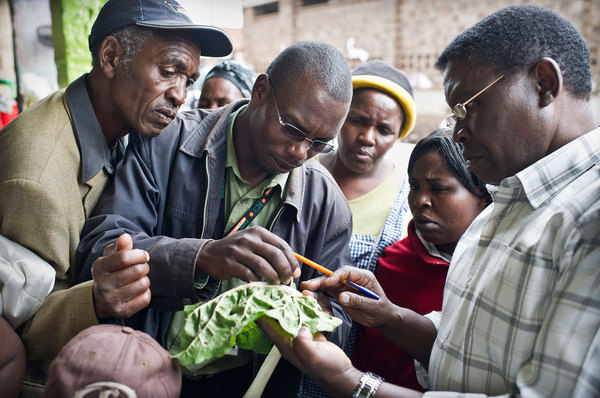
Plant clinics in Sri Lanka, known as the Permanent Crop Clinic Programme, continue to grow and modernize throughout the country. After successfully rolling out e-plant clinics in several provinces in Sri Lanka, the younger generation of agricultural extension workers is now feeling just as confident in solving crop health issues as their senior colleagues did…
Agroforestry: Mitigating Cocoa Swollen Shoot Virus Disease in Ghana

Crop diseases are an ever-increasing worldwide threat and estimated to be the cause of the 20-40% decrease in global agricultural productivity. With this boom in plant diseases affecting agricultural practices, there is therefore also an increased demand for research and the implementation of disease control and management schemes.
Update: New Pest & Disease Records (7 Feb 18)
We’ve selected a few of the latest new geographic, host and species records for plant pests and diseases from CAB Abstracts. Records this fortnight include the first report of grapevine yellow speckle viroids in Nigeria, the first report of tomato ringspot virus (Secoviridae) in a vineyard in Ohio, USA and the first report of pepper vein…
Is it time for genetically modified bananas in Uganda?
Uganda is the world’s second largest producer of banana crop, with individuals consuming around 1.5 pounds of banana every day. Due to this major need for the success of banana crops within the country, plant pests and diseases are ever more threatening.
Lead battery soil contamination in Africa and the implications on plant and human Health

Globally, battery manufacturing and recycling plants have been identified as the major sources of soil lead contamination that have resulted in lead exposure to neighbouring communities via the accumulation of lead within plants. Lead is naturally found in soil in relatively low concentrations (10-50 mg/kg) in which it is taken up by plants via the…
Update: New Pest & Disease Records (5 Jan 18)
We’ve selected a few of the latest new geographic, host and species records for plant pests and diseases from CAB Abstracts. Records this fortnight include the first report of the golden apple snail (Pomacea canaliculata) in Iraq, the first report of Ceratocephalus falcatus smut caused by Urocystis eranthidis and a new species of thrip (Genus: Odontothrips)…
Update: New Pest & Disease Records (15 Dec 17)
We’ve selected a few of the latest new geographic, host and species records for plant pests and diseases from CAB Abstracts. Records this fortnight include a first report of snow mould (Typhula cf. subvariabilis) in Antarctica, the first report of Drosophila suzukii and the black locust gall midge (Obolodiplosis robiniae) in Poland.
Rhodococcus 'Jekyll and Hyde' Bacteria Discovered in Plant Nurseries
Researchers at Oregon State University (OSU) have used genome sequencing to identify species of the soil bacteria genus Rhodococcus that is commonly associated with stimulated growth patterns in a number of plant species. Herbaceous perennials such as chrysanthemum, speedwell and Shasta daisy are primarily affected by this bacterium.
E-plant clinics pilot launched in Bangladesh
Plantwise programme was launched in Bangladesh with Plant Protection Wing (PPW), Department of Agricultural Extension (DAE) in 2015 after signing MOU with Ministry of Agriculture and Economic Relations Division of Ministry of Finance. The programme initially started with establishment of 10 plant clinics in 5 districts and is gradually scaled up to 30 plant clinics…
PRISE Quarterly progress report – June 2017
PRISE inception workshops were held in Kenya, Ghana, and Zambia in March 2017. In the workshops it was recognised by partners that PRISE is a five year project and that the full benefits will only be fully available at the end. However to ensure that we deliver value in the interim we asked partners to…