
New study shows that bacteria can be engineered to create their own fertilizer using air

Researchers have successfully engineered bacteria to use nitrogen at night to create chlorophyll for photosynthesis. This new development could reduce the need for human-made fertilizers on agricultural crops, thus reducing the cost and manpower required for fertilizer application.
Update: New Pest & Disease Records (07 August 18)
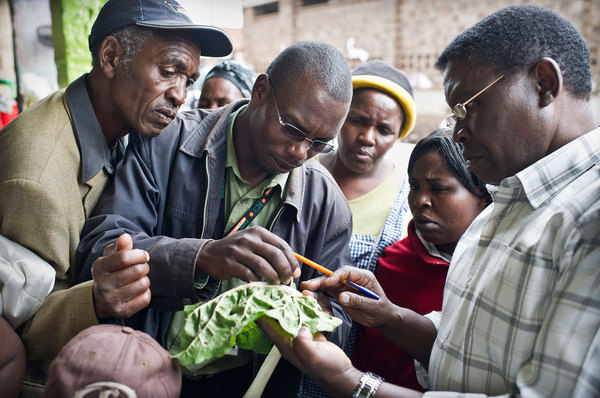
We’ve selected a few of the latest new geographic, host and species records for plant pests and diseases from CAB Abstracts. Records this fortnight include the first report of avocado sunblotch viroid (ASBVd) naturally infecting avocado in Greece, the first report of Dasheen mosaic virus infecting taro in Ethiopia and the first record of Cryptochetidae…
“Our crops have answers”
Kanyumbu village is a compact rural farming village in Lilongwe district in Malawi. Farmers in this village mostly produce maize, beans, and mangoes from a few trees scattered in their fields. In 2013, they received a new service from the Department of Agriculture; a plant clinic, with a plant doctor. They were informed that they…
PRISE: Kenya Stakeholder Workshop July 2018
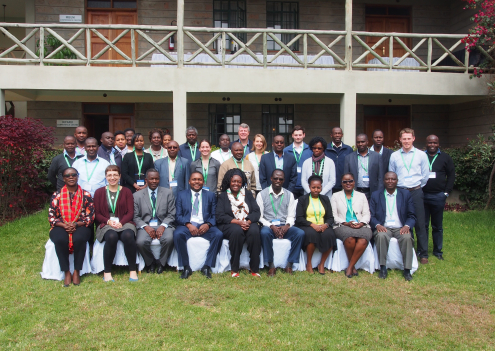
Earlier this month, members of the Pest Risk Information Service (PRISE) consortium held a stakeholder workshop in Kenya to update partners, donors and stakeholders on the progress of the project and to discuss future developments over the next four years.
“With the Plantwise Factsheets Library app, I am complete”
In the Kabwe District of Zambia, Adamson Andrew Tembo is the acting senior agricultural officer (SAO) working with the Ministry of Agriculture. He is trained as an agricultural engineer and his role has been as an irrigation engineer. He was transferred to Kabwe District in January 2017 and assumed the role of SAO in July…
Update: New Pest & Disease Records (19 July 18)
We’ve selected a few of the latest new geographic, host and species records for plant pests and diseases from CAB Abstracts. Records this fortnight include the first report of thrips from India, the description of a new species of PolycestaDejean from Chile and a report on the causal agent of leaf blight on sunflower in…
TerraSentia: the automated crop monitoring robot
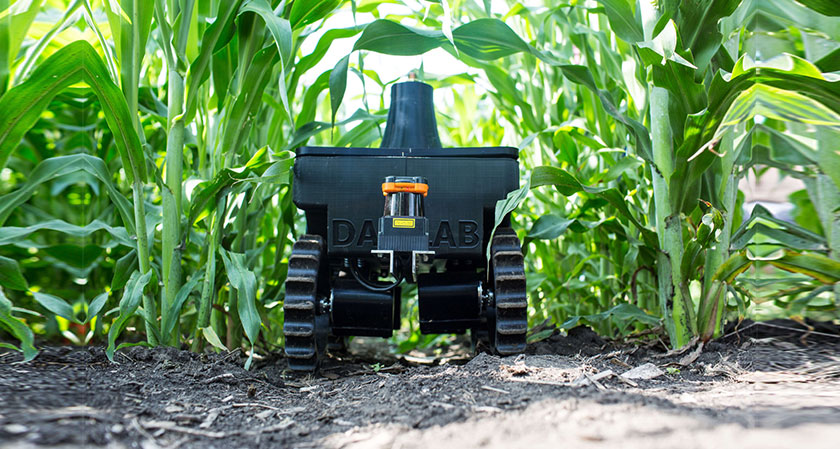
A team of researchers from the University of Illinois have developed a completely automated robot capable of monitoring crops in the field during growth periods with the aim of aiding crop breeders in the extensive task of developing and comparing plant cultivars.
Environmentally Friendly Insect Repellent for Agriculture

A team of researchers from the Technical University of Munich (TUM) have developed a biodegradable agent that repels insect pest activity amongst crops without the use of insecticide chemicals.
Update: New Pest & Disease Records (08 June 18)
We’ve selected a few of the latest new geographic, host and species records for plant pests and diseases from CAB Abstracts. Records this fortnight include the first report of Melon necrotic spot virus in Brazil, the first report of chrysanthemum stem blight and dieback (caused by Tomato spotted wilt virus) in China and the first…
The benefits of crop rotation for corn and soybean

Many farmers who grow soybean and corn also integrate crop rotation strategies to avoid the continuous corn yield cost, but scientists from the US have given a new reason to use crop rotation. Evidence suggests that rotating crops increases yield and lowers greenhouse gas emissions compared to monoculture corn or soybean.