Unemployment remains a significant issue faced by young people worldwide. In sub-Saharan Africa (SSA) in particular, the youth unemployment rate is 10.17% meaning that one in ten 15-24 year-olds cannot find work. Young women and vulnerable youth, in particular, face societal barriers that limit their job opportunities.
Underemployment (i.e. not having a job that matches skill or education level) is also a significant challenge for young people. A considerable percentage of those employed are in low-paying, unsafe, and insecure jobs.
To improve the economic development of many countries, increasing job quantity and quality is greatly needed. Two sectors that can create numerous jobs for young people are agriculture and agribusiness. Involving youth in agriculture brings many benefits. It creates more jobs, boosts food security, and helps reduce poverty.
Many projects in SSA aim to boost youth engagement in these sectors, such as the African Agribusiness Youth Strategy and the Comprehensive African Agriculture Development Programme.
Analyzing employment pathways in Africa
Despite numerous projects, there remains a lack of clear understanding of the factors that contribute to their success. This hinders the design of effective large-scale youth programmes that can enact long-term change. To better understand these factors, CABI researchers reviewed ways to create opportunities for young people in the agricultural sector.
The research, funded by CABI’s PlantwisePlus programme focused on practices and innovations in the field.
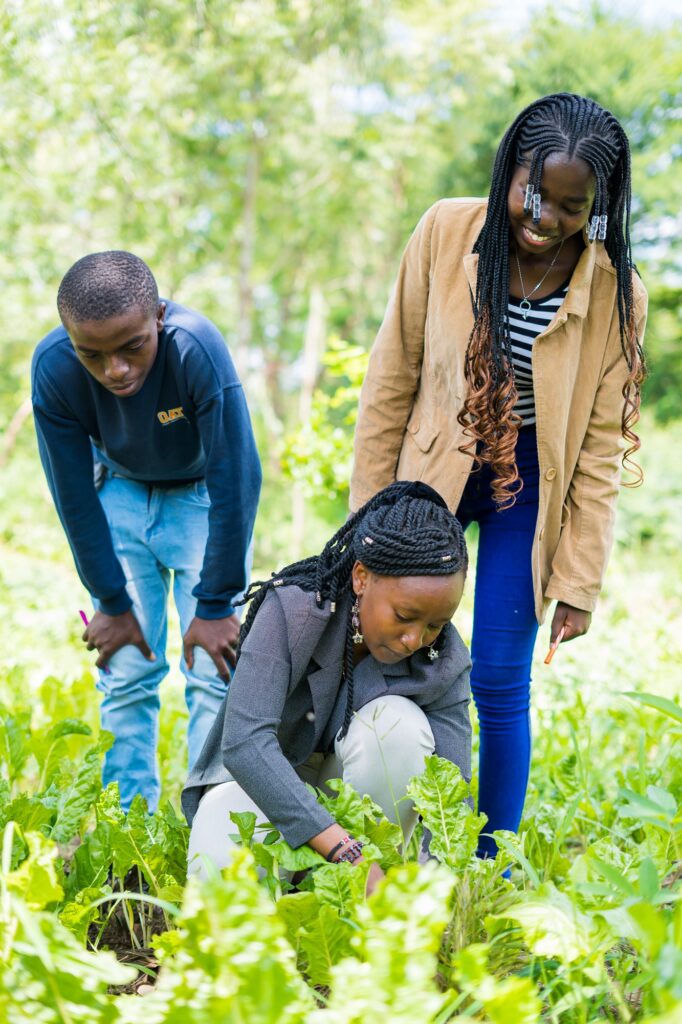
The team identified 25 initiatives, including public and private institutions, agribusinesses and social enterprises. This was done through web scraping for data. In addition, CABI hosted a workshop for 75 youths in Uganda to gather information on career paths and business models.
The researchers found several distinctions and considerations for youth engagement in agribusiness. In particular, young people possess an entrepreneurial mindset, and their creativity and innovation drive their success. Their higher level of digital literacy allows them to effectively utilize technology to benefit themselves. Additionally, young people are more inclined to collaboration, associations, and connectivity.
However, access to land, capital, and credit affects their ability to participate in agribusiness, and inaccessibility is more pronounced for females.
The authors identified six key employment pathways and business models and assessed these for scalability and sustainability.
Six key employment pathways for youth engagement
1. Farming and production
Young people can grow organic fruits, vegetables, herbs, and spices, or raise niche livestock and explore seed entrepreneurship. These activities require less space and capital, offer accessible markets, and involve low costs. Producers, buyers, and intermediaries drive the business models in this pathway. Young farmers can enhance scalability by pooling resources and reducing production risks.
2. Service provision within the food supply chain
This pathway encourages young people to establish businesses that offer essential extension and advisory services. Farmers need these services to address challenges such as pests and soil fertility. Young entrepreneurs can employ models such as bundling (offering a package of different services), fee-for-service, and subscription-based models.
3. Farm-to-table and direct marketing
Young people can use farmers’ markets, community-supported agriculture programs, and online platforms to sell produce directly to customers. This pathway allows young farmers to build customer relationships and serve as brokers for traders.
4. Value addition, processing, and packaging
Strong demand for high-value agro-processed products drives this pathway. Jobs in feed processing and food packaging use diverse revenue models, including direct sales, service fees, and contractual agreements with companies.
5. Agro-dealership
Young people can supply seeds, pesticides, and equipment to farmers by acting as intermediaries between sellers and farmers. This pathway gives farmers quick access to quality products while helping young people develop their management skills.
6. Green youth entrepreneurship
This pathway promotes sustainability and green jobs. The growing demand for eco-friendly products and services drives this employment option, which focuses on developing innovative solutions. Different models, such as direct production and sale, as well as brokerage services, fall under this pathway.

Policy actions for scaling employment pathways
All six of the employment pathways can be scaled, but through different means. Local conditions should be considered to ensure long-term effectiveness. Business models focusing on internal capital generation, developing transferable skills, and creating strong entrepreneurial networks are more likely to sustain impact over time.
The researchers recommend that certain policy actions must be taken to support these business models and increase youth engagement in agriculture.
- Increase youth’s access to land, capital and finance through policies that enable young farmers to acquire or lease land, community-supported land access programmes, and innovative financing models that don’t require traditional collateral
- Provide agribusiness training through apprenticeships, competency-based training, short-term courses and other forms of training.
- Promote access to affordable digital tools and technologies
- Ensure policies and programmes are gender-sensitive, especially those related to land access, finance and technology
Dr Monica Kansiime, lead author of the review and CABI’s Deputy Director, Development and Outreach, Africa, said, “Youth engagement in agribusiness presents a crucial opportunity to tackle youth unemployment in Sub-Saharan Africa while simultaneously driving the inclusive and sustainable transformation of the agricultural sector.”
The role of digital tools and technology in employment pathways

Today’s young people are digital natives. Incorporating digital tools and platforms into agricultural training attracts youth to the sector and prepares them for modern farming practices across various employment pathways.
Dr Kansiime emphasized that digital tools, including mobile-based extension services, mechanization platforms, and e-commerce solutions, can improve market access, resource efficiency, and business performance. “Ensuring equitable access to these technologies and supporting infrastructure will accelerate the growth and resilience of youth-led enterprises and boost productivity,” she explained. “Equally important is the adoption of gender-responsive policies that lower barriers for young women, enabling their full participation and contribution to agricultural growth.”
PlantwisePlus achieves a dual purpose by enhancing advisory services for farmers while simultaneously creating employment opportunities for young people. The programme provides training in technologies that support multiple employment pathways, including sustainable pest management, fertilizer use, and digital marketing. Through platforms like CABI Academy, young people can access self-paced learning modules that cover topics including agribusiness and bioprotection.
Read the research in full:
Kansiime, M. K., Aliamo, C., Alokit, C., Rware, H., Murungi, D., Kamulegeya, P., Ssenyonga, A., Sseryazi, A., Mayambala, G., Wanjiku Kiarie, L., Kadzamira, M. A., Akiri, M., & Mulema, J. M. (2025). Pathways and business models for sustainable youth employment in agriculture: A review of research and practice in Africa. CABI Agriculture and Bioscience. https://doi.org/10.1079/ab.2025.0045
More on CABI’s work with youth
Empowering the next generation: Strategies for youth-inclusive agricultural training and engagement
Youth in agriculture: Meet Anthony Ssenyonga, an agri-entrepreneur in Uganda
Empowering a continent: How youth and cooperatives are revolutionizing agriculture in East Africa
From field to farm: How digital innovation is transforming precision agriculture in Uganda
Gender and youth: Reducing inequality through better opportunities for rural women and youth
PlantwisePlus gratefully acknowledges the financial support of the Directorate-General for International Cooperation, Netherlands (DGIS); European Commission Directorate General for International Partnerships (INTPA); UK International Development from the UK government; and the Swiss Agency for Development and Cooperation (SDC).
Related News & Blogs
From monitoring to impact: how evidence is driving youth agripreneurship
PlantwisePlus works with partners to help farmers protect their crops and livelihoods, strengthening plant health systems. By integrating capacity development, digital advisory tools, and evidence-based decision-making, the programme is creating more r…
23 March 2026