Plantwise news update May 2013

PlantwiseLeaves150x150The latest Plantwise newsletter is here. Click ‘Read more’ to find out about the launch of Plantwise in Ghana, discussions on greater collaboration between CABI and agricultural stakeholders in Myanmar,  support for Plantwise from the European Union, and developments in the Knowledge Bank.

Read more of this post

Update: Plant Health News (22 May 13)

Low returns due to flood and drought are affecting rice growers © Steve Evans (CC BY licence)

Low returns due to flood and drought are affecting rice growers © Steve Evans (CC BY licence)

Here’s a taste of some of the latest stories about plant health, including farmers abandoning rice crops due to poor returns, crops in Bangladesh destroyed by a cyclone and trading conflict for coffee in Democratic Republic of Congo.

Click on the link to read more of the latest plant health news!
Read more of this post

Rotterdam Convention members agree prior consent required for azinphos-methyl trade

Image

Azinphos-methyl among the instecticides tightly regulated by the Rotterdam Convention (Image: WSU Extension)

Contributed by Melanie Bateman, CABI Switzerland

It is estimated that 2 million chemical preparations  are for sale around the world[1]. Many of these chemicals have hazards associated with them. An estimated 200,000 people die each year of pesticide poisoning[2]. And yet, it is very difficult for any one country acting on its own to track all of these chemicals and to assess all safety concerns. The Rotterdam Convention supports information exchange on hazardous pesticides and industrial chemicals.

At its sixth meeting earlier this month, members of the Convention[3] agreed to add azinphos-methyl to the list of chemicals requiring “prior informed consent” (Annex III of the Convention). Azinphos-methyl is an insecticide used to control mites and moths by interfering with the nervous system. Canada was one of the countries that provided information to support its inclusion in Annex III because the Canadian authorities have found that “the use of azinphos-methyl and associated end-use products entails an unacceptable risk of harm to the agricultural worker”[4]. Read more of this post

So how can we deal with all this plant clinic data?

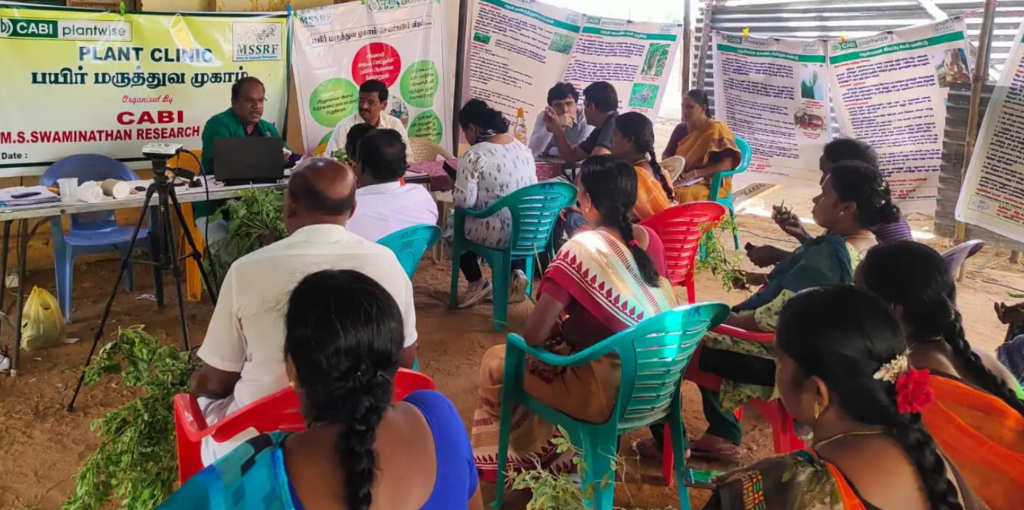
Plant clinic in Pondicherry, IndiaThere are many ways that data from plant clinics can inform agricultural activities. Clinic data can be used to identify the distribution of major crops and diseases, and help to flag up new and emerging pests and diseases. These data can also contribute to the monitoring of the quality of advice given to farmers at plant clinics, and be used to determine what additional training plant doctors might need.

Plantwise Online Management System graphs

The Plantwise Online Management System will enable plant health stakeholders to view analyses of their plant clinic data © CABI

CABI Country Coordinators and EU Resource Staff for several Plantwise countries gathered in Egham, UK for a two-day course on data management, facilitated by the Plantwise Knowledge Bank team. The course emphasised the importance of collecting good quality data from the plant clinics, and managing it effectively within the country, so that this can provide information to farmers, extension workers, researchers, and other plant health stakeholders.

Read more of this post

News of Plantwise Zambia sparks national media coverage

Contributed by Josepth Mulema, CABI Africa

Zambia Daily Mail article written by Benedict Tembo

Ending hunger will require increased agricultural investment, urges UK Parliament

ImageIn order to end global hunger and malnutrition in this lifetime, the UK government needs to increase investment in agriculture, urges members of the UK parliament in a new report released today. Home Grown Nutrition, produced by the All-Party Parliamentary Group on Agriculture and Food for Development, outlines the key challenges facing food security, and recommendations for overcoming these challenges based on the series of Westminster- held debates. At the heart of these recommendations is increased support for the smallholder farmer, the source of food and path to nutrition for approximately one-third of the global population. Smallholder farmers, numbering an estimated 500 million worldwide, are already a focus of support from UK’s Department of International Development (DFID) through initiatives like Plantwise and other agricultural development programmes. Yet to defeat hunger, public and private investment must play a greater role to enable the smallholder to produce more, and more effectively, while boosting nutritional content and sustainability. The Group also notes in the report that food security is a highly complex issue for which agricultural investment alone is not the solution.  This investment must be accompanied by action in other critical areas, including provision of nutritional supplements, wider-economy approaches (cash-transfers), the empowerment of women, access to healthcare as well as to clean water and sanitation.

The APPG’s recommendations are launched in the run-up to the G8 summit next month in London, during which world leaders will be called upon to make commitments towards improved global nutrition. Days before, on June 8th, a Nutrition for Growth summit led by the DFID will be held in the capital to focus public and media awareness on this issue, further encouraging timely action to end hunger.  As part of the UK’s commitment to nutrition, DFID will be supporting CABI’s work on an initiative aimed at spreading nutritional advice amongst developing communities via mobile phones.

Update: New Pest & Disease Records (15 May 13)

Gall caused by Pemphigus bursarius © Gyorgy Csoka, Hungary Forest Research Institute, Bugwood.org (CC BY licence)

Gall caused by Pemphigus bursarius © Gyorgy Csoka, Hungary Forest Research Institute, Bugwood.org (CC BY licence)

We’ve selected a few of the latest new geographic, host and species records for plant pests and diseases from CAB Abstracts. Records this fortnight include recent multiple introductions of the gall-forming aphid Pemphigus bursarius into Japanese islands, the distribution and characterization of Streptomyces species causing potato common scab in Germany and the first report of Endoclita signifer as a new pest on Eucalyptus.

Read more of this post

Bees aid early detection of fireblight in orchards

The bees leave fireblight bacteria in the tube.

Bees from the orchard leave any fireblight bacteria in the tube through which they enter their hive © Rudolf Moosbeckhofer, AGES

Fireblight is a bacterial disease caused by the species Erwinia amylovora that affects fruit trees including apple and pear. It also affects other members of the rose family, including roses, crabapples and hawthorn. The disease can quickly spread through a plant, killing it within a few months, and can devastate entire orchards within a season. Fireblight is difficult to control; there are no chemicals that are effective once the disease has taken hold, and the spread can mainly only be slowed by pruning infected branches. Early detection of fireblight is therefore essential. Researchers at the Vienna University of Technology have devised a method to detect the disease, not on the fruit trees but on the bees that pollinate them. Read more of this post

Update: Plant Health News (08 May 13)

The Australian banana industry wants a banana production and marketing information system to improve its resilience to cyclones, pests and diseases.

The banana industry is planning an information system to reduce crop loss

Here’s a taste of some of the latest stories about plant health, including the risk of Septoria attack if sprays are delayed, an internet data portal plan from the banana industry and new plant protein discoveries that could ease global food and fuel demands.

Click on the link to read more of the latest plant health news!
Read more of this post

Hazardous pesticides on the agenda as the Basel, Rotterdam and Stockholm conventions hold joint meeting

Contributed by Melanie Bateman, CABI Switzerland 

Image

Delegates of top international conventions set a more collaborative regulation agenda (Image: Secretariat of the Basel, Rotterdam and Stockholm Conventions)

Geneva– The three conventions that govern chemicals and hazardous waste safety at the global level are, for the first time, convening jointly in an historic back-to-back meeting of the parties in Geneva from 28 April to 10 May, 2013. The joint meeting aims to strengthen cooperation and collaboration between the conventions, with a view to enhance the effectiveness of their activities on the ground. Nearly two thousand participants from more than 160 countries will attend the two-week long meeting.

Beginning today, the sixth meeting of the Conference of the Parties to Rotterdam Convention on the Prior Informed Consent Procedure for Certain Hazardous Chemicals and Pesticides in International Trade will be held individually to deal with its own specific topics.

Read more of this post

Follow

Get every new post delivered to your Inbox.

Join 504 other followers

%d bloggers like this: